
Last updated October 15, 2026
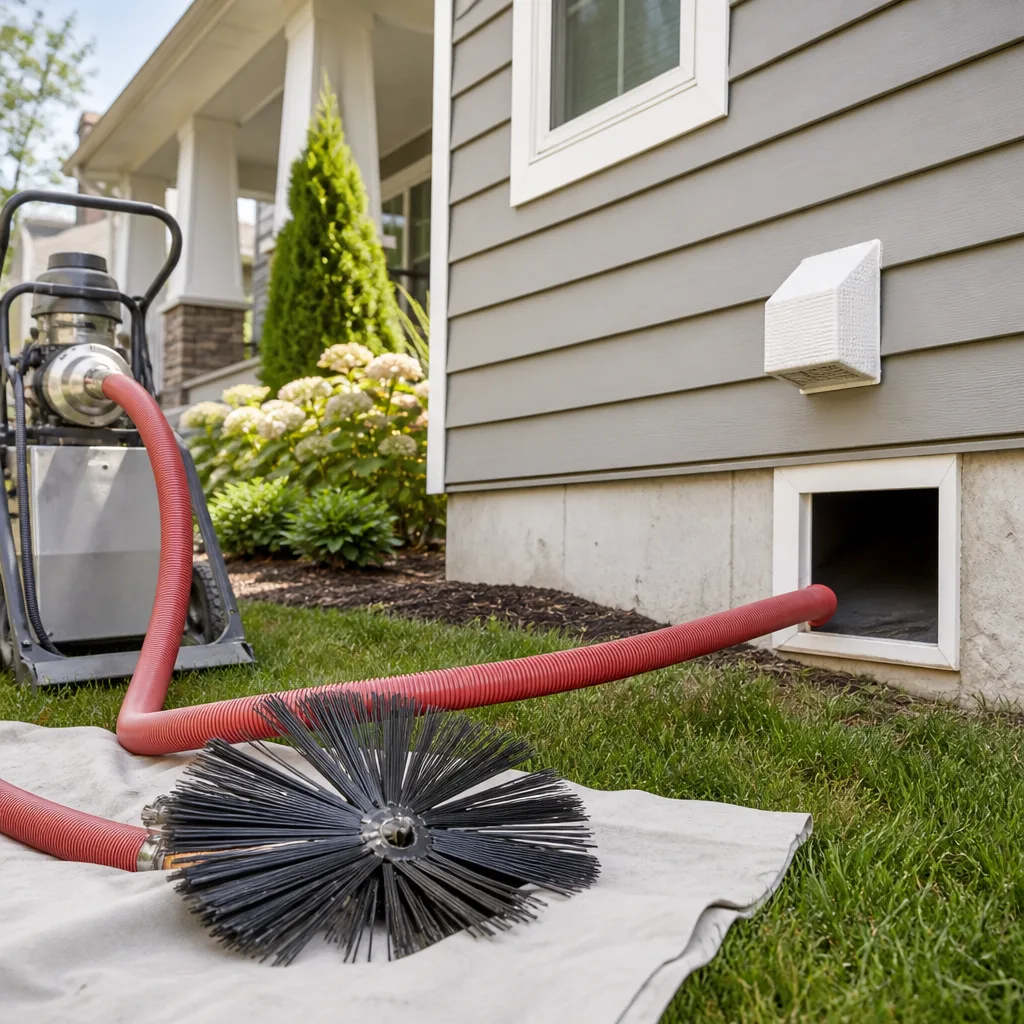 Whole-home duct cleaning
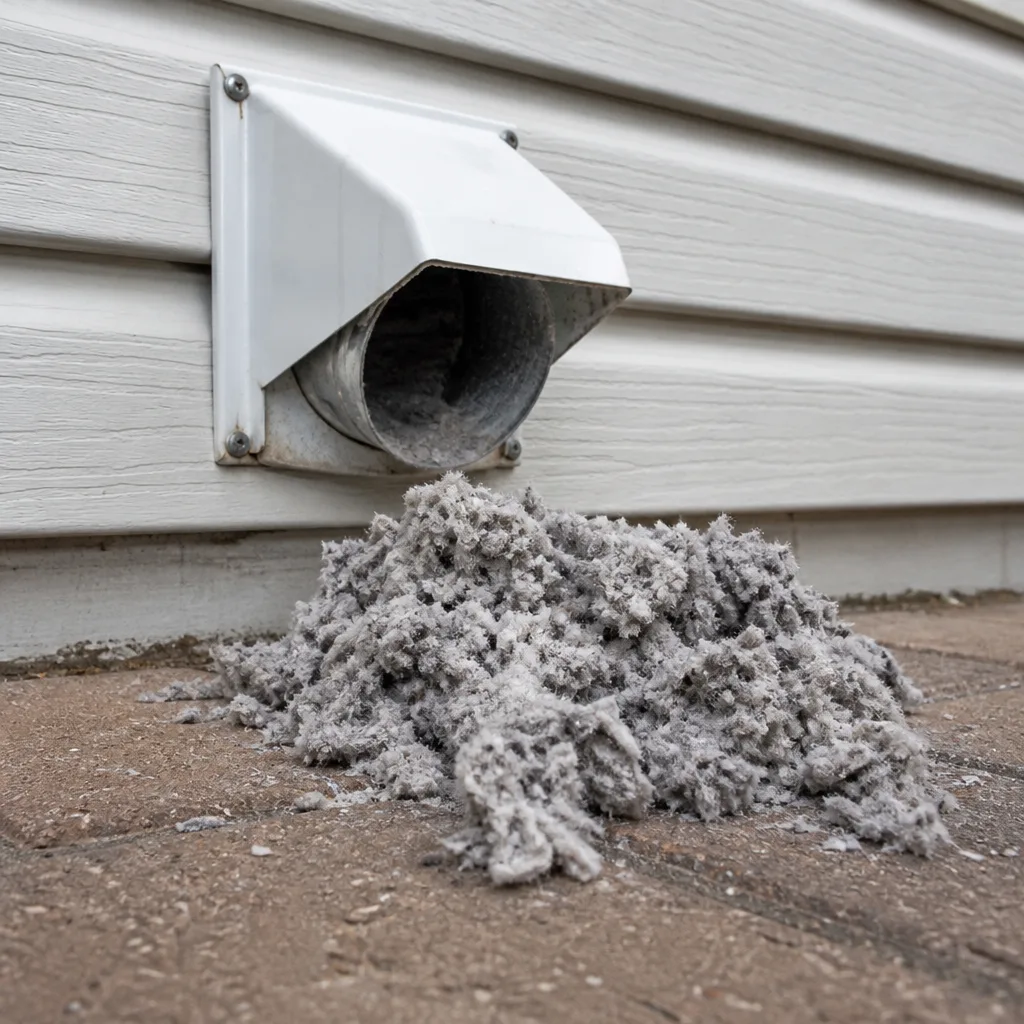 Dryer vent cleaning
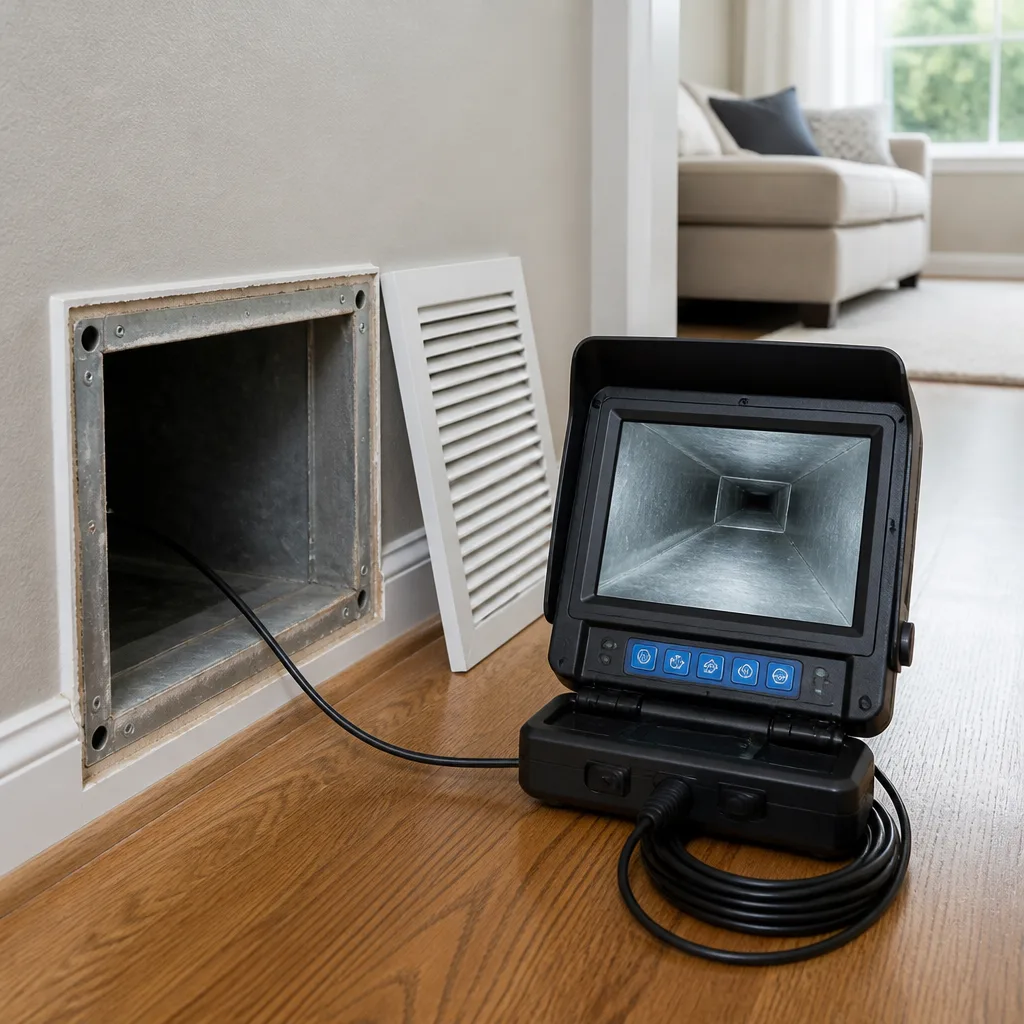 Camera inspection
 Sanitizing & deodorizing
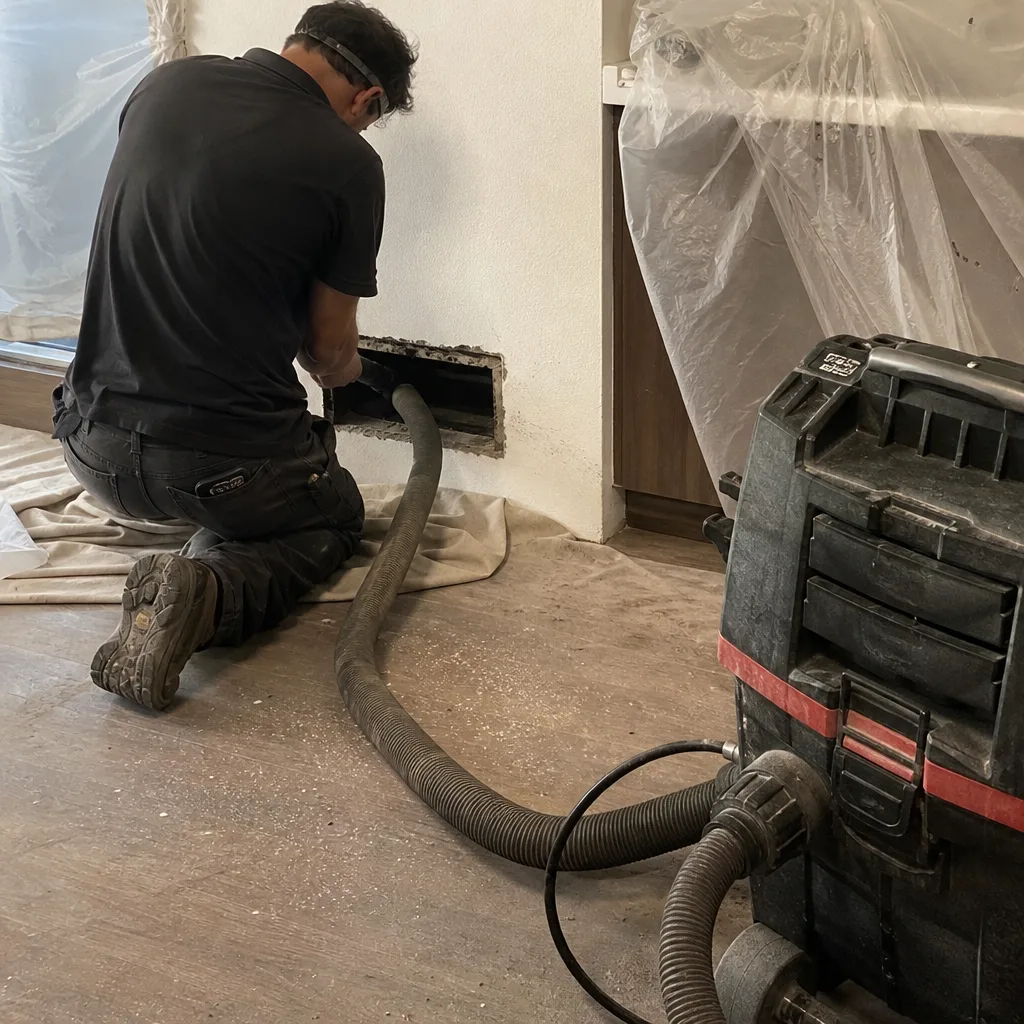
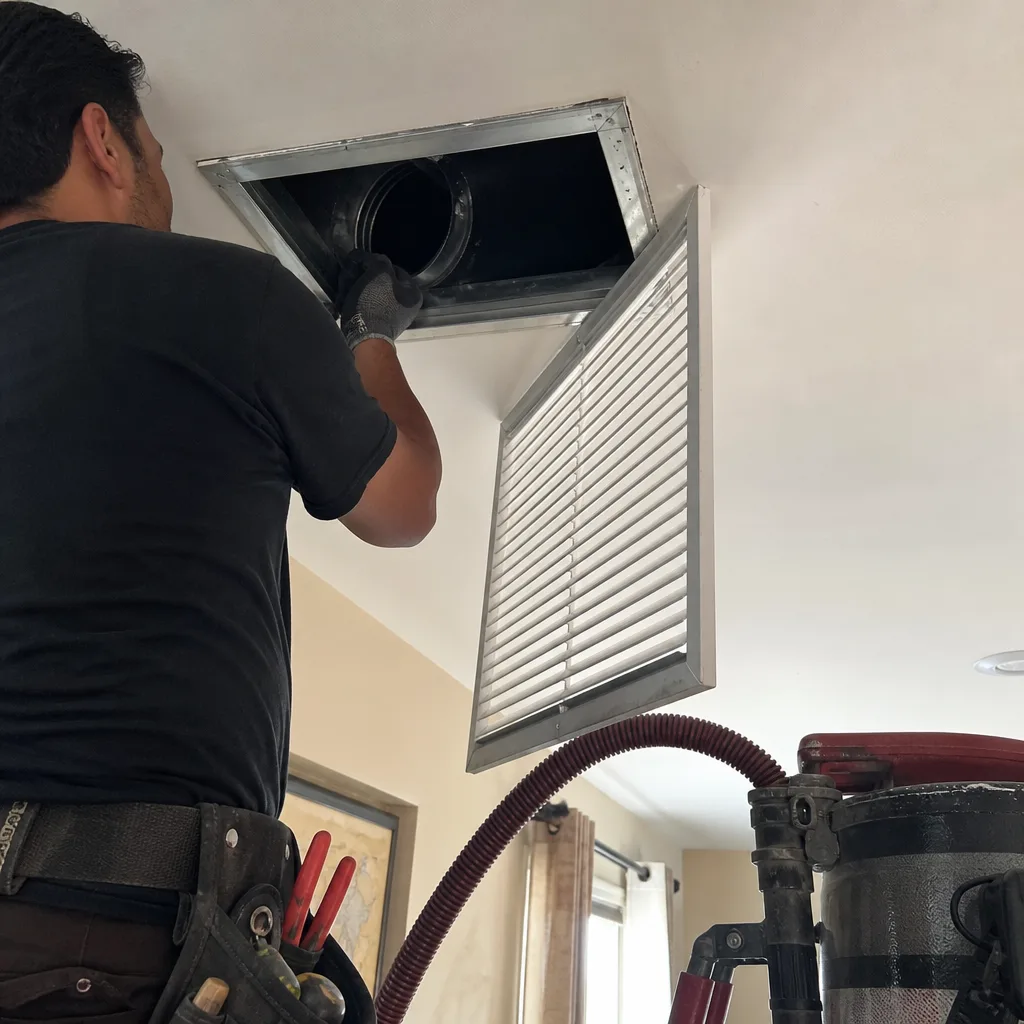
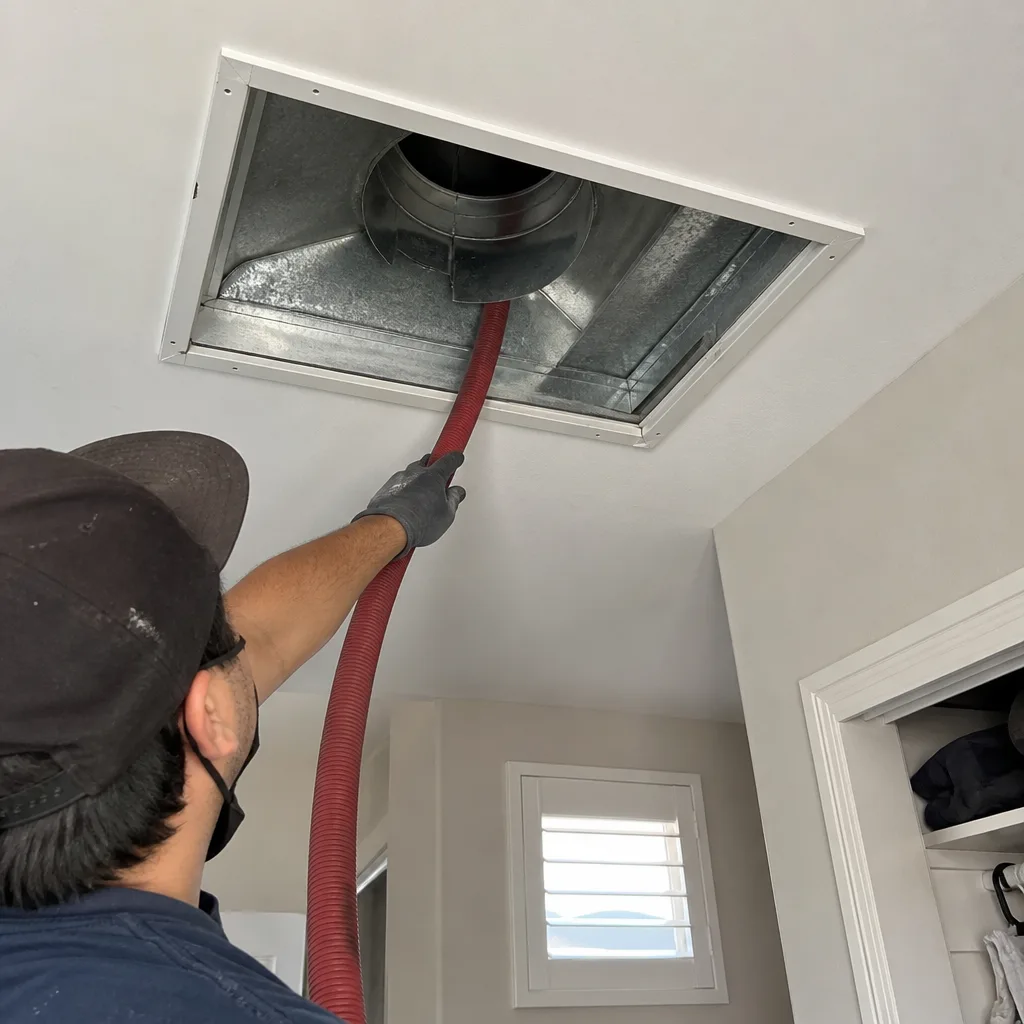
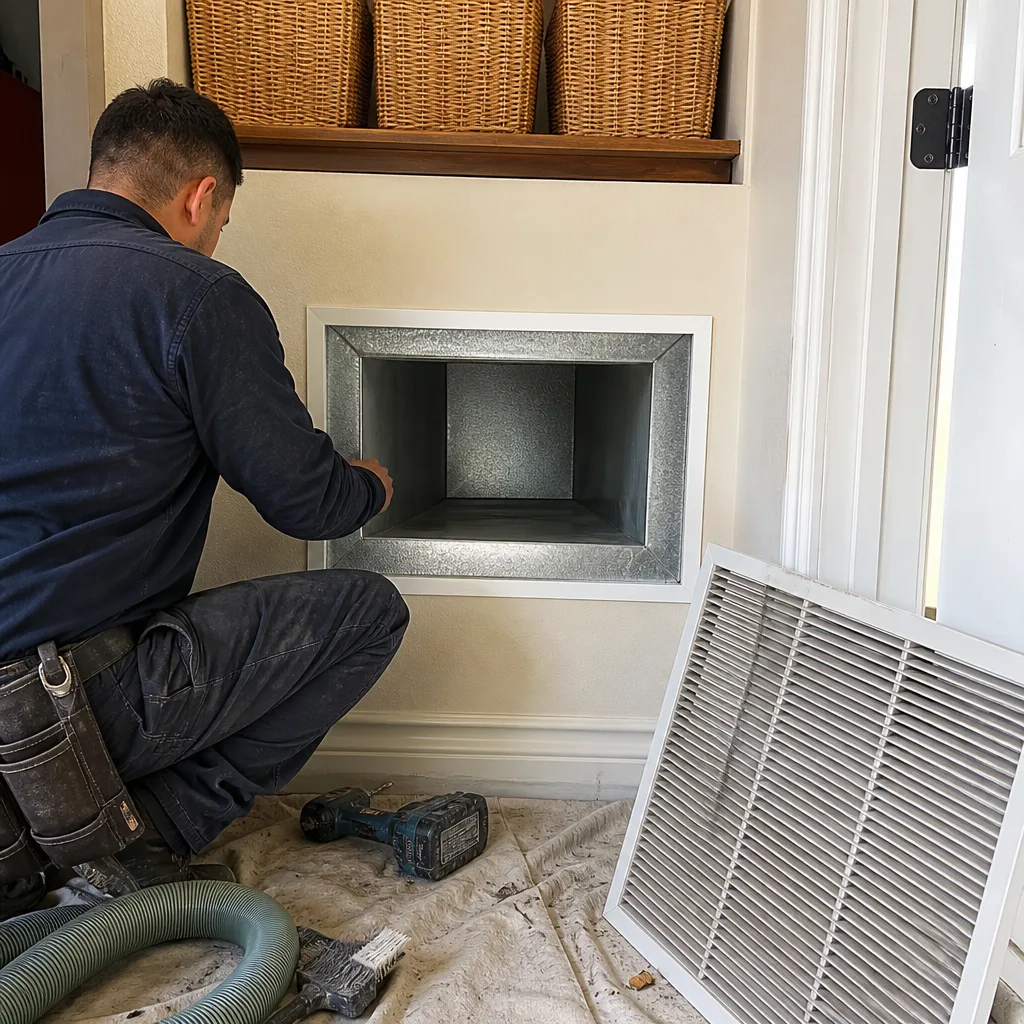
Whole-system duct and dryer vent check with before-and-after photos - you see exactly what came out of your vents
That "$99 whole-house special" is a bait ad - the real number appears once they are in your hallway, or the "clean" is a shop-vac at the register. We photograph the inside of your ducts before and after instead.
Air Duct Cleaning Maintenance Checklist for San Diego Homeowners
San Diego’s air is not one thing. It shifts by ZIP code. A house in Del Mar breathes salt-laced marine air that corrodes coil fins and feeds mildew in duct runs. A home in El Cajon, fifteen miles east, collects a fine, chalky dust from decomposed granite and dry chaparral that packs into return plenums and blinds filters within weeks. Most maintenance checklists ignore this entirely. They hand every homeowner the same twelve bullets, regardless of whether the nearest feature is the Pacific or the Cleveland National Forest. This one is built for San Diego specifically, with go/no-go triggers tied to what you can see, smell, and measure, not just what the calendar says. You’ll learn what to check monthly, what to flag for a pro, what it costs here, and when a filter swap is enough versus when the whole system needs full Air Duct Cleaning in San Diego.
Styles & brands we work with
Quick Answer
For most San Diego homes, a practical air duct maintenance routine means checking filters every 30 days during wildfire season and every 60 days otherwise, wiping supply registers quarterly, doing a visual duct inspection twice a year, and scheduling professional Air Duct Cleaning services every 3 to 5 years. The trigger to escalate is never the calendar alone; it’s a specific sign: visible dust plumes from registers when the system kicks on, persistent stale odor, a filter caked before 30 days, or elevated dust return within two weeks of cleaning. Homes in coastal zones should add a coil inspection every other year due to salt air, and any home within ten miles of a wildfire smoke event needs a professional assessment within 60 days of the air clearing.
Table of Contents
- A Trigger-Based Philosophy for San Diego
- Monthly Checks: What to Look For Before the Filter
- Seasonal Rhythm: Santa Anas, Smoke Season, and Marine Layer
- Homeowner Tasks vs. Contractor Tasks: The Honest Split
- The Post-Renovation Sub-Checklist
- Real Costs in San Diego for Each Contractor Task
- Red-Flag Column: When Maintenance Stops and Professional Help Starts
- Common Mistakes to Avoid
- When to Call a Professional
- Frequently Asked Questions
- The Bottom Line
A Trigger-Based Philosophy for San Diego
A maintenance checklist only earns its keep if every item on it has a clear trigger, a smell, a reading, a visible sign, not just a calendar date. The date tells you to look. The trigger tells you to act.
San Diego’s air quality calendar is unlike most of the country. We don’t have a pollen season that fades by June. We have a nearly year-round pollen cycle, punctuated by two predictable disruptions: the Santa Ana wind events of September through November, which push dry desert air and particulate matter west across the county, and wildfire smoke season, which has shifted from “occasionally bad” in the early 2000s to “reliably several weeks a year” in the 2020s. The Santa Ana winds load ducts with fine, abrasive dust that settles in supply runs and then re-enters living spaces on every cycle. Wildfire smoke adds a second layer: fine particulate that penetrates filter media and coats the interior surfaces of return ducts.
Our coastal humidity creates a third variable most inland maintenance guides never have to consider. Morning marine layer condensation inside unconditioned attic duct runs promotes the kind of damp dust adhesion that hardens over time into a crust on the duct wall. Once that crust forms, no consumer vacuum is touching it. That’s a professional removal job.
So the philosophy is simple: check on a rhythm, but escalate on a signal. The rhythm keeps you looking. The signal tells you the system has changed.
Monthly Checks: What to Look For Before the Filter
Monthly checks are the homeowner-level front line. They take less than fifteen minutes and require no specialized tools beyond a flashlight, a screwdriver for register removal, and your eyes and nose. Here’s what to do every 30 days in San Diego.
- Pull the filter and hold it to a light source. If you cannot see the bulb’s outline clearly through the media, the filter is loaded. Replace it. Do not wait for the manufacturer’s nominal rating window, because San Diego’s particulate load during Santa Ana season can blind a 90-day filter in three weeks.
- Check the return grille for a dust mat. Run a finger across the face of the return grille, the large intake vent. If you come away with a visible coating of gray or brown fuzz, the return stream is carrying more particulate than the filter is catching. Mark this as a red flag if it recurs two months in a row.
- Sniff the first blast of air when the system kicks on. That first three seconds of air from the supply vents tells you a lot. A musty, damp smell indicates microbial growth somewhere in the run or at the coil. A dusty, hot smell indicates baked particulate on the heat exchanger or heating elements. A clean start-up has no smell at all.
- Wipe two supply registers and look at the residue. Remove a supply register in your most-used room and wipe the interior face with a damp white cloth. Gray residue is normal house dust. Black or greasy residue is not. Take a photo with your phone. That’s a useful comparison point for the next month.
- Listen for a change in airflow whistle. A register that used to be quiet and now whistles, or a room that suddenly feels stuffy while the system runs, can indicate a new obstruction downstream. Duct runs do not change shape on their own. Something moved into the airflow path.
Keep a simple log. A notes app entry with the date, filter brand, and whether the residue was normal is enough. Over six months, that log becomes the single most useful diagnostic tool a technician can read.
Seasonal Rhythm: Santa Anas, Smoke Season, and Marine Layer
San Diego’s duct loading pattern follows three distinct seasonal phases. Each phase has its own maintenance emphasis and its own escalation trigger.
Phase 1: Santa Ana Wind Season (September through November)
Santa Ana winds push dry, dust-heavy air from the desert toward the coast. The air carries fine particulate that settles into attics and then gets pulled into return ducts. Homes in East County (El Cajon, Santee, Lakeside, Alpine) see the fastest filter loading, sometimes blinding a new filter inside 14 days during sustained wind events. Homes west of I-5 experience this less intensely unless a wildfire is also burning inland.
Maintenance emphasis: Filter checks every 2 weeks. Register wipe-downs weekly if you’re in an affected corridor. Pay attention to whether windowsills in the house are accumulating dust at an unusual rate; sill dust is an early proxy for what’s entering the HVAC system.
Escalation trigger: A filter loaded solid in under 21 days, twice in a row. That indicates the return system is drawing airborne dust from somewhere inside the envelope, or the duct system has a breach in the attic.
Phase 2: Wildfire Smoke Advisories (Peak Season October, but Possible Anytime)
Smoke particulate is finer and more invasive than wind-blown dust. It penetrates standard MERV 8 filters, passes through the return side, and deposits on duct interior surfaces, the blower wheel, and the evaporator coil. This is not a filter problem. This is a system contamination problem.
Maintenance emphasis: During an active advisory, keep the system’s fan set to “On” if your thermostat has that option. This keeps air moving across the filter and prevents stagnant smoke from settling in supply runs. But understand: that’s a mitigation measure, not a solution. The smoke is still entering the system.
Escalation trigger: Any home within ten miles of a wildfire smoke plume or downwind of one, regardless of whether the air “smells smoky indoors,” should schedule a professional inspection within 60 days. Smoke residue is acidic and accelerates deterioration of duct liner and coil fins. In our experience, this is the most commonly skipped maintenance response in San Diego because the contamination is invisible until it starts smelling like a campfire every time the heat cycles on.
Phase 3: Coastal Marine Layer (May through August, and Often “May Gray” into “June Gloom”)
Coastal neighborhoods from Point Loma to Carlsbad get a nightly condensation cycle. The air itself is not dirty, but the persistent humidity in unconditioned attic spaces creates a microclimate where dust that would normally remain loose instead adheres to duct surfaces. Over time, that adhered layer becomes a damp, dark film.
Maintenance emphasis: Visual inspections of visible duct runs in the attic. Look for dark staining at duct joints or seam lines. That staining is condensation wicking through insulation and trapping dust. Also check for rust-colored speckling on the exterior of galvanized register boots.
Escalation trigger: A consistent musty odor from supply vents during the first HVAC cycle of the morning, or visible microbial staining inside the duct boot when you remove a register. This is not resolved by a filter change or a vent wipe. It requires professional cleaning and often a coil assessment.
Homeowner Tasks vs. Contractor Tasks: The Honest Split
Some maintenance chores belong to you. Some require equipment and training you shouldn’t buy or attempt. Here is the honest split for a San Diego homeowner.
Homeowner-Level Tasks (No Special Tools Required)
- Filter replacement. This is yours. Always. Learn your filter size, buy MERV 8 or MERV 11 for most homes, and keep a two-pack on hand. Higher MERV ratings restrict airflow on older systems, so don’t chase MERV 13 thinking it’s automatically better. It’s not, if your blower can’t push against it.
- Register vacuuming. Remove each supply register, vacuum the visible boot interior with a household vacuum’s crevice tool, and wipe the register face. Do this quarterly. It prevents the crust formation that requires professional removal later.
- Return grille wipe-down. The return grille is the first surface air touches. A loaded grille face adds resistance and signals an overloaded filter behind it.
- Visual duct inspection. In homes with accessible attic runs or basement runs, a flashlight inspection twice a year is a legitimate homeowner task. You’re looking for disconnected joints, sagging flex duct, crushed sections, and visible dust accumulation at the supply register boots.
- Condensate drain check. Locate the condensate drain line near your indoor air handler. Pour a cup of white vinegar down it twice a year to prevent sludge buildup. If water backs up or the line overflows, that’s a different conversation.
Contractor-Level Tasks (Professional Equipment Required)
- Negative-air extraction. This is the core of professional duct cleaning. A Nikro negative-pressure unit connects to the duct system and pulls a vacuum on the entire run while a rotary brush agitates the duct wall. The negative pressure ensures loosened debris moves out of the house instead of recirculating into living spaces. This is not achievable with a shop vac, regardless of what rental equipment marketing suggests.
- Rotary brush agitation. Rotobrush systems drive a spinning brush head through the duct run, dislodging the adhered crust that household vacuums cannot reach. The brush does the mechanical work; the negative air does the removal. They work as a pair.
- HEPA filtration during cleaning. Abatement Technologies HEPA units scrub the air in the workspace during cleaning, so the debris being removed doesn’t migrate into the home. This matters especially in San Diego homes with sensitive occupants, kids, elderly family members, or anyone with respiratory conditions.
- Evaporator coil inspection and cleaning. The coil sits inside the air handler, downstream of the filter. If it’s loaded with dust and smoke residue, your system’s efficiency drops and humidity control fails. Coil access requires panel removal and careful handling of refrigerant lines, a job for a trained technician, not a homeowner with a YouTube tutorial.
- Blower wheel cleaning. The blower wheel moves the air. A loaded wheel throws dust into the supply stream and wastes energy. Accessing it means opening the air handler cabinet, which is not a homeowner task on most systems.
The Post-Renovation Sub-Checklist
Drywall dust after a remodel is one of the fastest ways to clog a duct system regardless of cleaning history. Even a small bathroom remodel in a San Diego condo can push enough gypsum dust into the return air path to blind a filter within days and coat the coil with a hard, insulating layer.
If you have had any renovation work done in the past twelve months, run this sub-checklist instead of, not in addition to, the standard rhythm. It overrides the normal schedule.
- Seal off return registers during active work. This is a before-the-work step, not after. If work is ongoing, cover return grilles with painter’s plastic and tape. If the work is already done and you didn’t, you’re now in assessment mode, not prevention mode.
- Replace the filter immediately after the work concludes. That filter has been doing the job of a dust collector. It’s loaded. Replace it before you run the system for a full cycle.
- Wipe every supply register and the wall or ceiling around it. Drywall dust is fine enough to migrate anywhere. The register faces and the surrounding surfaces tell you how much escaped into the duct system.
- Inspect the coil for a white or gray coating. This requires removing the air handler panel. If you’re not comfortable doing that, schedule a professional coil inspection. A homeowner in Chula Vista recently showed us a coil frosted white after a kitchen remodel; it took professional cleaning to remove the layer and restore airflow.
- Run the system for 30 minutes and check for dust plumes. Have someone cycle the system on while you watch the supply registers with a flashlight. Any visible plume of fine dust means the duct runs themselves have accumulated a layer that needs professional negative-air removal.
- Schedule a full duct cleaning within 30 days if dust plumes are present. Post-renovation dust does not resolve on its own. It sits in the runs, gets baked onto surfaces, and then releases gradually for months. The longer it sits, the harder it is to remove.
Real Costs in San Diego for Each Contractor Task
Budgeting for duct maintenance in San Diego is straightforward once you know what each service actually costs here. Prices vary by house size, system complexity, and accessibility, but these ranges reflect the current San Diego market for professional work.
- Full duct cleaning, whole house, no renovation history: Most San Diego homes between 1,200 and 2,500 square feet run between $450 and $850 for complete negative-air cleaning with rotary brush agitation. This includes all supply runs, return runs, register boots, and the main trunk lines.
- Full duct cleaning, whole house, with post-renovation dust or smoke residue: The same home with heavy particulate loading may run $650 to $1,100. The difference is the additional pass time and the HEPA filtration load.
- Evaporator coil cleaning: Standalone coil cleaning runs $150 to $350 depending on access and whether the coil needs chemical treatment for microbial growth or smoke residue.
- Blower wheel cleaning: $100 to $250 as a standalone service. Many companies fold this into a full duct cleaning at no additional charge when the air handler is already open.
- Condensate drain line flush with preventive treatment: $75 to $150. Some homeowners do this themselves with vinegar, but if the line has already backed up and flooded a secondary pan, the fix is more involved.
- Dryer Vent Cleaning in San Diego: $175 to $300 for a standard single-story or two-story run under 25 feet. This is a different system from your HVAC ducts, but it belongs on the same maintenance radar because a clogged dryer vent is the most common household fire hazard in the county.
Kestrel Air Duct San Diego gives every customer a written price before any work begins. The price covers the entire job, no per-vent charges, no door-step revisions. If we quote $700 for your 1,800-square-foot home, that’s the invoice. The written price includes the full scope, and the 365-Day Done Right Promise covers the work in writing after it’s complete. If something we cleaned re-contaminates within the guarantee window, we return and make it right at no charge.
Red-Flag Column: When Maintenance Stops and Professional Help Starts
Every maintenance task on this checklist has a threshold. Below the threshold, it’s a homeowner task. Above it, it’s a professional call. Here is the red-flag column for each major category.
- Filter red flag: A filter loaded opaque in under 21 days, two consecutive replacements. This signals the return stream is drawing dust from an uncontrolled source. Something is wrong upstream.
- Register red flag: Black or greasy residue on a register wipe. Gray is house dust. Black is either soot from combustion, excessive candle use, or, in coastal zones, fungal growth. None of those are filter problems.
- Odor red flag: A musty smell on system start-up that does not go away after one cycle. A dusty or burnt smell that persists. A smoke smell on heat mode with no active wildfire. These are contamination signals inside the system.
- Airflow red flag: A register that suddenly whistles or a room that suddenly stuffs up. Duct runs don’t constrict themselves. Something moved.
- Renovation red flag: Visible dust plumes from supply registers after a remodel. This is not “settling dust.” This is duct contamination that will persist for months and then harden.
- Visual inspection red flag: Dark staining at duct joints in the attic, condensation beading on the exterior of flex duct, or visible moisture on the interior of a register boot. Moisture plus dust equals a biological growth issue that cannot be resolved by a homeowner.
- Health red flag: A household member with new or worsening allergy symptoms, asthma flare-ups, or chronic morning congestion that improves when they leave the house. The HVAC system is the largest air recirculation system in the home. If the air it pushes is contaminated, every room pays the price.
Common Mistakes to Avoid
- Trusting the filter’s packaging date. A filter rated “up to 90 days” is rated for average air. San Diego’s Santa Ana air and wildfire smoke are not average. Check monthly and replace on sight, not on calendar.
- Assuming a clean filter means clean ducts. The filter catches what enters through the return. It does nothing for what’s already in the duct runs downstream. A clean filter and dirty ducts are compatible facts.
- Using a household vacuum on duct interiors. A shop vac or household vacuum cannot create negative pressure across the entire duct system. It removes loose debris from the first few feet of the run and leaves the rest. Worse, it can blow the loosened dust back into the living space through leaks in the vacuum’s exhaust.
- Ignoring the dryer vent because it’s not an HVAC system. In San Diego, dryer vents clog with the same fine particulate as duct systems, plus lint. A clogged dryer vent is a fire risk and a dryer-killer. It needs professional cleaning every 1 to 2 years for most households.
- Waiting for a problem to appear. The most expensive duct cleanings we perform in San Diego are post-smoke-event jobs where the homeowner waited six months for the odor to “fade.” Smoke residue does not fade. It settles, hardens, and then re-releases for years. Early intervention is cheaper.
- Skipping the coil because it’s hidden. The coil is downstream of the filter and upstream of the supply runs. If it’s loaded, everything downstream of it is receiving dirty air, including rooms you just cleaned and a house you just dusted.
- Accepting a per-vent price from any company. Per-vent pricing is a bait-and-switch tactic. The “low” per-vent number multiplies by the number of vents, and by the time the invoice lands, the total is double the advertised figure. A written whole-system price before work starts is the only honest quoting method. Kestrel Air Duct San Diego operates this way on every job, because the Kingswell Guarantee requires it.
When to Call a Professional
You need professional duct cleaning if: you see dust plumes from supply registers when the system starts; you smell must or smoke on start-up that persists; your filter loads opaque in under three weeks, twice running; you’ve completed a renovation in the past year and haven’t had the ducts cleaned since; a household member’s allergies or asthma have worsened without another explanation; or it has simply been more than five years since anyone looked inside your duct system.
Kestrel Air Duct San Diego offers free estimates in San Diego. Call (619) 695-0424 and a real person answers, any time of day. We’ll give you a written price before a single vent is touched, and the work is covered by the 365-Day Done Right Promise. If it’s not done right, we make it right, in writing, on every job. That’s the standard Dale Whitmore has held since 2004.
Frequently Asked Questions
How often do air ducts really need cleaning in San Diego?
Every 3 to 5 years for most San Diego homes, with so
See the difference
 Before
 After
After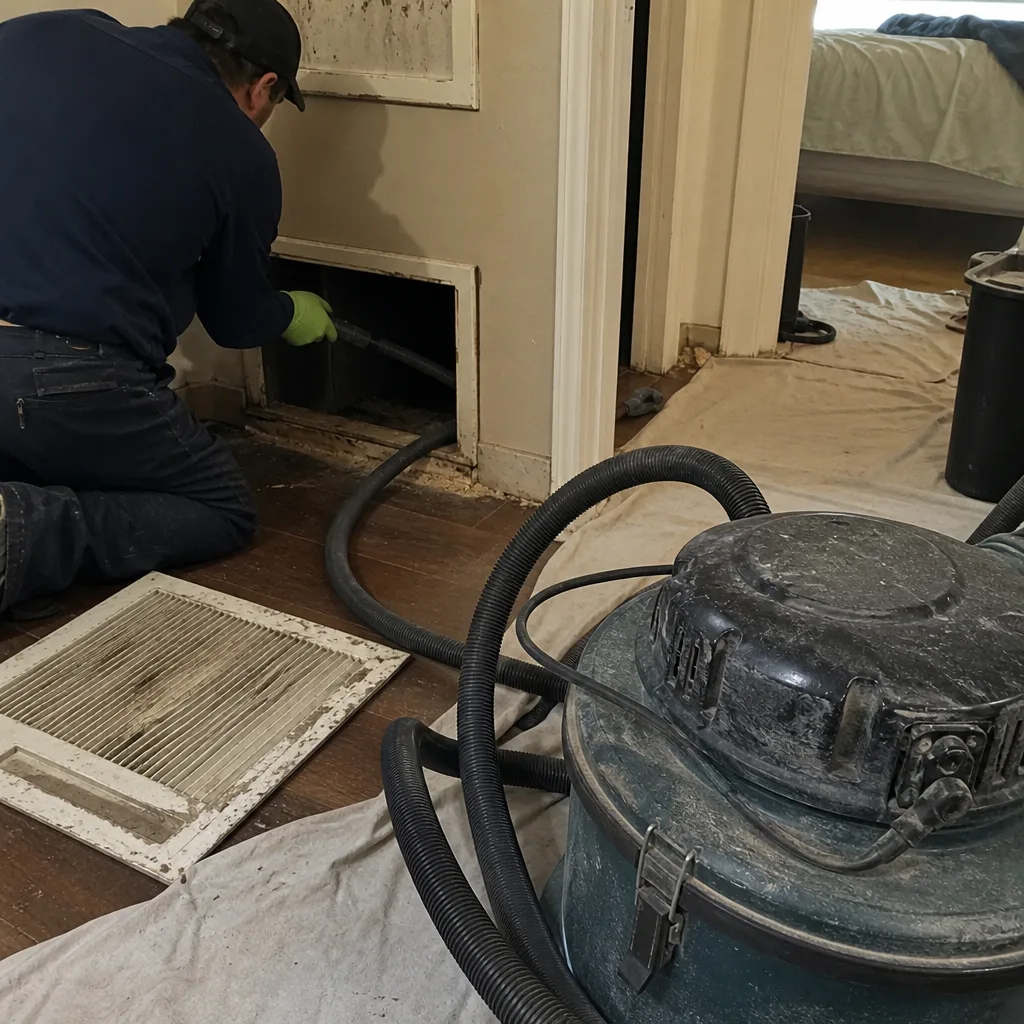 Before
 After
After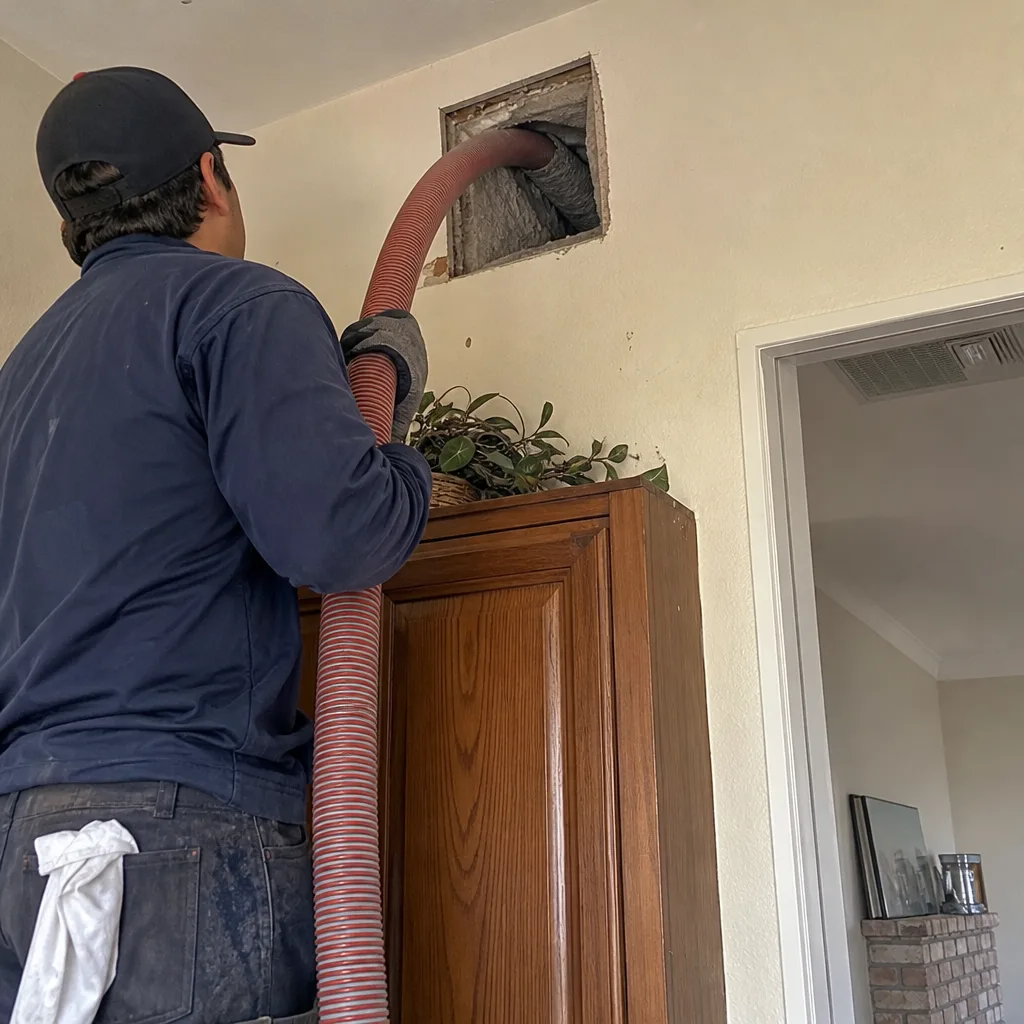 Before
 After
After