
Last updated October 15, 2026
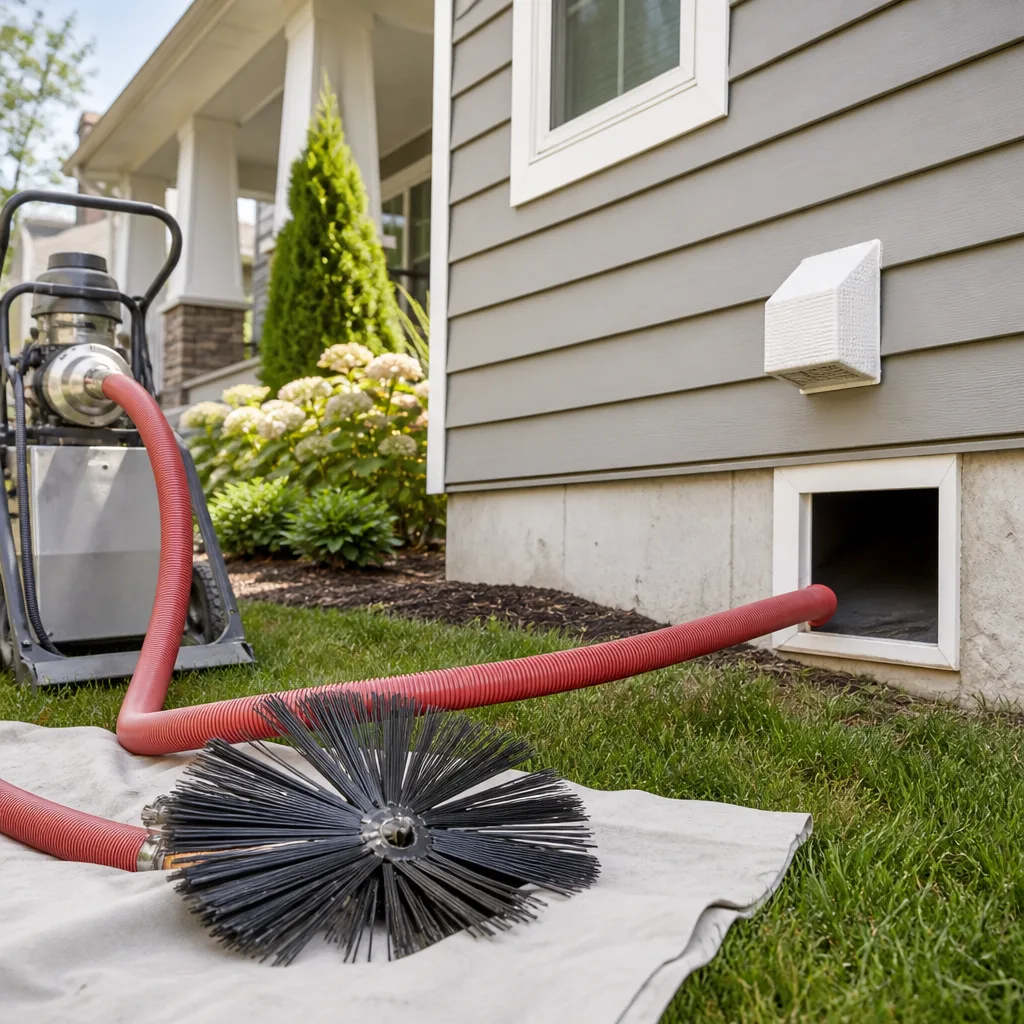 Whole-home duct cleaning
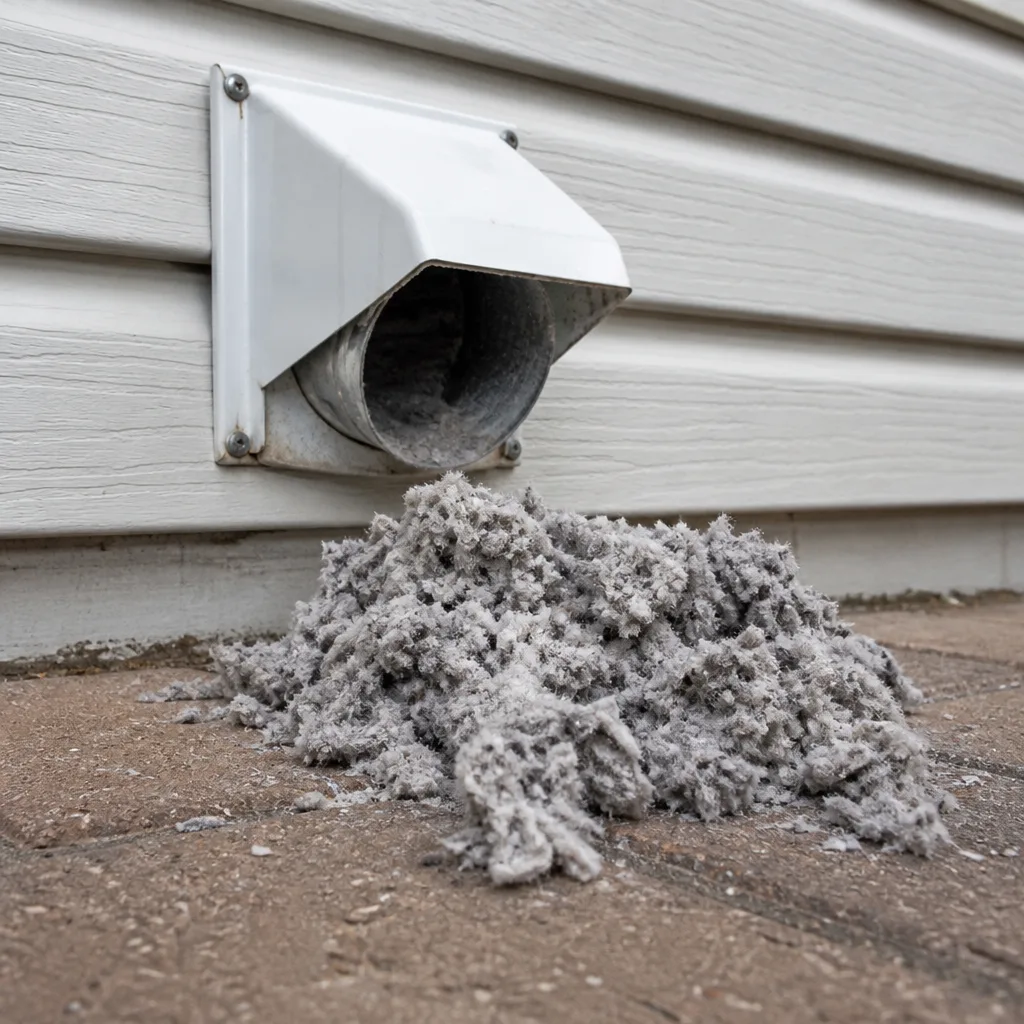 Dryer vent cleaning
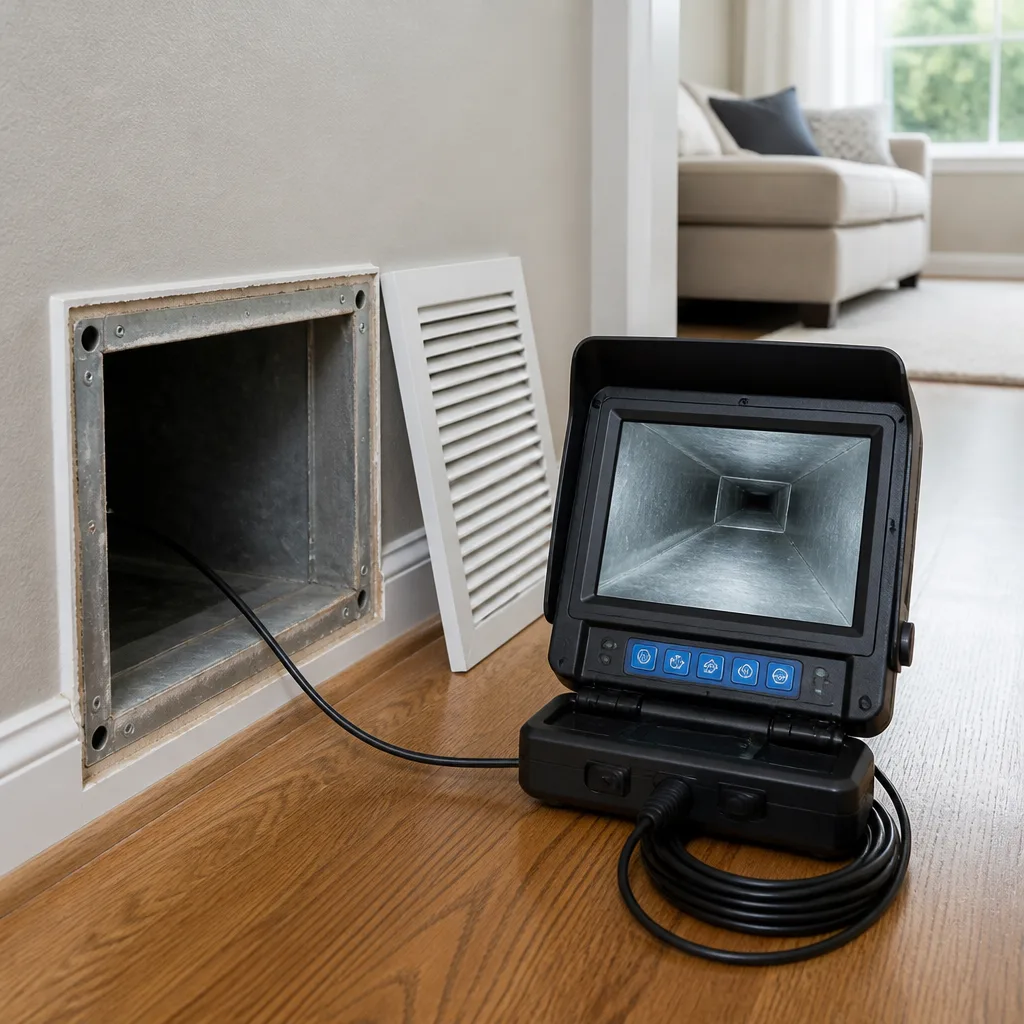 Camera inspection
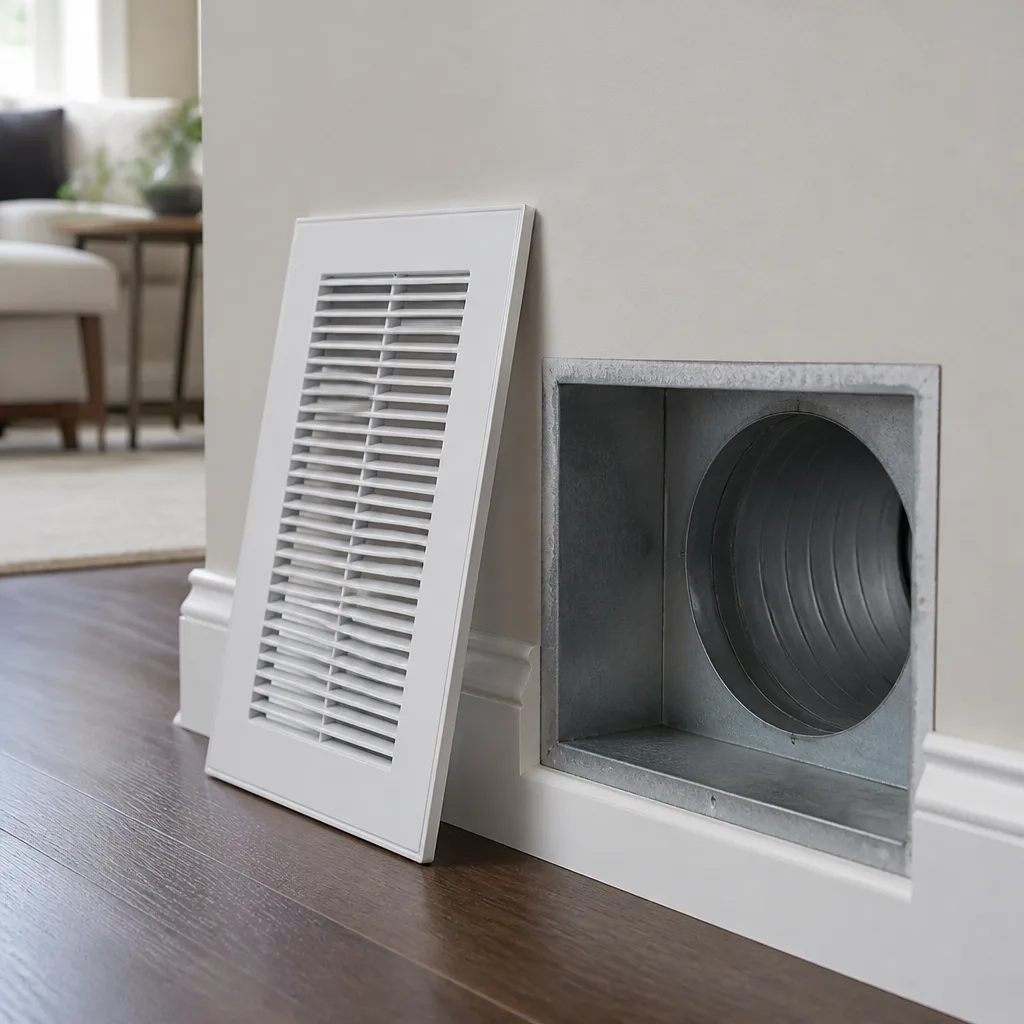 Sanitizing & deodorizing
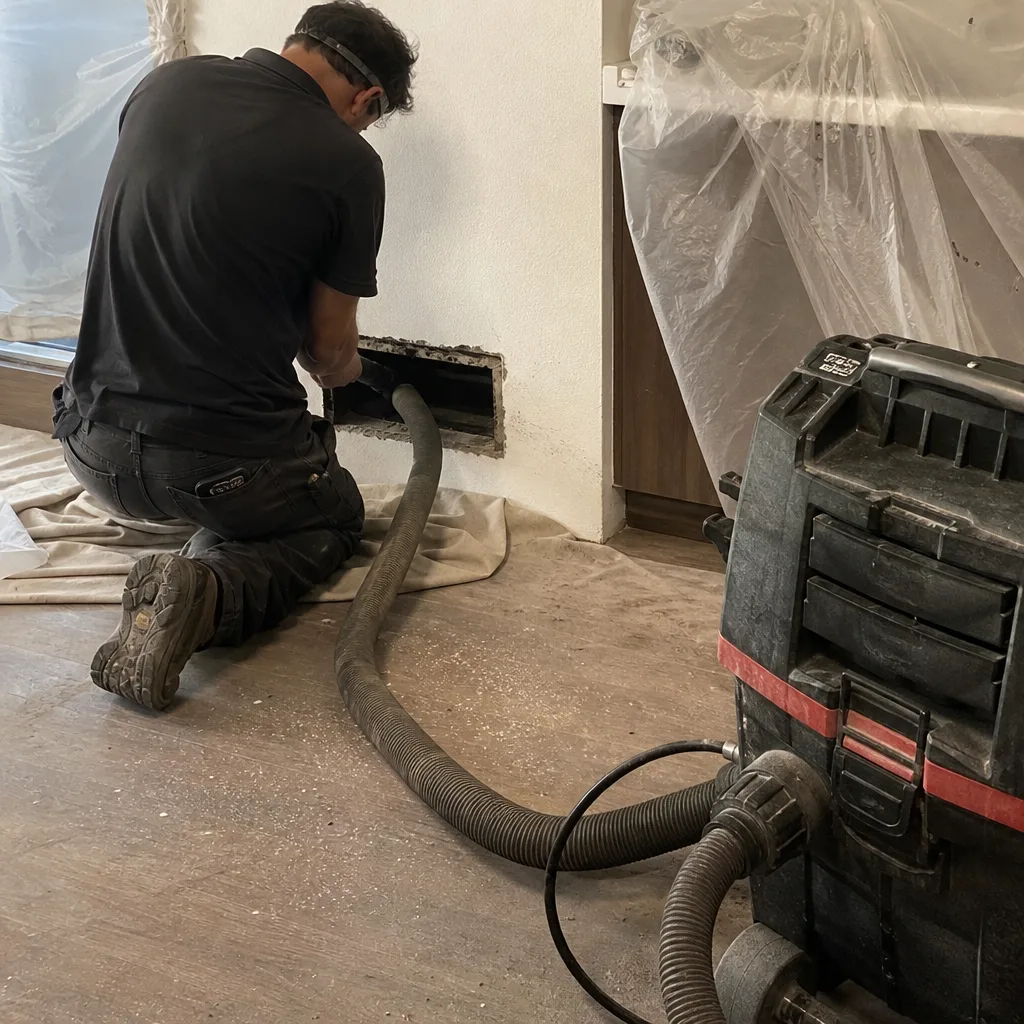
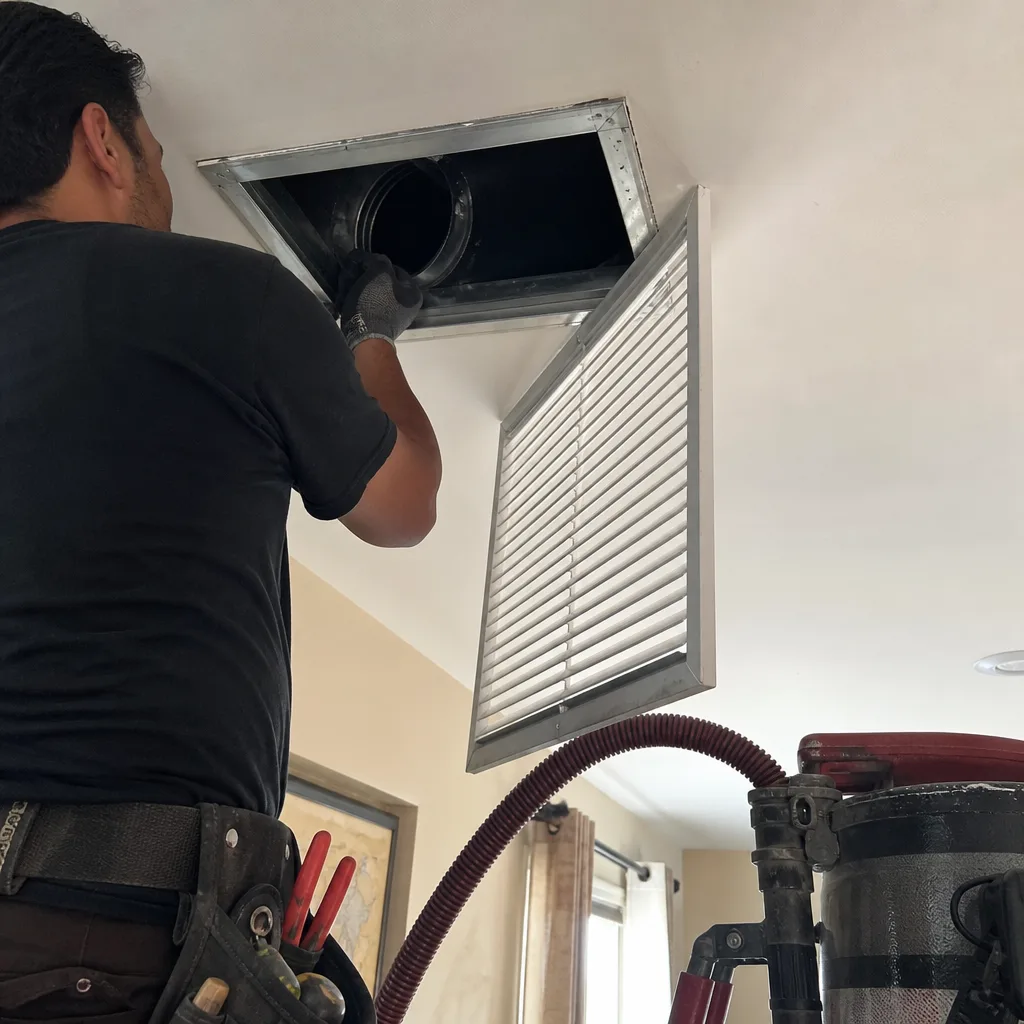
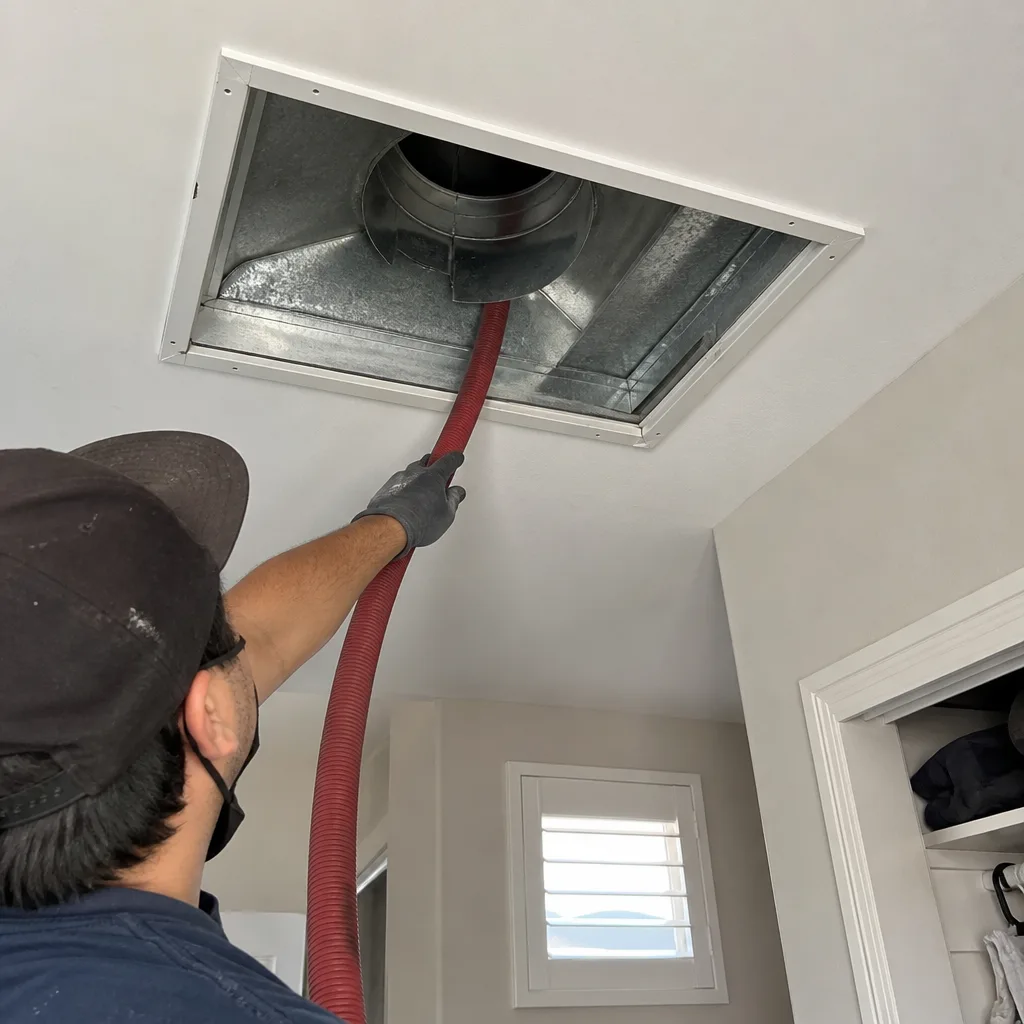
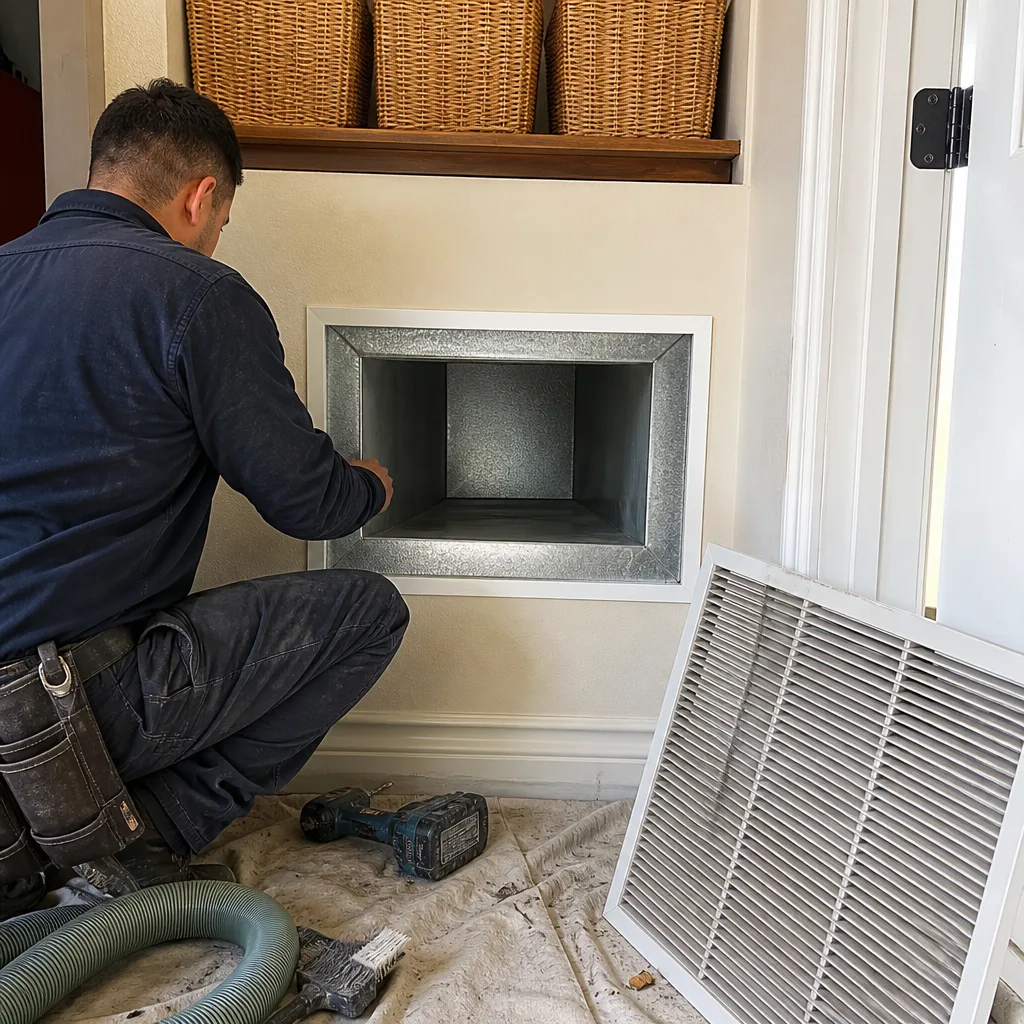
Whole-system duct and dryer vent check with before-and-after photos - you see exactly what came out of your vents
That "$99 whole-house special" is a bait ad - the real number appears once they are in your hallway, or the "clean" is a shop-vac at the register. We photograph the inside of your ducts before and after instead.
Air Duct Cleaning Warning Signs: A San Diego Homeowner’s Reference Guide
Here’s a number that should make every San Diego homeowner pause: the average six-room house circulates roughly 40,000 cubic feet of air per hour through its ductwork when the HVAC system runs. Most of the particles in that air get caught by the filter. Some don’t. The ones that don’t settle, accumulate, and eventually turn your ductwork into something closer to a sediment basin than a delivery system. This guide gives you something most warning-sign lists won’t: specific, measurable thresholds for each symptom, and a clear action tied to each one. For The Complete Guide to Air Duct Cleaning in San Diego, see our dedicated resource. By the end, you’ll know the difference between a dirty filter and dirty ducts, and you’ll know exactly when to pick up the phone.
Quick Answer
The clearest signs your San Diego home needs air duct cleaning are visible dust accumulation on the inside of return registers (not just surface dust on the outside), mold-ring staining around supply vents in rooms that stay damp, musty or burning odors that appear only when the system runs, and uneven room temperatures that persist after you’ve changed the filter. Surface dust on register covers alone is usually just a filter problem, not a duct problem. The distinction matters because our Air Duct Cleaning services for a typical San Diego home run between $350 and $700, and you shouldn’t pay that unless the indicators point to the duct interior, not the filter.
Styles & brands we work with
Table of Contents
- The Truth About Dust on Your Registers
- San Diego-Specific Warning Signs: Santa Anas, Salt Air, and Marine Layer
- The Smell Taxonomy: Musty, Burning, and Chemical Odors Decoded
- A Real DIY Register Inspection (What You Can Actually See)
- Act Now vs. Schedule vs. Monitor: Three Clear Tiers
- Airflow Changes: When Weak Air Is a Duct Problem
- Common Mistakes to Avoid
- When to Call a Professional
The Truth About Dust on Your Registers
Dust on your registers doesn’t mean your ducts are dirty. It usually means your filter is overloaded. Confusing the two leads to unnecessary $400 cleanings or, worse, ignoring the sign that actually matters: the one that shows up only when the system runs.
Here’s the distinction most guides never make. There are two categories of warning signs: register-level symptoms and system-level symptoms. They mean very different things.
Register-Level Symptoms
Surface dust on the register cover. This is the dust you can wipe off with a finger. It’s normal. Every time air moves past a register, particles settle on the metal or plastic grille. If you see dust only on the outside surface, your ducts are very likely fine. Change your filter and wipe the register. Monitor for two weeks. If the dust returns within days, the filter is undersized for the home or the wrong MERV rating is installed.
Dust visible inside the register throat. Take off the register cover (most lift straight off or unscrew with two screws). Look into the duct opening with a flashlight. If you see dust on the interior walls of the duct pipe itself, that’s a different story. Surface dust outside is normal. Dust accumulated inside the pipe is dust that has bypassed the filter and settled in the system. Light dusting is typical in any home older than two years. Dense, fuzzy accumulation or visible debris pieces mean the duct interior is serving as a particle reservoir.
Reduced airflow from one or two specific registers. If one room always feels stuffier than the rest, or one register barely moves air while others are strong, you may have a localized blockage: a collapsed flex duct, a disconnected section, or years of accumulated material in that particular branch line. This is a duct problem, not a filter problem, because a filter issue would affect airflow evenly across the entire home.
System-Level Symptoms
Uneven room temperatures that persist after a filter change. San Diego’s microclimates already give us temperature variation between rooms: west-facing bedrooms bake in the afternoon, north-facing ones stay cool. But if a room that used to condition properly now runs five or more degrees different from the rest of the house, and a fresh filter didn’t fix it, restricted airflow inside the duct system is a leading candidate. The system is working harder to push air through accumulated resistance.
Cycling frequency changes. Your HVAC system should not run in short bursts. Short-cycling (turning on and off every few minutes) or unusually long run times both signal a problem. Restricted ducts increase static pressure, which makes the blower motor work harder and the system to run longer to hit the thermostat setpoint. If your electricity bill climbs during a season when San Diego gas and electric rates haven’t changed, restricted airflow from dirty or damaged ductsis one thing to investigate.
The takeaway: one register acting up points to a localized duct issue. The whole system behaving differently points to airflow resistance across the board. Both are worth investigating, but they lead to different conversations.
San Diego-Specific Warning Signs: Santa Anas, Salt Air, and Marine Layer
San Diego’s climate is a bigger factor in duct health than most homeowners realize. We don’t deal with the deep freeze of the Midwest or the humidity of the Gulf Coast, but we have three weather patterns that create very specific duct problems.
Post-Santa Ana Dust Infiltration
Santa Ana winds push dust, fine sand, and particulates from the inland deserts through San Diego’s coastal communities every fall and early winter. That dust doesn’t just land on your patio furniture. It gets drawn into the HVAC system through outdoor air intakes, attic vents, and return grilles. In Mission Valley, Clairemont, and other east-west corridors that catch the wind, we regularly see homes where a single Santa Ana season deposited a visible layer of fine sediment inside return ducts.
What to check: After a Santa Ana event, remove a return register and feel the interior of the duct with a clean white cloth. If the cloth comes back with fine tan or gray powder, the system has drawn in wind-driven particulates. One or two such findings are worth monitoring. A heavy coating means the duct interior now holds material that will recirculate every time the system runs.
Salt-Air Corrosion on Metal Collars
Homes within a few miles of the coast, especially in Point Loma, Ocean Beach, Pacific Beach, and La Jolla, live with persistent salt in the air. That salt settles on everything, including exposed metal components of the HVAC system. Over time, it accelerates corrosion on metal collars, register boxes, and exposed duct connections.
What to check: Look at the metal collars where flexible duct connects to the register box (visible from inside the attic or crawl space in many San Diego homes). If you see white or green crusty buildup, flaking metal, or rust-colored staining, the connection is degrading. A corroded collar can separate from the duct, which creates a disconnected run that dumps conditioned air into the attic instead of the room it’s supposed to serve. This is a repair-and-clean situation, not a monitor situation.
Mold-Ring Staining Around Vents in Marine-Layer Homes
The marine layer that keeps June gloomy in San Diego also keeps coastal air damp for hours every morning. Homes in neighborhoods like Sunset Cliffs, Bird Rock, and Crown Point experience condensation on and around supply registers during humid mornings, especially in rooms that aren’t fully conditioned. That condensation creates a micro-environment where biological growth can take hold.
What to check: Look at the drywall or plaster directly around each supply register. A faint gray or dark ring that doesn’t wipe away with a damp cloth is condensed moisture with embedded particulate. If the ring is black, green, or has a fuzzy texture, you’re looking at biological growth starting on the register face and potentially extending into the duct interior. That’s a call-now situation, particularly if anyone in the home has asthma, allergies, or other respiratory sensitivities.
These three San Diego-specific patterns don’t appear in generic duct cleaning guides. That’s a gap in most of the advice floating around. Our climate produces specific failure modes, and knowing them gives you a head start on diagnosing what’s actually happening in your system.
The Smell Taxonomy: Musty, Burning, and Chemical Odors Decoded
Smells are among the most reliable warning signs you have, but only if you can distinguish them. Here’s what each odor from a supply register actually suggests, and which ones demand same-day action versus a scheduled inspection.
Musty or Damp-Earth Smell
What it suggests: Moisture has been present somewhere in the system long enough for biological growth or microbial activity to develop. The source could be a condensate pan that isn’t draining, a duct section in a crawl space that’s picking up ground moisture, or condensation inside the duct from marine-layer humidity.
Action tier: Schedule an inspection. Musty odors don’t typically require same-day emergency response, but they won’t resolve on their own. The longer it persists, the more established the growth becomes and the more extensive the remediation required. If you smell mustiness only when the system first starts and then it fades, the source is likely in the unit or the first few feet of supply plenum. If the smell is constant while the system runs, the issue is distributed across the duct network.
Burning or Hot-Dust Smell
What it suggests: In San Diego, many homes run the heat for the first time in late October or November after months of cooling-only operation. Dust settles on the heat exchanger and burns off during the first heating cycle, producing a distinct hot-dust smell. This is normal the first time or two you use heat each year.
Action tier: If the smell appears at the start of heating season and disappears within a day, monitor it. If the burning smell persists beyond two or three heating cycles, sharpens into an acrid electrical smell, or appears during cooling season, stop running the system and call a professional same day. Persistent burning odor can indicate an overheating blower motor, failing capacitor, or a foreign object against a warm component. These are not duct-cleaning issues; they’re mechanical or electrical issues that need immediate attention.
Chemical or Solvent Smell
What it suggests: Chemical odors from supply registers are rarely duct-related. More common sources include recently applied finishes in the home, off-gassing from new carpet or furniture, or household cleaning products that have been drawn into the return air stream. In rare cases, a refrigerant leak can produce a faintly sweet or chemical smell.
Action tier: Same-day investigation if the smell is sharp and you can’t trace it to a known household source. Open windows, turn off the system, and call an HVAC professional. Refrigerant exposure is a health risk, and a leak won’t fix itself. If you’ve recently refinished floors, painted, or installed new carpet, the smell will generally fade over a week of ventilation. But “generally” isn’t the same as “certainly,” so if the smell persists or worsens, don’t wait.
One more smell worth naming: a dirty-sock smell that appears only during cooling season. This is almost always coil biofilm, a biological film that grows on the evaporator coil when it stays wet. It’s not technically a duct problem, but it often accompanies duct contamination because the same air stream passes through both. If you smell it, both the coil and the duct interiors should be inspected.
A Real DIY Register Inspection (What You Can Actually See)
You don’t need professional equipment to perform a useful preliminary inspection. A flashlight and a phone camera will show you more than you might expect. Here’s a step-by-step process that takes about 20 minutes and gives you real diagnostic information.
- Gather your tools. A bright flashlight (a phone light works in a pinch but a small LED flashlight gives you better depth perception), your phone camera, and a clean white cloth you’re willing to throw away.
- Start with the return register closest to the HVAC unit. This is where the most concentrated air movement occurs, and it’s the first place contamination shows up. Most return covers lift straight off or have two screws. Set the cover aside carefully.
- Shine the flashlight into the duct interior at a shallow angle. Direct light straight down the pipe. What you’re looking for is the texture of the duct wall. Clean sheet metal or clean flexible duct should look smooth and uniform. Accumulated dust looks like a fuzzy gray or tan coating. You’re not looking for a perfectly sterile interior; you’re looking for accumulation that’s dense enough to change the appearance of the surface.
- Take a photo with the flash on. The camera will sometimes capture detail your eye misses. Do this in a few different registers around the house, and compare the images. If one branch line looks dramatically worse than the others, you’ve located a specific problem area.
- Run the white-cloth test. Reach into the duct as far as your arm comfortably allows (in a return line, air flows toward you, so this is safe) and wipe the interior wall with the cloth. A light tan dusting is within normal range for a home that hasn’t been cleaned in several years. A thick, dark, or greasy deposit means the system is holding material that will recirculate.
- Look at the duct connection points. Where the branch line meets the main trunk, where the register boot attaches, and where flexible duct connects to metal collars. These are the failure points. Disconnected, sagging, or improperly sealed connections are visible to the naked eye. If you can see a gap, the system has been pulling unfiltered air from the attic or crawl space.
When to stop the inspection and call a professional: If you find visible mold growth (fuzzy green, black, or white patches), if you find animal droppings or nesting material, or if you find standing water or visible moisture inside the duct, stop. These findings require professional assessment with proper containment and cleaning protocols. We use Nikro negative-pressure units and Abatement Technologies HEPA filtration on every cleaning precisely because loose biological material and animal contamination need to be removed under controlled conditions, not stirred around with a shop vacuum. The equipment matters for these situations.
Act Now vs. Schedule vs. Monitor: Three Clear Tiers
Every warning sign in this guide falls into one of three action tiers. Here’s the complete breakdown so you don’t have to make the judgment call alone.
Act Now (Same-Day or Next-Day Action)
- Burning odor that persists beyond the first heating cycle of the season. Turn the system off and call an HVAC professional. This is a mechanical or electrical concern first, not a cleaning issue.
- Visible mold growth on or inside register surfaces. Protect the air quality in your home. Block the affected registers if you can, and call for an assessment. Biological material needs proper containment during removal.
- Animal nesting material or droppings inside the duct. Rodent activity in ductwork is a health issue, and the cleanup requires careful protocols to avoid spreading contaminants through the home.
- Sharp chemical odor with no identifiable household source. Shut the system down and investigate. If it could be refrigerant, treat it as an emergency.
- A completely disconnected duct run. If a duct has separated from its register box or main trunk, you’re paying to condition the attic or crawl space. This should be repaired immediately. It’s also a clue the rest of the system is worth inspecting.
Schedule (Within Two to Four Weeks)
- Musty odor that persists. It won’t resolve on its own, but it’s unlikely to become an emergency in the short term. Book an inspection and have the system looked at.
- Visible interior dust accumulation that’s heavy or uneven across registers. The system is holding material that should be removed. Schedule a cleaning on a timeline that works for you.
- Salt-air corrosion on visible metal components in coastal homes. Corrosion is progressive. Catching it before a collar fails saves you a more expensive repair later.
- Post-Santa Ana dust infiltration that’s heavy enough to coat the duct interior. That dust will recirculate every time the system runs until it’s removed.
- Persistent uneven room temperatures that didn’t improve with a new filter. The cause may be airflow restriction or a localized blockage. An inspection will identify which.
Monitor (No Immediate Action, Watch for Changes)
- Surface dust on register covers. Wipe it off, change your filter, and watch. If it returns within a week, upgrade the filter or check the seal between the filter and the filter rack.
- First-heat-cycle burning smell at the beginning of heating season. Normal in most homes. If it fades within a day or two, you’re fine.
- Light, even dusting inside ducts in a home that hasn’t been cleaned in five to ten years. This is within normal range. Document what you see with a photo and check again in six months. If the accumulation is growing, move to the schedule tier.
- Faint mustiness that appears only briefly at system startup on humid coastal mornings. Could be condensation on the coil or in the drain pan. Note the frequency and whether it’s getting worse before deciding to act.
The tier system exists to prevent both overreaction and underreaction. A $400 duct cleaning when your ducts are fine is a waste of money. Waiting six months on a musty system, meanwhile, gives biological growth time to establish deeper into the materials. Most homeowners only need to act on one or two of these signs in any given year.
Airflow Changes: When Weak Air Is a Duct Problem
Reduced airflow is the most commonly ignored warning sign in San Diego homes, partly because it develops gradually and partly because people adapt to it. A room that used to cool in 15 minutes now takes 40. The register in the back bedroom has always been weak. The system just runs a lot in August. These all feel normal until you stop and think about them.
Here’s how to separate a duct problem from other airflow issues.
Step 1: Change the filter and note the date.
A clogged filter is the single most common cause of reduced airflow, and it’s a $10 fix. Change it, note the date, and observe for one week. If airflow improves measurably, the filter was the problem. If it doesn’t, continue down the list.
Step 2: Check individual registers against each other.
Walk the house with a piece of tissue paper and hold it near each supply register while the system runs. The tissue should flutter at every register. A register where the tissue barely moves while others are blowing hard points to a localized branch-line issue: disconnected section, crushed flex duct, or a damper that’s closed. These are not whole-system problems; they’re point failures.
Step 3: Compare rooms on the same side of the house.
Sun exposure affects room temperature, but it doesn’t affect airflow. If two rooms on the same side of the house receive very different airflow, the difference is mechanical, not environmental. The weak room has a restriction somewhere in its supply run.
Step 4: Listen to the system.
A properly operating system should sound consistent. Whistling, rattling, or a change in blower tone when certain registers are opened or closed suggests static pressure issues. The system is fighting against resistance, and that resistance is often years of accumulated dust and debris on the duct walls and in the returns.
In our experience, whole-home airflow reduction that doesn’t improve with a new filter traces back to one of three things: a severely loaded return duct, an evaporator coil that’s been fouled by years of bypass dust, or undersized returns for the system. The first two are directly addressed by professional duct and coil cleaning. The third is a design issue that a cleaning won’t fix but an inspection will identify. All three are worth knowing about before you spend money on guesses.
For San Diego homeowners, airflow problems are especially common in older homes in neighborhoods like Normal Heights, North Park, and South Park, where original ductwork from the 1950s and 60s was often undersized for the central air systems that were added later. These systems work harder, pull more air through smaller ducts, and accumulate deposits faster than properly designed modern installations.
Common Mistakes to Avoid
- Treating surface dust on registers as proof that ducts need cleaning. Surface dust is a filter issue in most cases. Change the filter first. Don’t spend $400 on a cleaning that won’t solve the problem. If the filter was the culprit, the dust won’t return.
- Waiting until the smell is unbearable. Musty odors build gradually, and homeowners adapt. By the time you notice it constantly, the biological growth may be well established. The earlier you act, the less involved the remediation.
- Assuming a new home has clean ducts. Construction dust is the single largest contaminant we find in San Diego homes built or renovated in the last two years. Sheetrock dust, sawdust, and debris get pulled into the system during construction and remain there after move-in. A new home is not necessarily a clean-duct home.
- Using the highest-MERV filter you can find. A filter that’s too restrictive for your system creates excess static pressure, reduces airflow, and makes the blower work harder. It can actually push more unfiltered air through gaps in the filter rack. Unless your system was designed for high-efficiency filtration, stick with the MERV rating the manufacturer recommends.
- Ignoring a single weak register. One dead register often means a disconnected or crushed branch line. Air is being dumped into the attic or crawl space. The longer it goes unnoticed, the more money you spend conditioning space no one lives in.
- Attempting DIY duct cleaning with a shop vac. A shop vac cannot reach more than a few feet into a duct run, and it has no way to capture the fine particles that get dislodged. You’ll stir up material and blow it back into the living space. Professional cleaning uses equipment specifically designed to agitate debris at the duct wall (we run Rotobrush rotary brush systems) and capture it under negative pressure (Nikro units) with HEPA filtration (Abatement Technologies) keeping loosened particles out of the home.
- Scheduling a cleaning without asking what the final price will be before work starts. This industry has a reputation problem, and some of it is earned. A low teaser price that doubles once the technician is on site is a known pattern. Insist on a written price before any work begins. If a company won’t give you one, find one that will.
When to Call a Professional
You should call for a professional assessment when any act-now sign appears; when schedule-tier signs persist for more than a month without improvement; when you’ve done a DIY inspection and found something you weren’t expecting; or when you’ve lived in your home for five or more years and have never had the duct system inspected. The last one is not a warning sign so much as a maintenance interval. Ductwork is like any other part of your home: it lasts longer when it’s checked.
Kestrel Air Duct San Diego offers free estimates across the San Diego area. Call (619) 695-0424 and a real person will answer, any time of day. Our qualified technicians give you a written price before any work begins, with no exceptions. You can find more about our Air Duct Cleaning in San Diego service on our site.
See the difference
 Before
 After
After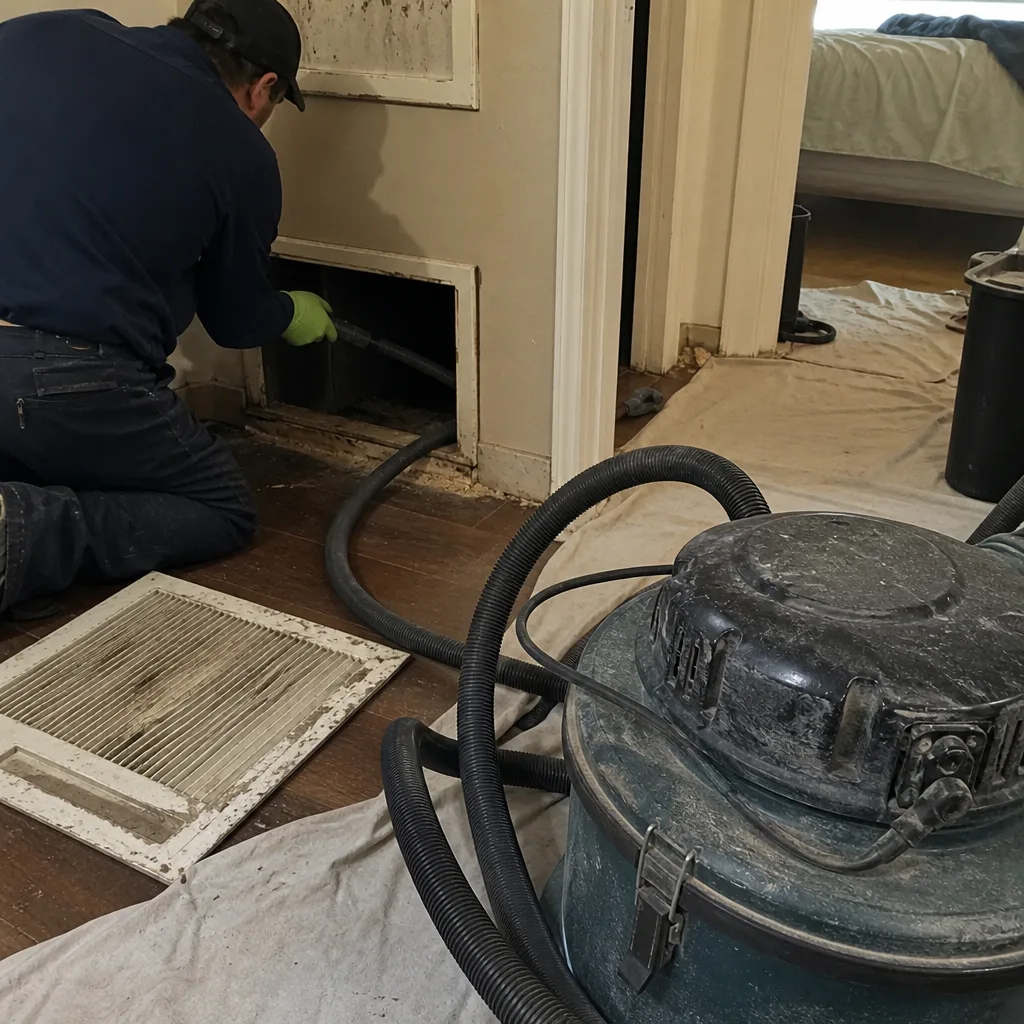 Before
 After
After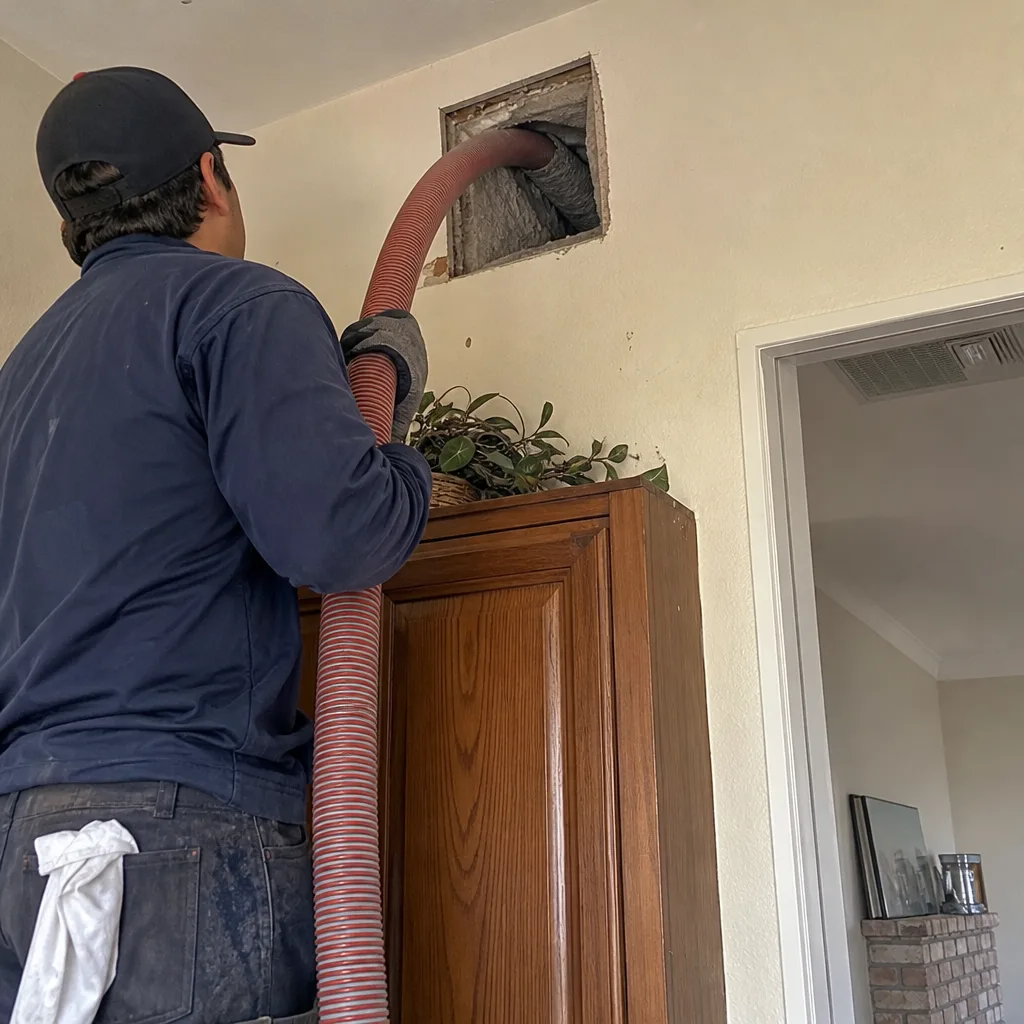 Before
 After
AfterFrequently Asked Questions
Look inside the duct with a flashlight after removing a register cover. Heavy or uneven dust accumulation on the interior walls, visible debris, mold staining, or animal droppings are direct evidence that cleaning is warranted. Surface dust on the outside of register covers alone does not indicate dirty ducts. If you’re uncertain, a professional inspection costs nothing with the right company: our San Diego team provides free inspections and will show you exactly what they see before recommending any work.
Most San Diego homes run between $350 and $700 for a complete duct cleaning, depending on home size, number of systems, and the level of contamination. Prices below $250 almost always indicate a bait-and-switch operation where the final invoice lands much higher. When you call for a quote, ask for a written price that covers the entire system before any work begins. Our team gives every customer a written price in hand before a single vent is touched, under the Kingswell Guarantee.
Low quotes in the $99 to $199 range are almost always partial cleanings: supply ducts only, no returns, or a set number of vents with additional charges per vent after that. The final bill often exceeds what a reputable company would have charged upfront. A complete cleaning includes both supply and return sides, the main trunk lines, branch runs, and the register boots. Ask any company you’re considering whether the quoted price covers the entire system in writing. If it doesn’t, expect a surprise at the end.
Ask for before-and-after photos of your own ducts. A reputable company will document the cleaning with a camera inside the ductwork. This is standard practice for us because it protects both sides: you see the result, and we have a record of the condition we left the system in. If a company refuses before-and-after photos, treat that as a red flag. Dryer vent cleaning in San Diego should follow the same standard: the technician should be able to show you the vent interior before and after.
Most San Diego homes benefit from duct cleaning every five to seven years. Homes within a few miles of the coast may need it more frequently because salt air accelerates corrosion and marine-layer moisture promotes biological growth. Homes with pets, homes that have undergone renovation, and homes where residents have allergies or respiratory conditions should move to a four-to-five-year interval. The best guide is not a calendar, though. It’s what you see when you inspect the registers.
Yes, when the ducts are actually contaminated. Removing accumulated dust, pollen, and biological material from the duct system reduces the particle load being circulated through the home. But it’s not a cure-all: the filter, the coil, and regular household cleaning all play roles in indoor air quality. If allergies are the main concern, pairing a duct cleaning with a better filtration strategy is more effective than either step alone. We stock Honeywell, Aprilaire, and Guardsman filtration products for customers who want to maintain cleaner air between service visits. Call (619) 695-0424 and we’ll talk through your specific situation.
The Bottom Line
Most San Diego homeowners will never need emergency response for a duct issue. What you need is the ability to distinguish a dirty filter from dirty ducts, a normal seasonal smell from a mechanical fault, and a watch-list item from a call-today problem. This guide gives you those tools. Check your registers twice a year: once in October before heating season, once in April before the summer cooling load hits. Note what you see. Act when the signs dictate action, and not before. When you do call, demand a written price before work starts and a guarantee in writing. They’re reasonable asks, and any company that treats them as unreasonable has told you something important about how they operate.
Written by Dale Whitmore, Owner at Kestrel Air Duct San Diego, serving San Diego since 2004.