
Last updated October 15, 2026
 Whole-home duct cleaning
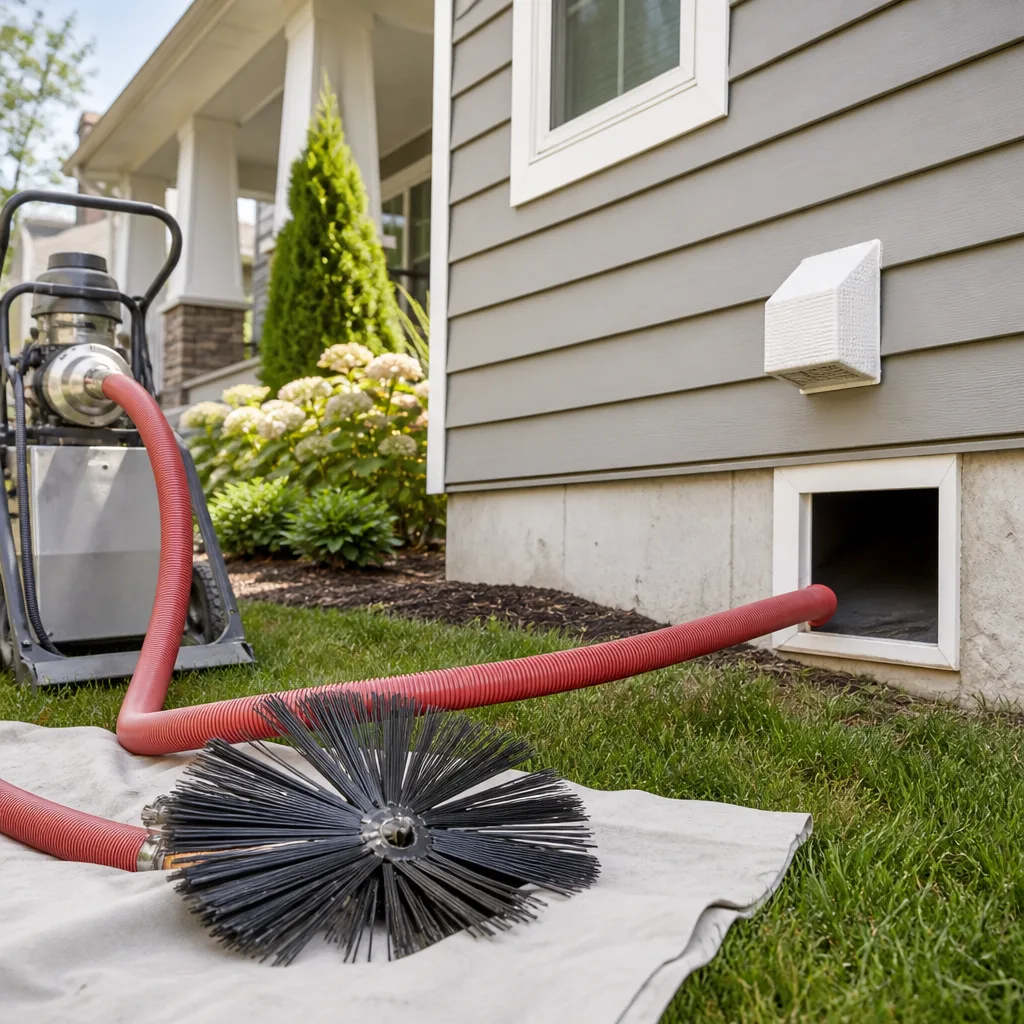
 Dryer vent cleaning
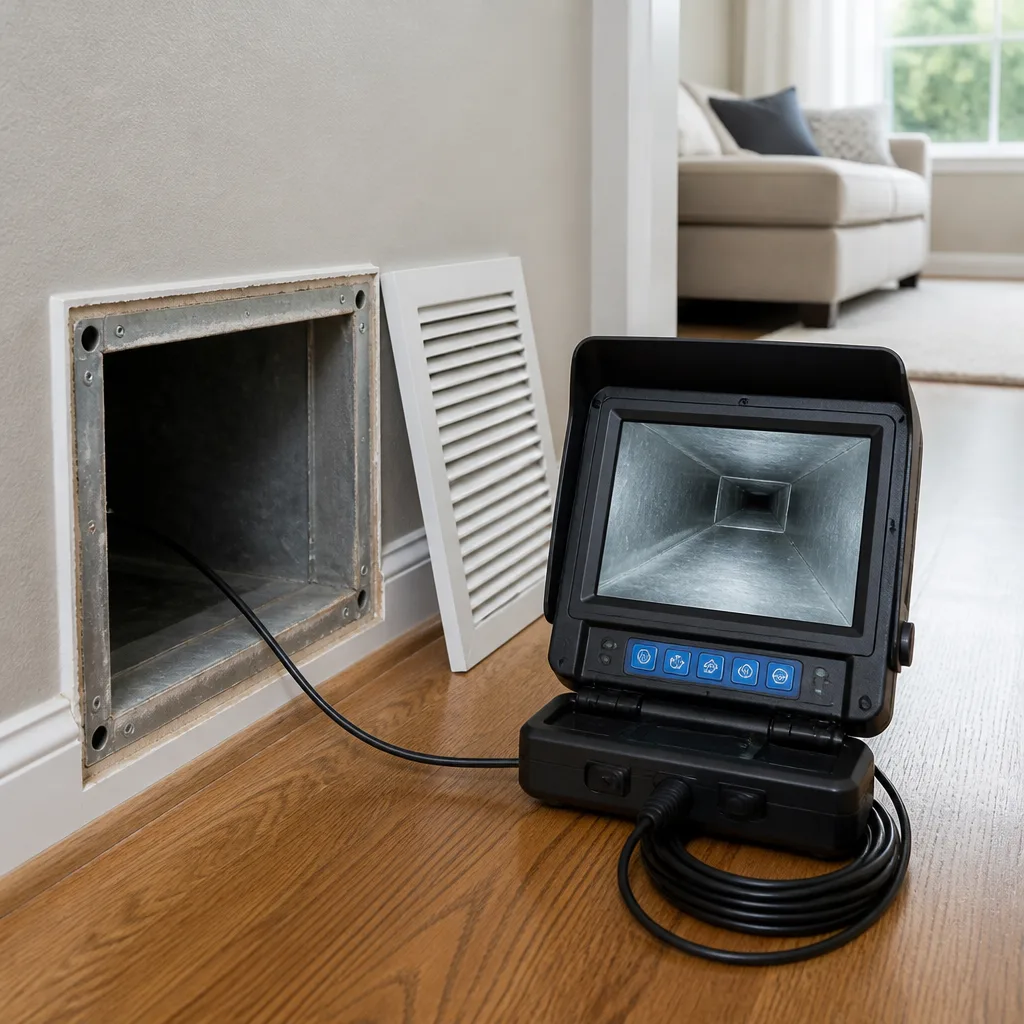 Camera inspection
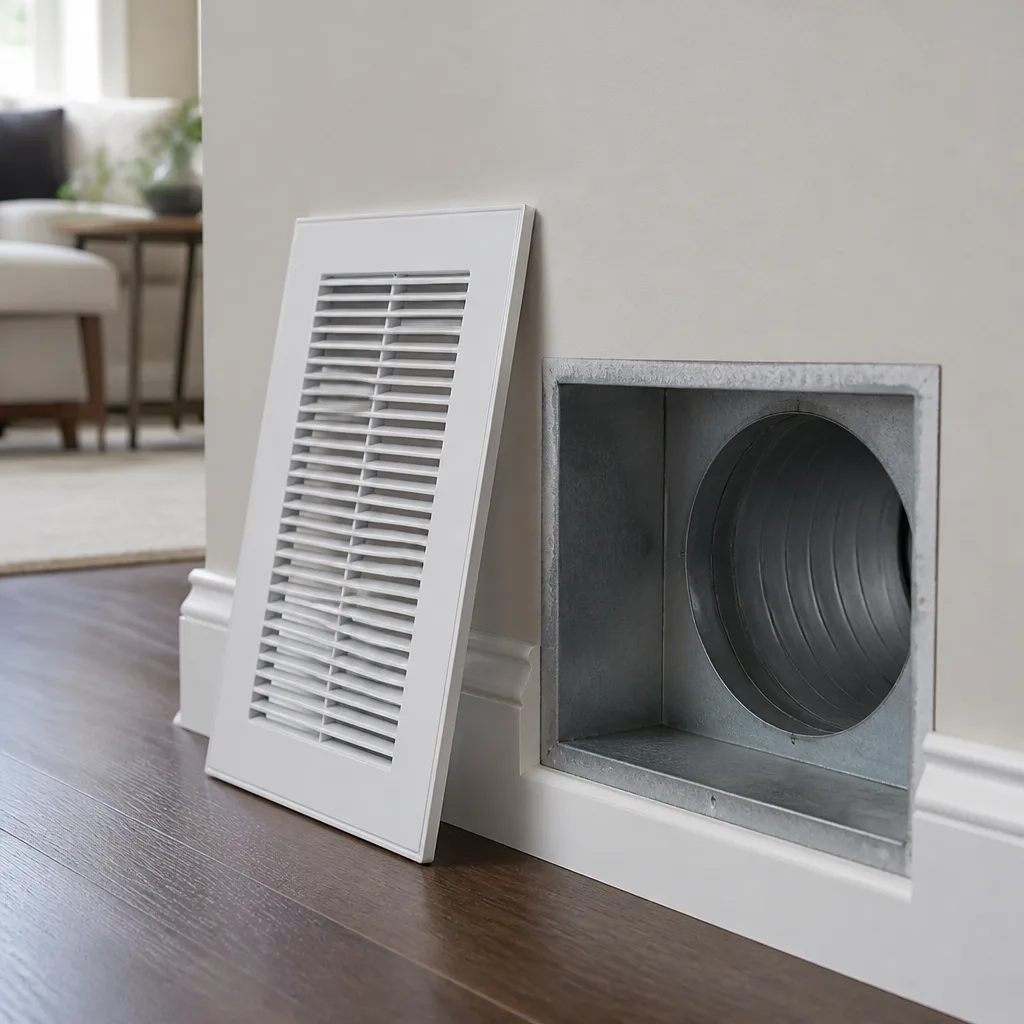 Sanitizing & deodorizing
Whole-system duct and dryer vent check with before-and-after photos - you see exactly what came out of your vents
That "$99 whole-house special" is a bait ad - the real number appears once they are in your hallway, or the "clean" is a shop-vac at the register. We photograph the inside of your ducts before and after instead.
DIY vs Professional Air Duct Cleaning: The San Diego Homeowner’s Decision Guide
Here’s a detail every “DIY duct cleaning” video skips: you can buy a dryer vent cleaning kit at Home Depot for about $30, and it works reasonably well for that job. The equivalent tool for cleaning the interior of your home’s air ducts, meaning the full supply and return network, is a negative-air machine with HEPA filtration, and renting one costs between $1,200 and $4,000 per day. In San Diego, where coastal humidity and inland dust combine to fill ductwork faster than most homeowners expect, that price gap collapses the DIY argument almost immediately. This guide walks through exactly what you can and cannot do yourself, what the tools actually cost, and when Air Duct Cleaning by a pro is not just easier but genuinely cheaper.
We’ve spent two decades working inside air ducts across San Diego and have seen what works, what fails, and what makes things worse. By the end, you’ll know which category your home falls into and what the honest numbers say about each path.
Quick Answer
For surface-level maintenance like cleaning registers, wiping return grilles, and replacing filters, DIY works fine and should be part of your routine. For any cleaning that reaches the interior surfaces of the duct runs themselves, the equipment required costs more to rent for a single day than a professional cleaning costs for an entire home. The realistic answer: maintain registers and returns yourself, and leave duct-interior work to a company with professional-grade negative-air extraction equipment.
Styles & brands we work with
Table of Contents
- What DIY Can Genuinely Handle
- What DIY Cannot Do (And Why It Matters)
- The Real Cost Comparison: Equipment Rental vs. Professional Service
- How San Diego’s Climate and Housing Stock Affects Your Ducts
- The Warranty and Liability Angle Nobody Mentions
- The Honest Recommendation Matrix
- Common Mistakes to Avoid
- When to Call a Professional
- Frequently Asked Questions
- The Bottom Line
What DIY Can Genuinely Handle
Let’s be clear about what a homeowner in San Diego can realistically do with tools from a hardware store. We’re not going to pretend DIY is worthless. It isn’t. The task is to match the work to the tool, and there are three jobs where DIY maintenance genuinely makes sense.
1. Register and return grille cleaning. Those stamped metal grilles on your walls and ceilings collect dust, pet hair, and cooking grease. You can remove them with a screwdriver, wash them in warm soapy water, dry them, and reinstall them. This takes an afternoon and should be done twice a year. It reduces recirculating dust but does nothing for the duct interiors behind the grille.
2. Filter replacement. The single highest-impact maintenance task is replacing your HVAC filter every 30 to 90 days depending on the filter’s MERV rating and the amount of dust your home generates. A dirty filter forces the blower to work harder, shortens equipment life, and allows more particulate to settle in the duct system. This is not optional maintenance, and nobody needs a professional for it.
3. Visual inspection of accessible flex duct. In many San Diego homes, particularly those built in the 1980s and 1990s, flex duct runs through accessible attics and crawlspaces. You can visually check for obvious problems: crushed sections, disconnected joints, tears in the outer jacket, or signs of rodent activity. You can also inspect the area around registers with a flashlight. What you cannot do is clean the interior surfaces of those flex ducts from a distance, and that limitation matters more than most guides admit.
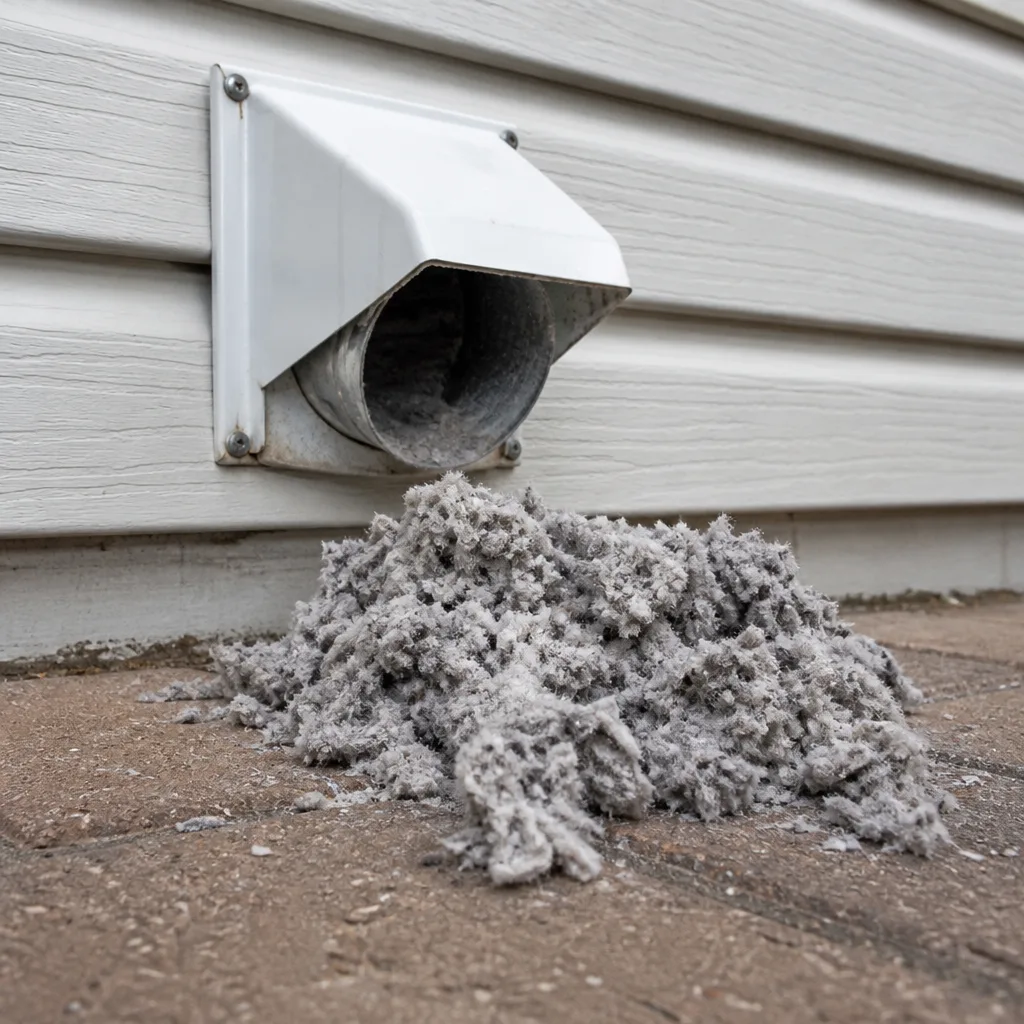
4. Dryer vent lint removal. This is the one job where a $30 kit genuinely works. A flexible brush on a drill attachment can knock loose accumulated lint from the vent run, reducing both fire risk and dry time. We cover this at length in our dryer vent cleaning guide, and we’ve seen homeowners do a genuinely competent job here. But note the difference: a dryer vent is a single short run designed for mechanical brushing from one end. Your home’s duct network is a branching system, and brushing it from the register side only pushes debris deeper into the trunk line.
What DIY Cannot Do (And Why It Matters)
The central limitation of DIY duct work is not skill. It’s physics. Meaningful interior duct cleaning requires negative-air extraction, which is the process of placing the entire duct system under controlled suction while agitating debris from the duct walls. A machine creates continuous negative pressure so that loosened particles are pulled out of the system rather than pushed into living spaces or compacted into harder-to-reach sections.
The equipment needed includes three components working together:
- A negative-pressure unit capable of 2,000 to 5,000 CFM (cubic feet per minute) of airflow. This is not a shop vac with a bigger hose. A standard wet/dry vac produces maybe 150 CFM. The professional unit produces an order of magnitude more airflow, and that airflow is what carries debris the length of the duct run.
- Rotary brush agitation with brushes sized to the specific duct diameter. Debris in ducts often adheres to the duct wall by moisture, static charge, or simple compression. Airflow alone will not remove it. The brush mechanically breaks that bond, and the negative pressure immediately removes what the brush dislodges.
- HEPA filtration on the exhaust side. When you’re pulling dust, mold spores, and rodent waste out of a duct system, the exhaust air must be filtered before it returns to the home environment. Professional units use HEPA filters rated to capture 99.97% of particles at 0.3 microns. A rented carpet cleaner or box fan creates different problems and is worse than doing nothing.
A homeowner could theoretically rent a portable negative-air machine from an equipment rental company. Some industrial suppliers in San Diego have them. The daily rental rate, as we noted, typically runs from $1,200 at the low end to $4,000 for a truck-mounted unit with the required hose adapters and filters. Most rental houses also require a damage deposit that can double the initial outlay. You would still need to buy or rent a rotary brush kit (another $300 to $600), purchase HEPA replacement filters (often $80 to $150 each), and spend a full day learning to operate the machine without tearing a flex duct. The math does not work in the homeowner’s favor. That is the point most YouTube videos conveniently omit.
The Real Cost Comparison: Equipment Rental vs. Professional Service
Most DIY-versus-professional debates turn on labor costs. Duct cleaning is different because the equipment cost alone, before factoring in time and risk, exceeds the cost of hiring a professional.
| Equipment or Service | Typical Cost | What You Get |
|---|---|---|
| Professional air duct cleaning, whole home (San Diego, 3-bedroom) | $350 to $650 | Full-system negative-air cleaning, brush agitation, HEPA filtration, typically 2 to 4 hours |
| Portable negative-air machine rental, 1 day | $1,200 to $2,500 | Machine only, no hoses in most cases, no brush kit, no HEPA filters |
| Truck-mounted negative-air unit rental, 1 day | $2,500 to $4,000 | More power, but same lack of accessories and still no experience |
| Rotary brush kit, purchase | $300 to $600 | Sized brushes and drive rods |
| HEPA replacement filters for rental unit | $80 to $150 each | Needed if you care about air quality during the work |
| Inspecting camera or borescope | $100 to $400 | To see whether the cleaning actually worked |
At the very bottom of the range, a competent DIY attempt with rented equipment costs roughly $1,700 in rental and accessory costs, plus a full day of labor and the very real risk of damaging a duct. That is roughly three times the cost of a professional cleaning for a typical San Diego home. At the top of the range, you could replace a section of flex duct and still come out ahead of the rental bill.
We arrive at most local jobs with a written price that typically falls between $350 and $650 depending on the number of systems, the size of the home, and the level of contamination. The price is agreed before work begins, and it stays that price. That comparison, equipment rental versus a complete professional service, is one a homeowner should see before deciding to go it alone.
How San Diego’s Climate and Housing Stock Affects Your Ducts
San Diego’s climate sounds gentle, from a duct perspective, but it creates specific problems that don’t show up in home-maintenance guides written for the East Coast or the Midwest. Coastal humidity keeps organic material damp enough to adhere to duct surfaces. Inland heat bakes that material into a hard film. The result is debris that resists simple airflow removal and requires mechanical agitation, the brush type we described earlier, to break free.
The housing stock adds another layer. A significant share of San Diego homes were built between 1970 and 2000, and many originally used flex duct that has now been in service for multiple decades. Flex duct is a thin plastic inner liner wrapped in insulation and an outer vapor barrier. Over time, the liner degrades, develops pinhole leaks, and separates at joints. When that happens, the system pulls air from unconditioned spaces: crawlspaces, attics, garage cavities, wall voids. That air carries fine dust, insulation fibers, and in some areas, dry rodent waste.
We see this pattern regularly in east-county and central San Diego neighborhoods where homes stretch past the 30-year mark. The ducts themselves become contaminated with material that no register-level cleaning will ever touch. Homeowners sometimes call us after trying a DIY job and noticing the air still smells stale. The odor is coming from 30 feet down the trunk line, beyond the reach of any consumer tool.
San Diego also has a significant rental-property market, and landlords in areas like Mission Valley, Pacific Beach, and North Park often need documentation that ducts were professionally cleaned as part of turnover or tenant-health complaints. A professional invoice with before-and-after photos satisfies that requirement. A weekend DIY project does not, no matter how thorough it felt. If you’re preparing a rental or dealing with a tenant request, the professional route is the only route that resolves the situation cleanly.
The Warranty and Liability Angle Nobody Mentions
Here is the part most DIY guides never address. Your central heating and cooling system represents a multi-thousand-dollar investment. Whatever you do to the ductwork attached to that system can affect the manufacturer’s warranty and your homeowner’s insurance position.
HVAC equipment warranties. Most furnace and heat pump manufacturers require documented professional maintenance as a condition of warranty coverage. If you carelessly damage a duct, and the system experiences a corresponding failure, the manufacturer can and sometimes does deny a claim on the grounds of improper maintenance. We’re not saying every claim gets denied. We’re saying the risk exists, and it is entirely avoidable at a lower cost than you probably expect.
Homeowner’s insurance. If a DIY duct-cleaning attempt collapses a flex duct, tears the liner, or drives contaminated air through the system and into living spaces, the resulting mold remediation or repair work may not be covered if your insurer determines the damage resulted from unqualified work. Mold claims following improper duct work are notoriously difficult to navigate. Some policies exclude coverage for damage arising from work performed without a licensed contractor. The cost of being wrong is not the cost of a cleaning. It’s the cost of a remediation company, and those bills start around $2,000 and rise quickly.
Mold spread. Duct systems can harbor mold, particularly in San Diego homes near the coast where humidity is high year-round. The critical risk with DIY work is not that you’ll miss the mold. It’s that you’ll hit it with a rotating brush, break the colony apart, and distribute spores throughout the house because your shop vac does not have the filtration or the negative-pressure profile to contain them. Professional negative-air extraction is designed specifically to prevent this. When we clean a system, the Abatement Technologies HEPA filtration on the exhaust side keeps loosened particles out of the living space. That equipment cost is invisible in the written quote, but it is the single most important difference between professional and DIY work.
To be blunt: the liability risk of DIY duct work falls squarely on the homeowner. When a professional performs the work, the company carries the insurance and the responsibility. That is part of what the written price covers, and it is not an optional extra.
The Honest Recommendation Matrix
No honest guide can give one blanket answer for every home. Here is the matrix we use when San Diego homeowners ask us directly whether they should tackle a job themselves or schedule a cleaning. It weighs the factors that actually determine the answer.
| Your Situation | Recommendation | Why |
|---|---|---|
| Home under 10 years old, no pets, no smokers, filters changed regularly, no respiratory conditions | DIY register maintenance and filter replacement; skip professional cleaning for now | New ducts rarely need interior cleaning. Save the money. |
| Home 10 – 25 years old, one or two pets, no visible mold, occasional allergies | DIY surface maintenance; schedule professional cleaning every 3 – 5 years | This is the maintenance sweet spot where both approaches work together. |
| Home 25+ years old, original flex duct, visible dust at registers, musty smell when system runs | Professional cleaning now; DIY maintenance between visits | Old flex duct needs mechanical agitation and negative-air extraction. DIY cannot reach the deposits. |
| Allergy or asthma in household, regardless of home age | Professional cleaning with HEPA filtration | Air quality is a medical issue, not a maintenance preference. Use the strongest tool available. |
| Rental property turnover or tenant complaint | Professional cleaning with documentation | You need a written record. DIY work produces no verifiable documentation. |
| Visible mold growth near or inside registers | Professional assessment immediately | Mold requires identification and containment. A DIY brush can spread it. |
| Recent renovation or construction dust | Professional cleaning | Construction debris like drywall dust penetrates deep into duct systems and requires negative-air removal. |
| You’ve never had ducts cleaned and home is over 20 years old | Professional first, then decide on future schedule based on what the technician documents | A baseline professional cleaning with photos tells you what you’re dealing with. |
The matrix reflects a simple principle we’ve learned from thousands of jobs: DIY maintenance extends the interval between professional cleanings, but it never replaces the need for one. The equipment gap is simply too wide.
See the difference
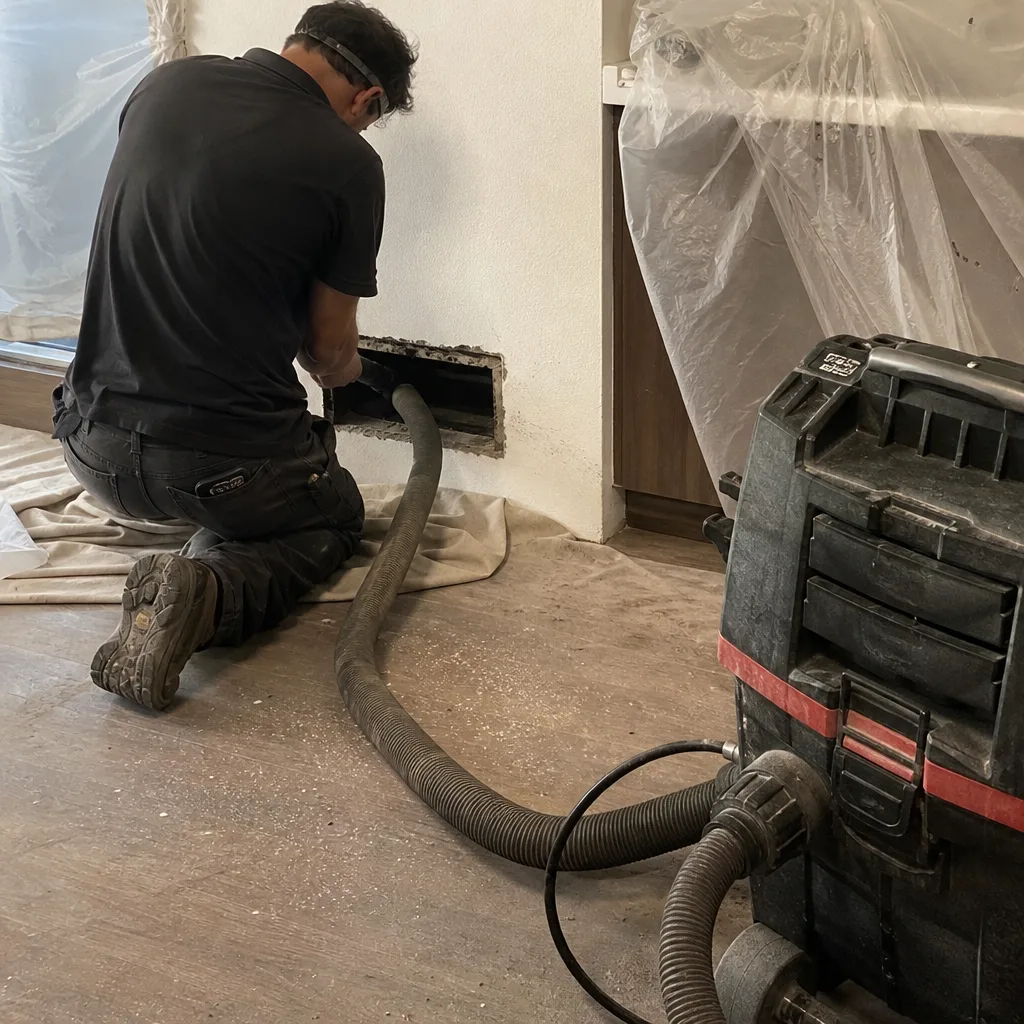 Before
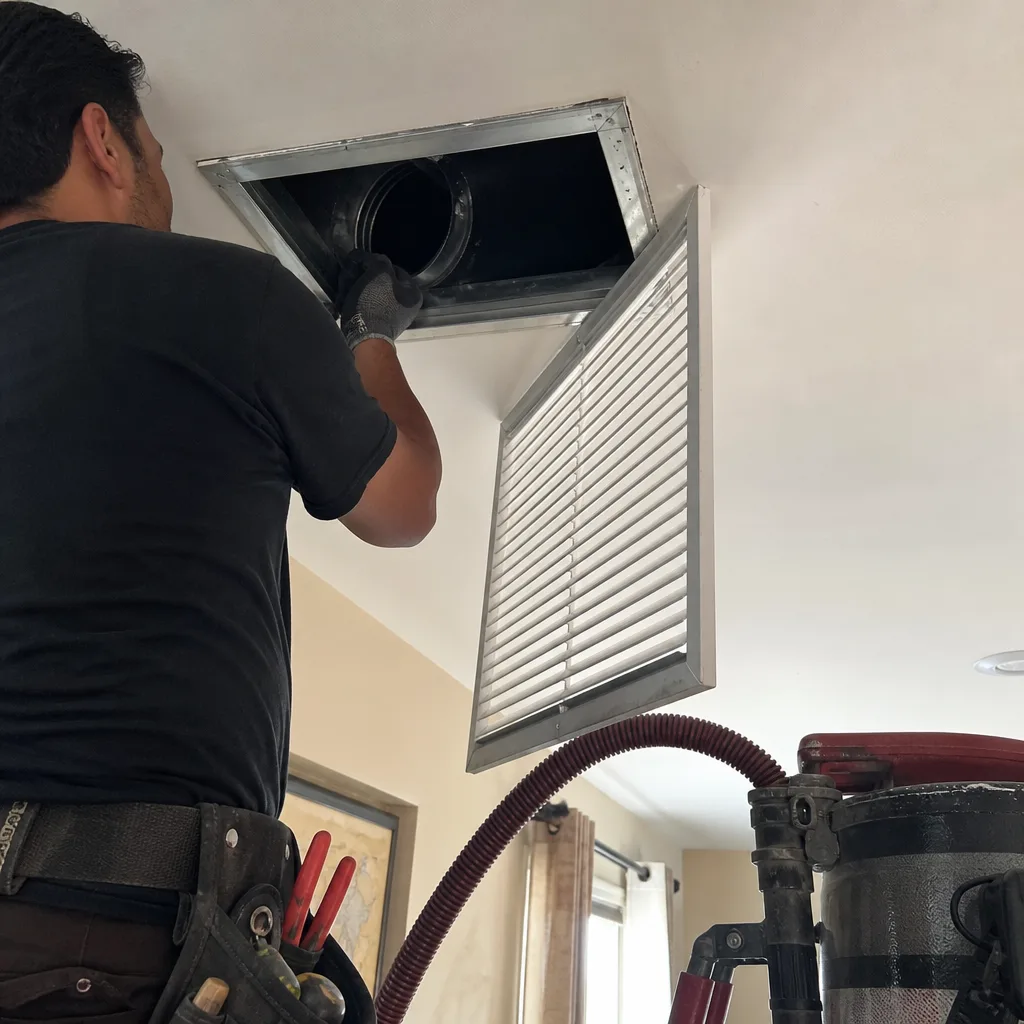 After
After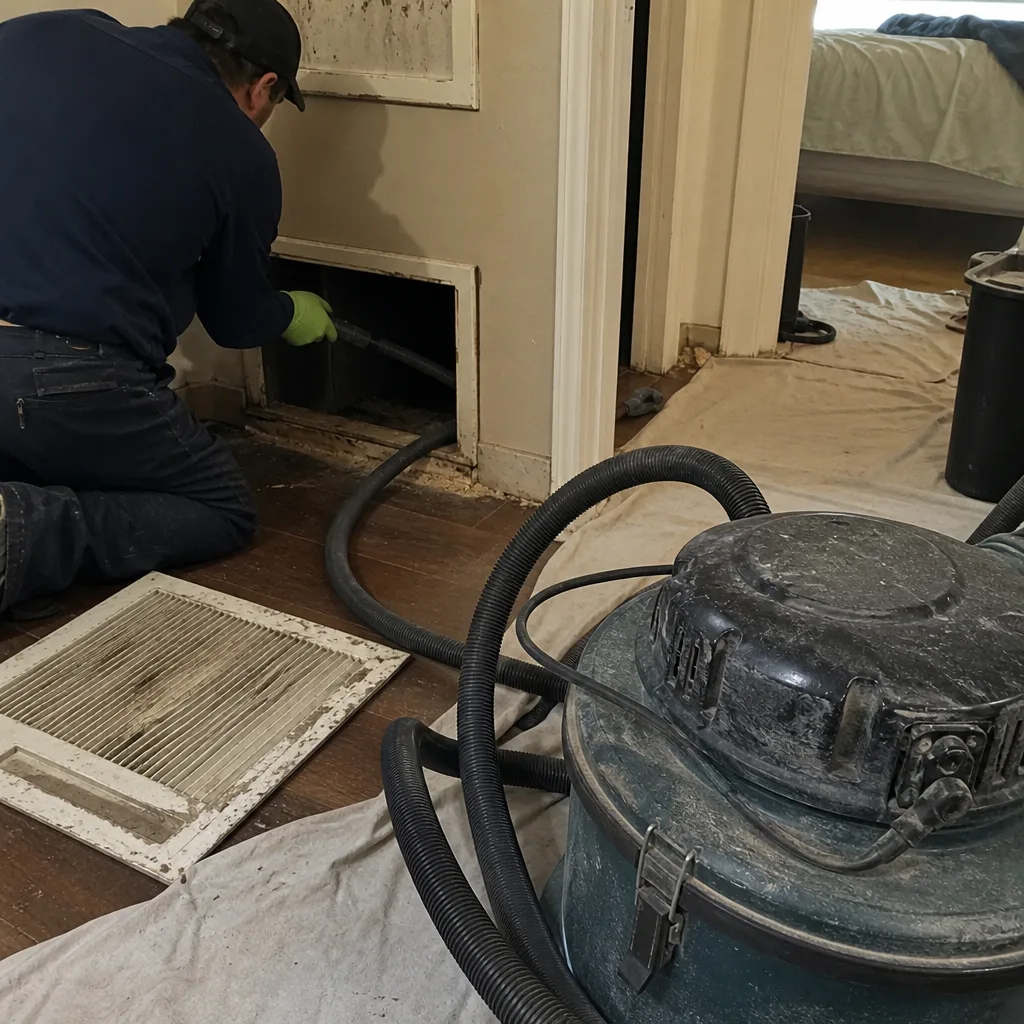 Before
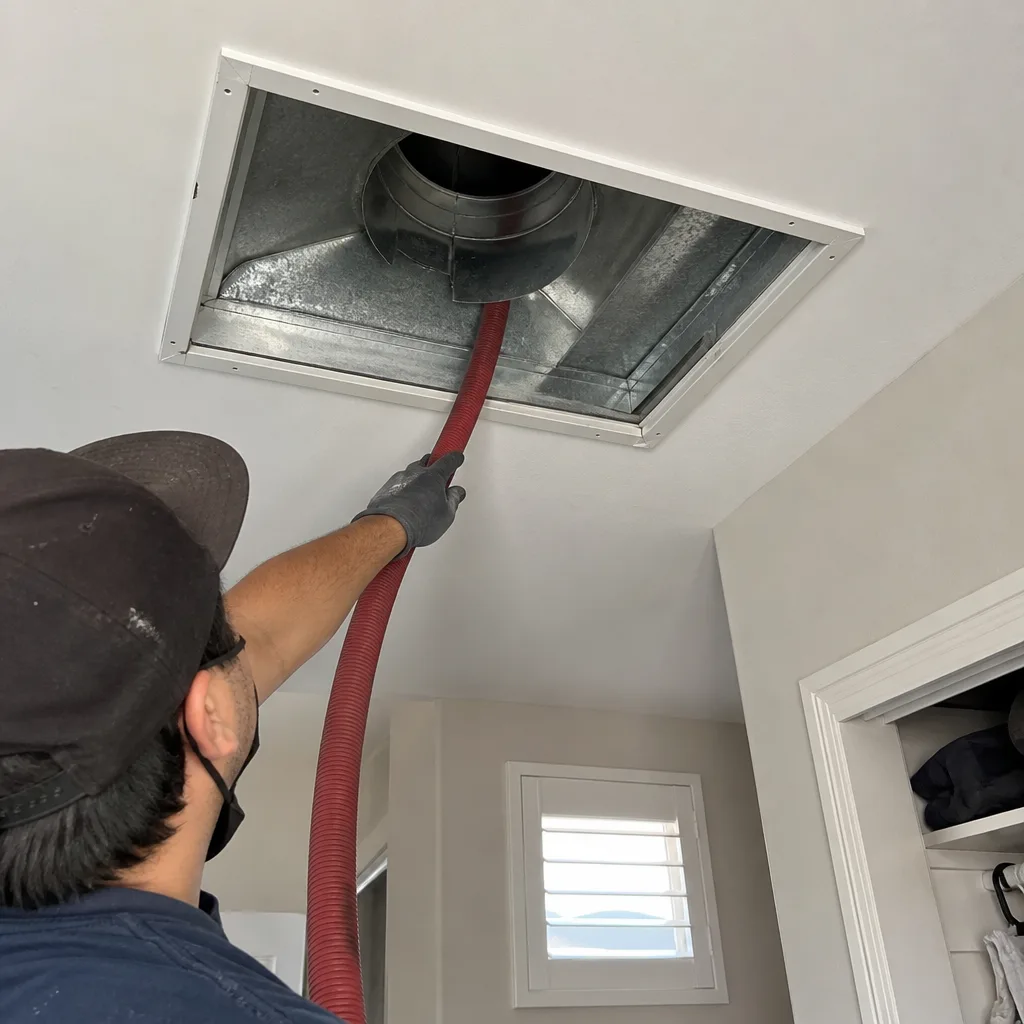 After
After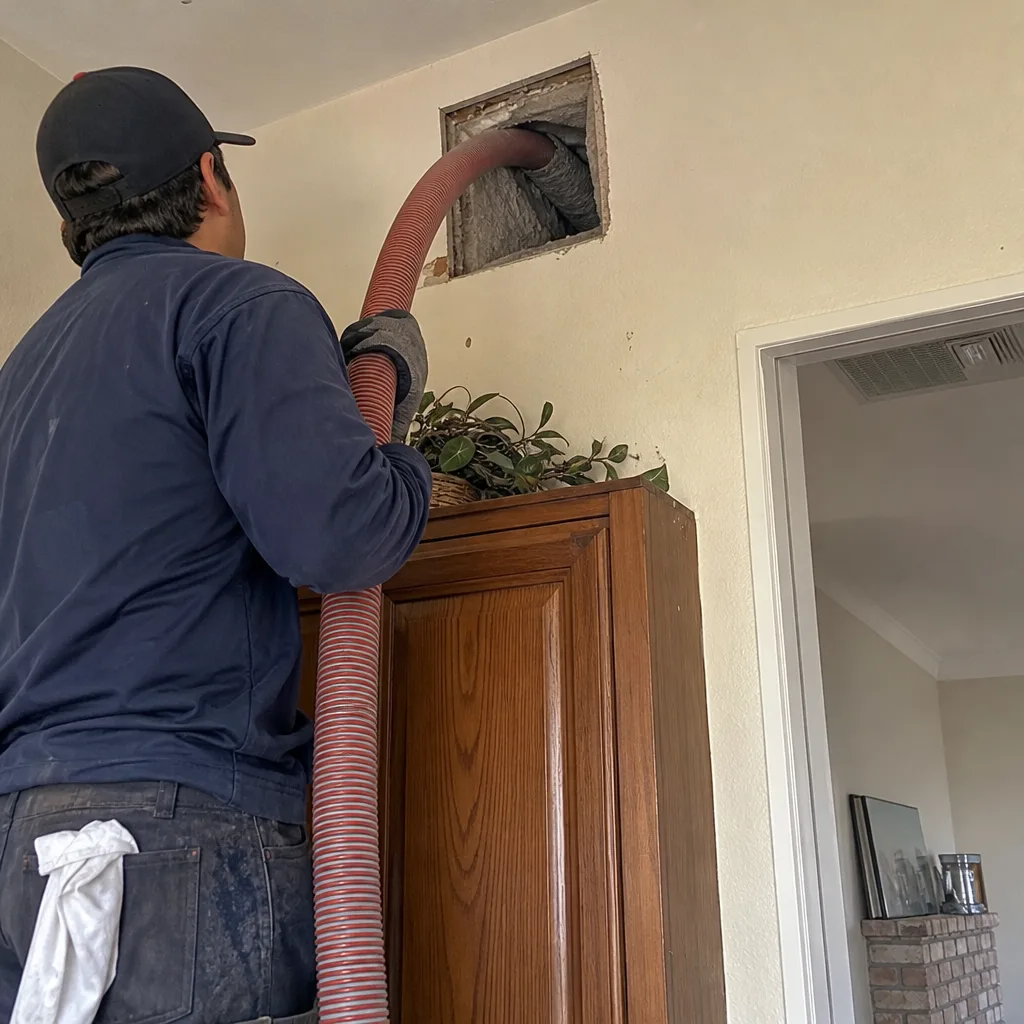 Before
 After
AfterThree Scenarios Where DIY Helps, Two Where It Hurts
To make the decision even more concrete, here are the situations where we actively encourage homeowners to do their own work, and the situations where we’ve seen DIY efforts make the eventual professional cleaning harder and more expensive.
Where DIY Genuinely Helps
- You recently had a professional cleaning and want to preserve it. Register cleaning, grille wiping, and on-schedule filter replacement keep surface debris from being drawn back into the ducts. We recommend this to every customer after a cleaning. It stretches the value of the professional work.
- You’re between tenants or preparing for a sale and everything else is already clean. If the ducts were professionally cleaned within the last two to three years and no significant contamination has occurred, a thorough surface-level DIY pass can freshen the home for showings or move-in. Check the registers before assuming this, though. If they’re dirty, the interior is dirty too.
- You’re diagnosing whether a professional is needed at all. A flashlight inspection, a look at the filter, and a sniff test at the registers can tell you a lot. If the filter is filthy after 30 days, the duct interior is accumulating at the same rate. If the registers are coated in gray dust even with regular filter changes, the ducts are the source. This diagnostic work saves you money by telling you when to skip a cleaning and when to schedule one.
Where DIY Makes Things Worse
- Brushes inserted from a register without negative pressure. This is the most common DIY mistake we encounter. The homeowner runs a flexible brush down the duct from the register side. Without continuous suction at the main trunk, the brush knocks debris loose and pushes it deeper into the system. Some of that debris ends up in the air handler cabinet, where it coats the blower motor and evaporator coil. A professional cleaning now has to address the blower and coil, not just the duct runs, and the cost goes up.
- Using a leaf blower or shop vac in reverse to ‘blow out’ the ducts. Blowing air into a return registers sends debris backward through the system. It concentrates at the filter or blows into the air handler, and in the process, it distributes fine particulate into the living space through every open register. We’ve walked into homes where a DIY blow-out covered the furniture in a visible layer of dust. The same homeowner then had to book a professional cleaning to undo the damage, which means paying twice.
The takeaway: DIY duct work that stays at the surface level helps. DIY duct work that reaches into the system without negative-air extraction makes your eventual professional bill larger, not smaller.
What Professional Equipment Actually Does, in Plain English
We use two brand families you may see referenced in the industry: Rotobrush rotary brush systems and Nikro negative-pressure units, paired with Abatement Technologies HEPA filtration. Here’s what each one does, translated out of trade language.
Rotobrush rotary brush systems are spinning brushes on flexible drive rods, pushed through the duct run from an access point. The spinning brush scrapes the duct walls, breaking the mechanical bond that holds dust, pet dander, and construction debris in place. Think of it as a powered bottle brush for ducts, sized to match the duct diameter so it scrubs evenly without leaving untouched strips.
Nikro negative-pressure units are the vacuum side of the operation. They connect to the duct system at a strategic point and pull air through the entire network at high volume. This continuous suction is what carries loosened debris out of the duct and into the machine’s filtration rather than into the living space. Without this simultaneous suction, agitation alone just relocates dust.
Abatement Technologies HEPA filtration is the barrier on the exhaust side. The machine is pulling thousands of cubic feet of air per minute through the ducts. That air exits somewhere, and if it exits into the home without filtration, the whole exercise is counterproductive. HEPA filters capture the fine particles that the negative-air flow has just removed, so the air returning to the room is cleaner than the air that went in.
This combination, brush agitation plus negative-air extraction plus HEPA filtration, is what professional air duct cleaning in San Diego should mean. If someone quotes you a price and can’t name the equipment, or worse, shows up with a shop vac and a rotary brush, you’re paying for a partial result.
Common Mistakes to Avoid
- Believing a shop vac equals negative-air extraction. A shop vac moves 100 to 200 CFM. A professional unit moves 2,000 to 5,000 CFM. The scale difference is the entire job. A shop vac can clean the first few feet of a duct from a register. It cannot clean a 30-foot run.
- Pulling the brush out without checking the filter afterward. If you run a brush into a duct and the system filter shows no significant debris collection, you didn’t clean anything. You just moved dust around. Check the filter before and after any DIY attempt.
- Cleaning ducts while the system is off and then immediately running it before re-cleaning the registers. Whatever came loose settles inside the duct. Running the fan immediately after a surface-level DIY job simply redistributes that loose material. Professional cleanings account for this with the negative-air flow during the work itself.
- Assuming a clean-looking register means clean ducts. Most contamination lives in the main trunk line and return plenum, not at the register. The register is the tip of the iceberg, and it’s the only part you can see.
- Using a high-MERV filter without checking system static pressure. San Diego homes with older single-speed blowers can struggle against highly restrictive filters. If you switch to a MERV-13 filter and your system starts short-cycling or the coil freezes, the filter may be too restrictive for the blower. This is a mechanical compatibility issue, not a cleaning issue.
- Ignoring the return side. Most DIY attention goes to supply registers because they’re visible. The return side pulls unfiltered air from the living space, and return runs often carry more debris than supply runs do. Any meaningful cleaning must address both. If your DIY work only reached the supply registers, you addressed half the system.
When to Call a Professional
Call a professional if you notice dust accumulating on surfaces within days of cleaning, if the system smells musty when the fan runs, if you’ve just completed renovation work, if allergy symptoms worsen in the home, if tenants have raised air-quality concerns, or if your home is over 25 years old and the ducts have never been cleaned. Call if you saw a video, got inspired, and realized halfway through that the brush won’t reach past the first bend. That’s not failure. That’s the same physics every homeowner hits.
Kestrel Air Duct San Diego home offers free estimates by phone. Our written price is in your hands before any work starts, and the 365-Day Done Right Promise covers a free return visit if the work falls short within the guarantee period. Call (619) 695-0424 and you’ll talk to a person, any time of day.
Frequently Asked Questions
Most San Diego homes fall between $350 and $650 for a complete professional cleaning, including negative-air extraction, brush agitation, and HEPA filtration. The price varies with home size, number of systems, and contamination level. Be wary of quotes under $100, which typically mean a crew with a shop vac doing register-level work and calling it duct cleaning. Call (619) 695-0424 for an exact quote based on your home’s specifics.
No. A shop vac produces roughly 100 to 200 CFM of airflow, while effective interior duct cleaning requires 2,000 to 5,000 CFM of continuous negative pressure. The shop vac can clean the visible space behind a register but cannot reach the main trunk line where most debris settles. The equipment rental cost alone exceeds the price of a professional cleaning.
Most San Diego homes benefit from professional cleaning every three to five years, with the interval shortened by pets, smoking, recent renovation work, or coastal humidity, as detailed in our Seasonal Air Duct Cleaning Care for San Diego: Year-Round Homeowner’s Guide. Homes with allergy-sensitive occupants may benefit from more frequent service. Homes under 10 years old with regular filter changes often don’t need cleaning at all yet.
Low-priced quotes typically reflect a different scope of work: register cleaning and superficial vacuuming rather than full-system negative-air extraction. Some companies advertise very low initial prices and then raise the total after the technician arrives. A reputable company gives you a written price before work begins and that price stands. If a quote seems impossibly cheap, it is not for the same job.
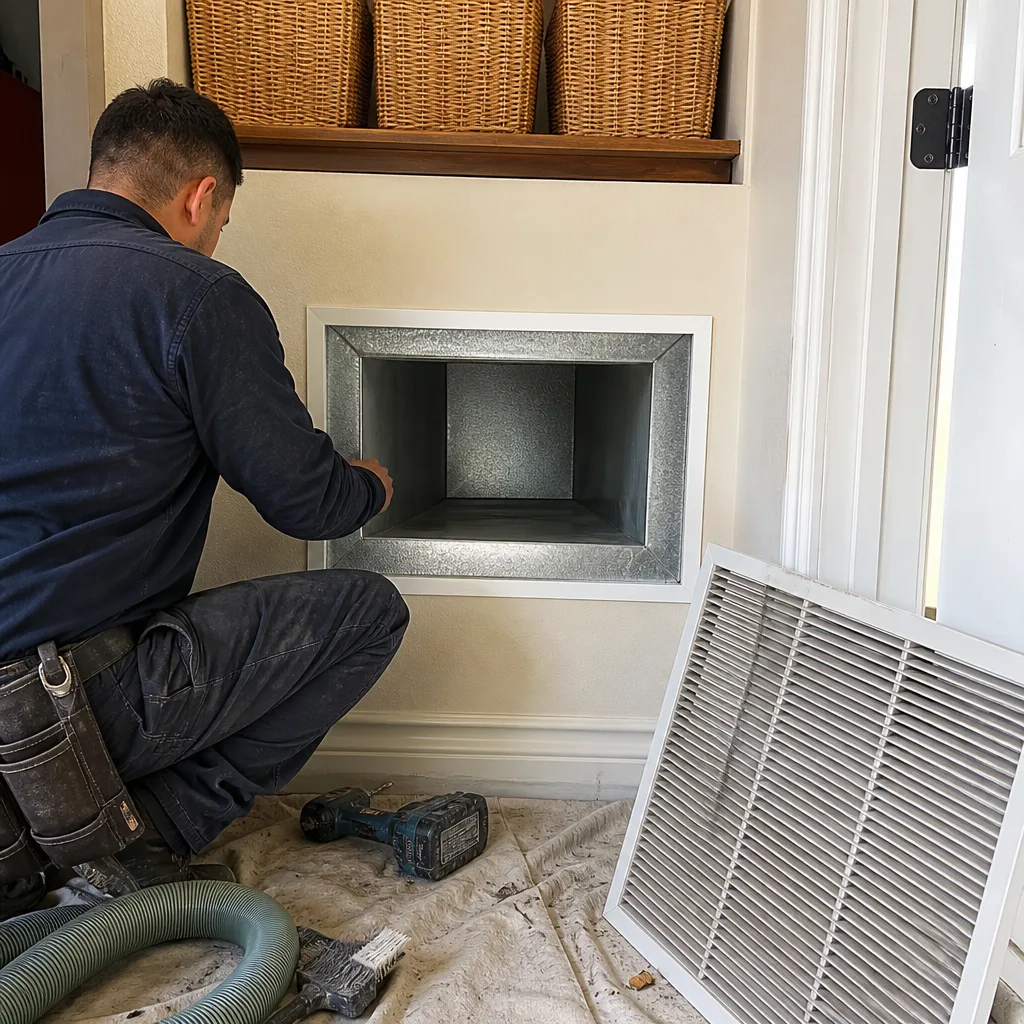
Ask for before-and-after photos of the duct interiors. Professional companies should be able to show you visual proof from inside your own ducts, not stock photos. We document every job with inspection camera images so San Diego homeowners can see exactly what was removed and what the cleaned duct looks like afterward.
Duct cleaning is not a scam when performed with genuine negative-air equipment, and it is not necessary for newer homes with clean filters. The dishonest actors are companies charging for register-level vacuuming while claiming full-system cleaning. For older San Diego homes with flex duct, pets, and coastal humidity, professional cleaning with the proper equipment removes material that would otherwise recirculate through the living space. The honest answer depends on your home’s specifics, not on a blanket yes or no.
The Bottom Line
The DIY-versus-professional question in duct cleaning has a clearer answer than most guides are willing to give. DIY maintenance of registers, returns, and filters is legitimate, valuable, and should be part of every San Diego homeowner’s routine. DIY interior duct cleaning is not a real option because the equipment required costs more to rent for one day than a professional charges for the entire job. Add in the warranty and liability risks, and the professional route is not just more thorough but more economical. Do the surface work yourself. Schedule the interior work with someone who has the negative-air machine, the brush, the HEPA filter, and the written guarantee. For additional help, see our more guides & resources.
Written by Dale Whitmore, Owner at Kestrel Air Duct San Diego, serving San Diego since 2004.