
Last updated October 15, 2026
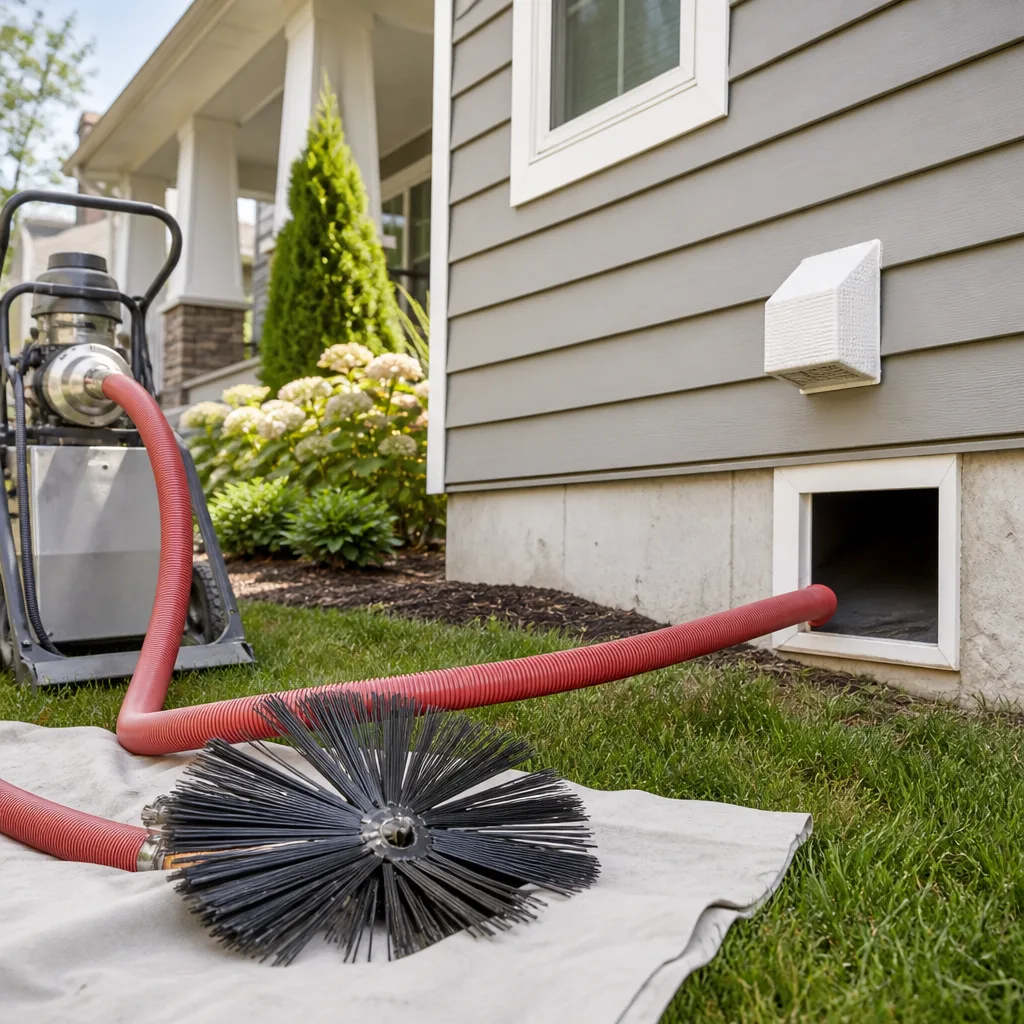 Whole-home duct cleaning
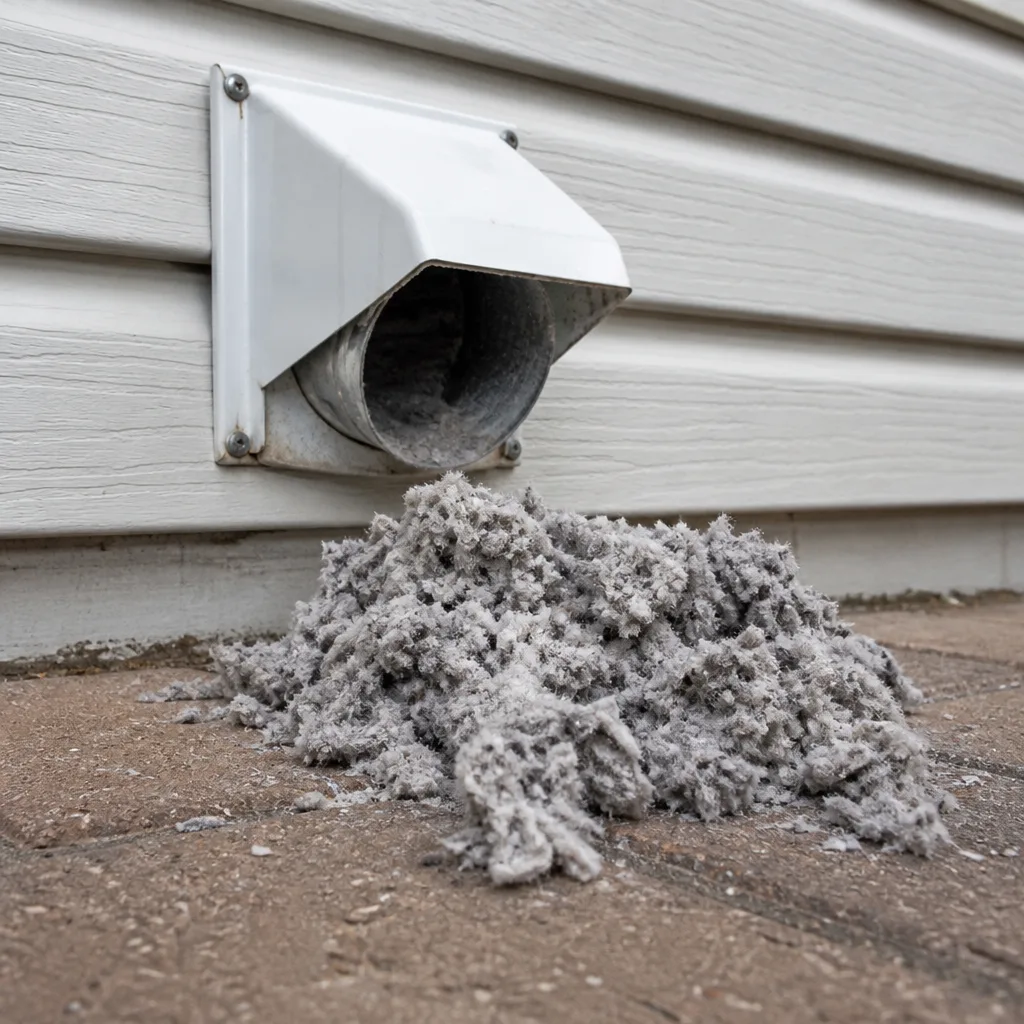 Dryer vent cleaning
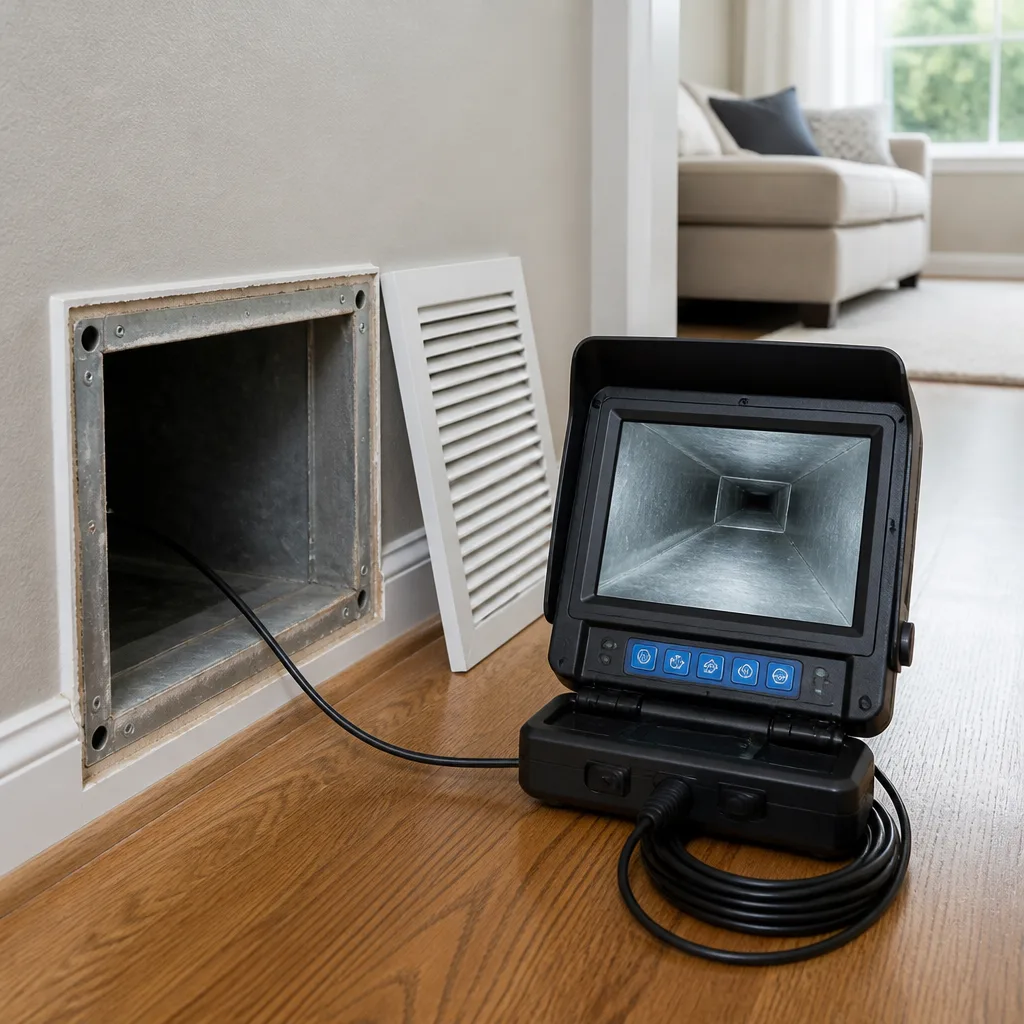 Camera inspection
 Sanitizing & deodorizing
Whole-system duct and dryer vent check with before-and-after photos - you see exactly what came out of your vents
That "$99 whole-house special" is a bait ad - the real number appears once they are in your hallway, or the "clean" is a shop-vac at the register. We photograph the inside of your ducts before and after instead.
Seasonal Air Duct Cleaning Care for San Diego: Year-Round Homeowner’s Guide
San Diego homeowners are told they don’t need to worry about seasonal HVAC care the way Phoenix or Chicago homeowners do. That’s wrong. Your ducts face marine-layer moisture in June, wildfire-ash infiltration in October, and Santa Ana dust events in November, and each one requires a different response. The region has four functionally distinct air-quality seasons, not one mild blur. If you’re only changing your filter once a year and hoping for the best, this guide will show you exactly what your San Diego duct system is up against each season and what to do about it, in plain language and with honest numbers.
Quick Answer
Seasonal air duct cleaning in San Diego means timing your maintenance around four distinct air-quality periods: the June Gloom marine layer (moisture and mold risk), summer inland heat (dust and allergen buildup), Santa Ana wind season (fine particulate infiltration), and wildfire smoke months (ash and carbon residue). Most San Diego homes benefit from a professional duct inspection once per year, with actual cleaning typically needed every two to three years unless you live in a wildfire corridor, have pets, or recently remodeled. The goal is simple: catch what each season pushes into your ducts before it recirculates through your home for months.
Styles & brands we work with
Table of Contents
- San Diego’s Four Functional Air-Quality Seasons
- June Gloom: The Marine Layer Moisture Problem
- Summer Inland Heat: Dust, Allergens, and Static Buildup
- Santa Ana Wind Season: Fine Particulate Infiltration
- Wildfire Smoke: The Ash Protocol San Diego Needs
- Pre-Season and Post-Season Contractor Check Timing
- What Duct Care Costs Per Season in San Diego
- Common Mistakes to Avoid
- When to Call a Professional
- Frequently Asked Questions
San Diego’s Four Functional Air-Quality Seasons
Here’s the thing about San Diego weather: the temperature numbers look gentle, but the air quality tells a different story. National HVAC maintenance calendars assume four seasons driven by freezing and thawing. San Diego has four seasons driven by moisture, dust, wind, and smoke. If you map your duct care to the wrong calendar, you’ll consistently clean at the wrong time and wonder why the problems keep coming back.
The four functional seasons for San Diego duct systems are:
- June Gloom season (May through early July): The marine layer parks itself over the coast and inland valleys. Relative humidity sits above 70% for hours at a time, often all day in coastal neighborhoods like Point Loma and La Jolla. Your ducts, if they leak, become condensation surfaces.
- Summer inland heat (July through September): While the coast stays moderate, inland areas like El Cajon, Santee, and Escondido regularly hit the 90s and 100s. Your system cycles harder, pulls more dust across the evaporator coil, and recirculates whatever has settled in the ductwork.
- Santa Ana wind season (October through November): Hot, dry winds blow from the east, stripping moisture from the air and carrying fine desert dust into every gap in your home’s envelope. Static electricity builds, and duct interiors collect a fine layer of grit that standard filters don’t catch.
- Wildfire smoke corridor months (August through November, peaking in October): San Diego sits downwind of some of the most active wildfire zones in the country. Smoke from local fires in the backcountry and regional fires in Riverside, Los Angeles, and even Northern California can push ash into your intake system for days or weeks at a time.
Each of these seasons stresses a duct system differently. A one-size-fits-all maintenance schedule ignores that reality. Our team at Kestrel Air Duct San Diego has worked in homes across the city since 2004, and we can tell you exactly which season left its mark on a duct system just by what we pull out of it: rust flakes and mildew from June Gloom, caked dust from summer, fine grit from Santa Anas, and black carbon residue from smoke.
If you’re new to thinking about duct care this way, our Air Duct Cleaning in San Diego page walks through what a full cleaning actually involves, equipment and all.
June Gloom: The Marine Layer Moisture Problem
June Gloom isn’t just an overcast morning that burns off by noon. In many San Diego neighborhoods, especially coastal and near-coastal areas like Pacific Beach, Mission Hills, and Clairemont, the marine layer can sit for days. Outdoor relative humidity often runs 70 to 85% for extended stretches. That moisture finds its way into your home through doors, windows, and any small opening in the building envelope. What most homeowners miss is that it also enters through leaky duct systems.
Here’s how it works. Your ductwork runs through unconditioned spaces: attics, crawlspaces, garage ceilings. When the air inside those spaces is humid and your air conditioner is running, the exterior metal surface of a supply duct can drop below the dew point. Condensation forms on the outside of the duct. Over time, that moisture invites mold growth on the duct exterior and, if seams or joints are loose, on the interior as well. We regularly see this in San Diego homes built in the 1980s and 1990s, where duct tape (the literal fabric tape, not the brand) was used to seal joints and has since dried out and peeled away.
What to do during June Gloom:
- Check visible duct runs for condensation. Look at any exposed ducts in your garage or attic. If you see water beading on the metal surface or dark staining around joints, that’s a leak indicator and a mold risk.
- Run your fan on “auto” rather than “on.” Continuous fan operation pulls humid air across a cold coil and distributes it through the ducts. Auto mode lets the coil dry between cycles.
- Replace your filter at the start of June. A wet, clogged filter becomes a mold source in its own right. Start the season clean.
- Inspect your registers for condensation rings. If you see water stains or rust around a supply register, the air coming through is colder than the room’s dew point, and that points to airflow or insulation problems worth a professional look.
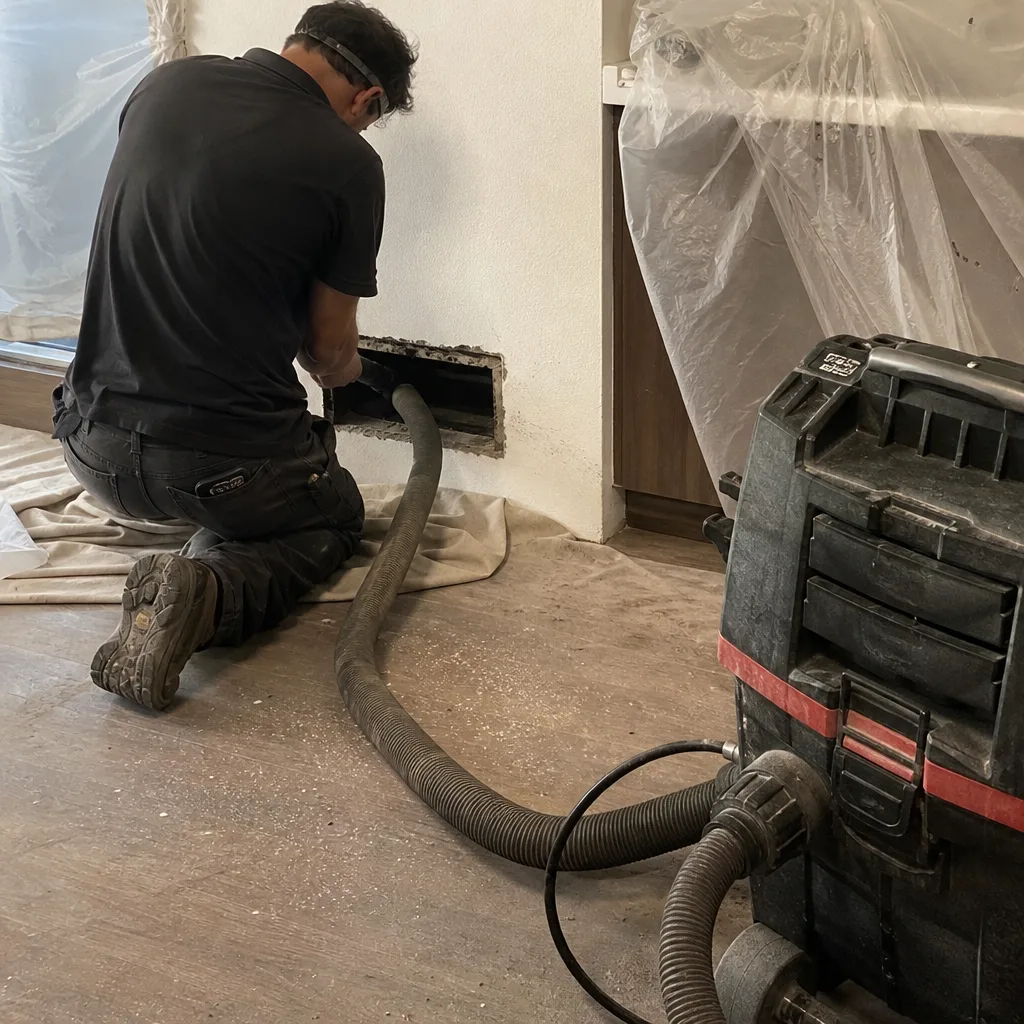
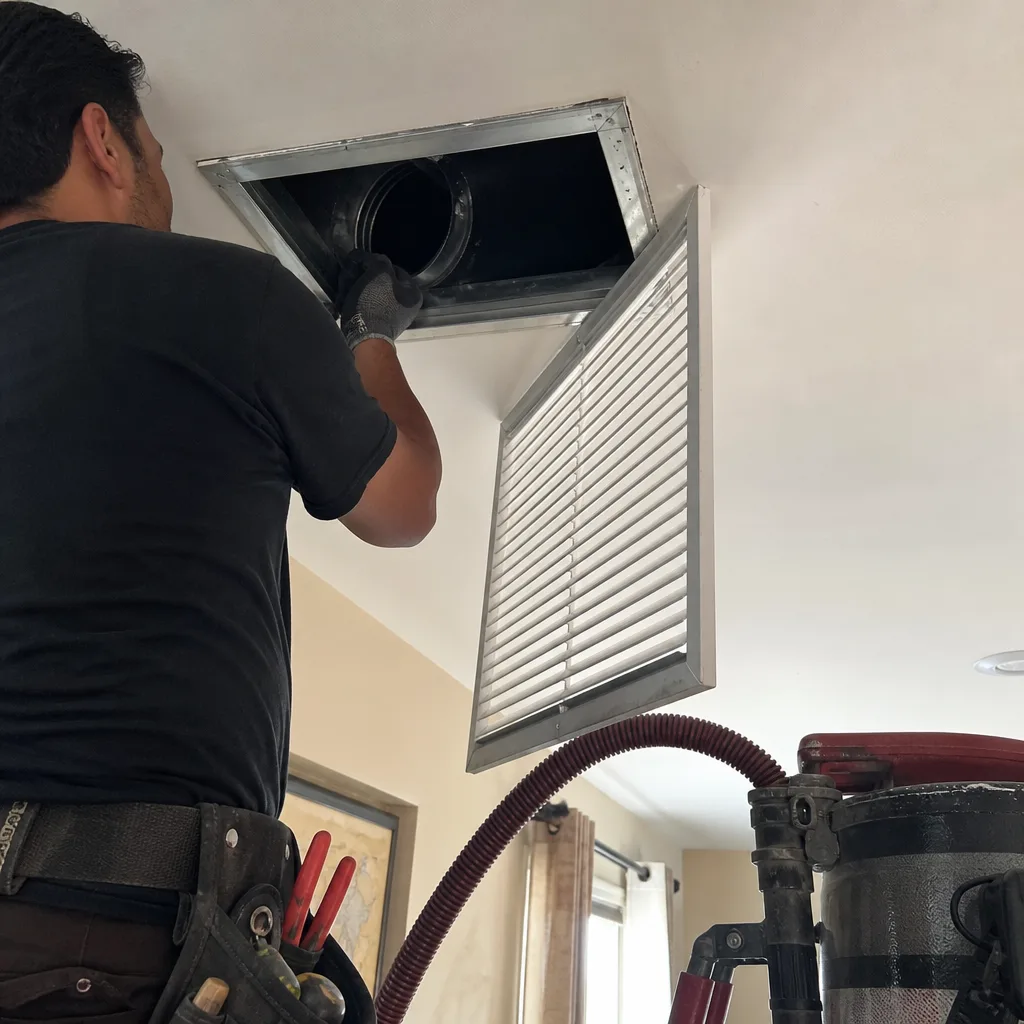
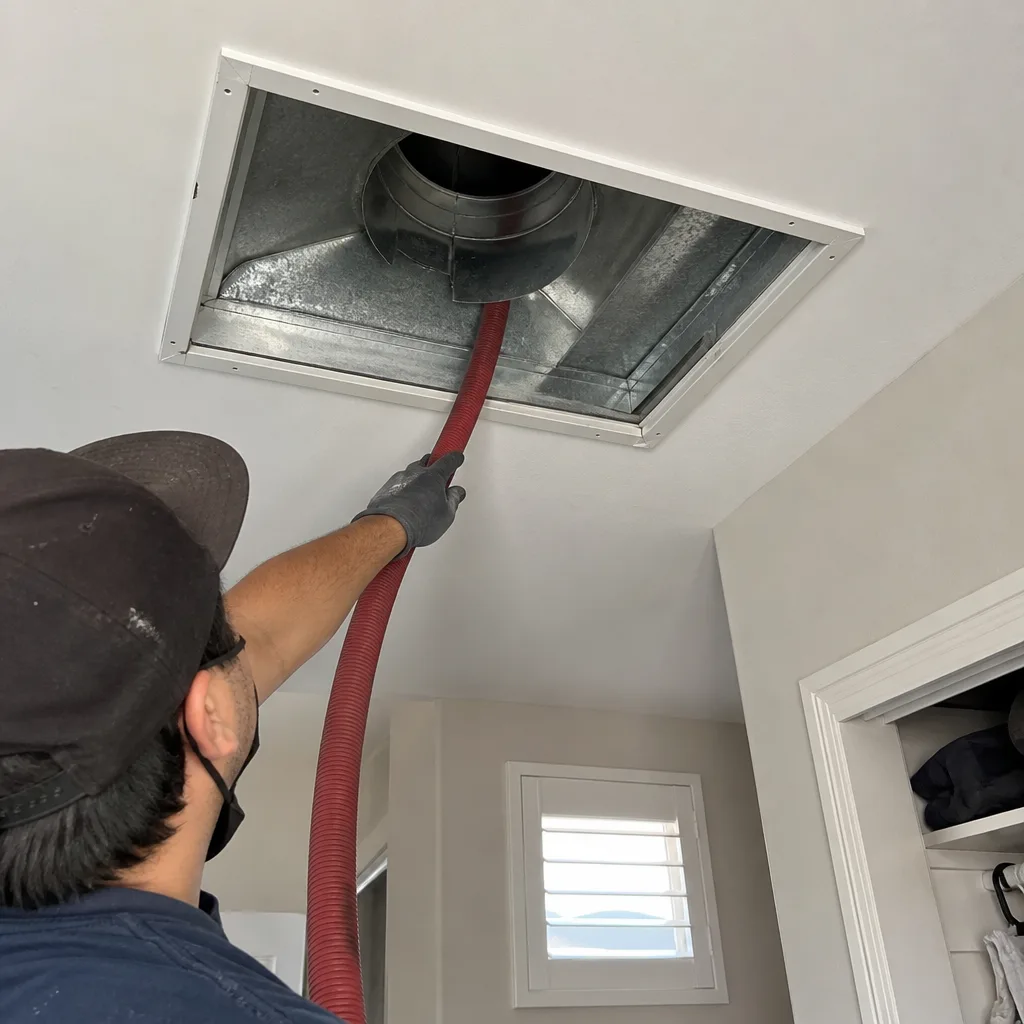
If you have a chronically musty smell in the house that worsens during May and June, that’s not your imagination. It’s often the smell of microbial growth inside ductwork that gets more active as humidity rises. A visual inspection can confirm it, and a professional cleaning with negative-air extraction removes it. That’s the process where a powerful vacuum unit creates suction throughout the duct system while a brush agitates the walls, pulling debris and biological material out rather than pushing it into your living space.
Summer Inland Heat: Dust, Allergens, and Static Buildup
San Diego’s inland valleys get genuinely hot. El Cajon, Santee, Ramona, and Poway routinely run 15 to 20 degrees warmer than downtown. Your air conditioner works harder in these areas, cycling on more frequently and running for longer stretches. That means more air moves through your ducts in July, August, and September than in any other period of the year.
All that air movement stirs up whatever has settled in the duct system. Dust, pet dander, pollen from spring, and dead skin cells all get pulled off the duct walls and pushed through your registers. Homeowners often notice a fine layer of dust on furniture within days of cleaning during these months, and they assume the house is just dusty. In many cases, the dust is being delivered by the ducts themselves.
Static electricity makes this worse. Santa Ana season hasn’t arrived yet, but inland air in July and August is dry enough that static charges build on the interior of non-metallic ducts and on the plastic components of registers. Charged surfaces attract and hold fine particles. A standard flat fiberglass filter catches maybe 10 to 15% of what passes through it. The rest goes straight into the duct system, where static makes it stick.
What to do during summer inland heat:
- Upgrade your filter before the hottest stretch. If you’re running a basic fiberglass filter, move to a pleated filter with a MERV 8 to 11 rating. Brands like Honeywell and Aprilaire make pleated filters in this range that fit most standard slots. Higher MERV ratings catch more, but too high a rating (MERV 13+) can restrict airflow in older systems, so don’t overdo it without checking your system’s specifications.
- Vacuum your return grilles monthly. The return side pulls air in, and the grille is where larger debris accumulates first. A vacuum with a brush attachment takes two minutes and keeps that material from working its way deeper into the system.
- Keep an eye on register dust patterns. If some rooms get dustier than others when the AC runs hard, that’s often a sign of a specific duct branch with a blockage or a leak that’s pulling in attic air rather than return air.
- Schedule a professional look at your evaporator coil. The coil sits in the air handler and gets wet during operation. In a hot summer, it’s also a dust magnet. A dirty coil reduces cooling and sends humid, stale-smelling air through the ducts. We’re not a coil-cleaning contractor, but a duct inspection with Kestrel often catches coil buildup and we can tell you honestly whether it needs attention.
Dale Whitmore, owner of Kestrel Air Duct San Diego, puts it this way: if you live in Santee and your neighbor in Point Loma both run the same “annual checkup” schedule, one of you is doing it wrong. Inland homes often need filter changes twice as often during summer months, and they accumulate duct debris measurably faster. That’s not a guess; it’s what we see when we open up systems in different parts of the city.
If you’re also noticing your dryer is taking longer to dry clothes during summer months, the problem may not be the dryer. Our Dryer Vent Cleaning in San Diego page explains why summer heat plus a partially clogged dryer vent is a fire risk, not just an annoyance.
Santa Ana Wind Season: Fine Particulate Infiltration
Santa Ana winds hit San Diego from the east, typically October through November. They’re hot, dry, and gusty. The National Weather Service issues high wind warnings for the passes and canyons, and wind speeds regularly reach 40 to 60 mph in the foothills and backcountry. Alpine, Lakeside, and Jamul get hit hard. The rest of the city feels the effects too because the wind carries a fine dust made of ground-up earth, pollen, and dry organic material across the entire county.
What makes Santa Ana dust uniquely problematic for ducts is the particle size. This isn’t the fluffy household dust you see on a shelf. It’s fine mineral grit, much of it in the 0.3 to 10 micron range. That’s small enough to slip past a basic fiberglass filter and lodge deep in the duct system, where normal air movement won’t dislodge it. It takes professional brush agitation to remove it. That’s exactly what the Rotobrush rotary brush system does: it mechanically scrubs the interior surface of each duct, loosening particles that are physically adhered to the walls. Then a Nikro negative-pressure unit vacuums them out while HEPA filtration keeps the loosened dust from recirculating through your living space.
What to do during Santa Ana season:
- Close windows tightly and check weather stripping. Gaps around doors and windows let in more than a breeze. During high wind events, they let in the fine dust that eventually ends up in your ducts.
- Change your filter within 48 hours after a strong wind event. A normal filter might last three months. One run through a week of Santa Anas can clog it in days. Check it by holding it up to a light: if you can’t see light through it, it’s done.
- Dust your register covers while the system is off. The screws come off easily, and a quick wipe with a damp cloth prevents that ring of gray grime from hardening.
- Schedule duct inspection in late November or early December. By then, the Santa Ana season is usually winding down, and an inspection will show you exactly how much fine grit accumulated. If it’s significant, professional extraction makes sense before the holidays, when your system runs more and the house is full of guests.
One thing we hear from San Diego homeowners after Santa Ana events is that the house “just smells dusty” when the heat kicks on. That’s because the first heating cycle of the season burns off and blows out everything that spent the fall settling into the ductwork and the heat exchanger. If that smell persists beyond a few cycles, it’s not burn-off. It’s the ducts themselves.
Wildfire Smoke: The Ash Protocol San Diego Needs
San Diego’s wildfire season has stretched longer over the past two decades. Fires in the backcountry, in neighboring Riverside County, and across the broader region now routinely push smoke into San Diego airspace from August through November. October is the peak. The Cedar Fire in 2003, the Witch Creek Fire in 2007, and more recent blazes in the backcountry have all left San Diego homes with smoke and ash infiltration that hangs around long after the sky clears.
Wildfire smoke is more dangerous to a duct system than ordinary dust. The smoke carries carbon particles, volatile organic compounds, and fine ash that is both abrasive and chemically active. Ash particles are jagged under a microscope, and they embed themselves in duct walls, filters, and evaporator coils. More importantly, the smell persists. Ductwork is a series of long metal tubes, and smoke odor becomes trapped in the dust and debris lining those tubes. Running the fan won’t clear it. Air fresheners won’t clear it. The only way to remove trapped smoke residue is mechanical agitation plus extraction.
Here’s the protocol we recommend for San Diego homeowners after a meaningful wildfire smoke event. What counts as “meaningful”? If you could smell smoke inside your house, if you saw ash on your car or windowsills, or if there was an air quality alert for smoke in your specific ZIP code, the event was meaningful. If the sky was hazy but you couldn’t smell smoke indoors and saw no ash, a filter change is probably sufficient.
- Change your air filter immediately after the air clears, and again 30 days later. Smoke clogs a filter far faster than normal dust. The first filter catches the immediate load. The second catches what worked its way back into recirculation.
- Wipe all register covers and visible surfaces. Use a damp cloth. Ash is abrasive and fine, and dry wiping just moves it around.
- Run your system fan continuously for 24 hours with fresh filters in place. This pushes remaining fine particles into the filter rather than letting them settle.
- Wait about two weeks, then inspect the registers inside each room. If you see dark or gray residue accumulating again, that’s smoke particles working their way out of the duct deposit. It means the ducts themselves are holding smoke residue and need professional extraction.
- Consider professional duct cleaning after any severe smoke event. If the smoke was heavy enough to leave a smell in your home for more than a week, or if anyone in the household experienced respiratory irritation during the event, a full cleaning is called for. The Abatement Technologies HEPA filtration used during Kestrel cleaning captures particles down to 0.3 microns, which is the size range where smoke particulate lives.
The mistake we see most often is homeowners changing the filter once and assuming the problem is handled. The filter handles what’s passing through the system. It does not handle what has already settled inside the ducts. That material stays there, releasing odor and particles into the air every time the system runs, for months after the smoke has cleared.
Pre-Season and Post-Season Contractor Check Timing
Most national home maintenance calendars tell you to have your ducts checked in the spring and fall. That advice is based on a four-season heating and cooling cycle that doesn’t match San Diego’s actual weather. The real San Diego HVAC demand curve has two distinct peaks: the first in late May and early June, when the marine layer is at its thickest and temperatures start climbing inland, and the second in late October, when Santa Anas begin and homeowners fire up the heat for the first time in months.
Here’s the timing we recommend based on what we see across San Diego service calls:
- Late April to mid-May: Pre-June Gloom inspection. This is the best window for catching moisture damage from the winter rain season before it gets worse. Technicians are less booked than they’ll be in June. If you’re going to have ducts cleaned this year, this is the sweet spot for inland homeowners.
- Late September to early October: Post-summer, pre-Santa Ana check. The system has just finished its hardest working months. This inspection will catch summer dust accumulation before the Santa Ana winds add a fresh layer. It also gets you ahead of the holiday rush when contractors are slammed.
- Mid-November to early December: Post-Santa Ana, post-fire-season assessment. If you skipped the early fall check and the season was active, this is the catch-up window. Expect higher demand, so schedule a week or two in advance.
- January through March: The quiet season. This is when you can get the best scheduling flexibility in San Diego. The weather is mild, systems aren’t working hard, and any issues found can be addressed without urgency. If you’ve been putting off a cleaning, January is the time to book it.
- Using the cheap fiberglass filters year-round. They catch almost nothing. In a city with as much fine dust and smoke as San Diego, that means your ducts become the filter. A $30 pleated filter is not where you should save money.
- Assuming a clean-looking register means clean ducts. The register is the last point before air enters the room. Duct contamination happens upstream, often in the return side or the main trunk line. Looking at the register is like judging a river by the water at the mouth.
- Waiting until the smell is obvious. By the time you can smell mold, smoke, or accumulated dust coming through the vents, the contamination is well established. Earlier intervention is cheaper and faster. A duct inspection in the spring is a checkup; a duct cleaning in November because the house smells like a campfire is an emergency.
- Hiring a cleaner who quotes per vent. In San Diego, duct cleaners who quote per vent will often arrive and “discover” more vents than the homeowner counted. Kestrel quotes one price per system, written before work starts, and it doesn’t move. If a contractor gives you a per-vent price, ask why the number of vents wasn’t established in advance.
- Skipping the post-wildfire filter change because the filter “looks fine.” Smoke clogs filters at the microscopic level. A filter that looks passable can still have significantly reduced airflow. Change it after any smoke event where you smelled smoke indoors.
- Scheduling duct cleaning during October or November without a specific reason. That’s peak demand from reactive calls. If you can wait until January, you’ll get better scheduling flexibility and often a calmer experience. If you need it in October because of smoke, don’t wait. But if it’s just on your to-do list, push it to the quiet season.
- Visible mold growth on or near duct surfaces. Any dark staining around seams, joints, or register openings. This is a health issue and a system issue, and it needs professional assessment.
- Persistent musty smell that gets stronger when the system runs. Especially if it intensifies in May and June, when San Diego’s marine layer raises humidity.
- Fine dust accumulating within days of cleaning. If you wipe a surface and it’s dusty again in 48 hours, the ducts are probably the source.
- Smoke odor inside the home for more than a week after a wildfire event. The smoke particles are embedded in the duct system.
- Visible debris blowing out of registers. If you can see fibers, dust clumps, or dark particles exiting the vent when the system runs, there’s a significant accumulation somewhere upstream.
One thing worth knowing: the cheapest time to hire a duct cleaner in San Diego is usually January through March, simply because demand drops. For Air Duct Cleaning Cost Breakdown: The San Diego Homeowner’s Reference for 2026, see our detailed pricing guide. The most expensive time is October and November, when wildfire smoke and Santa Ana season drive reactive calls. Planning ahead saves real money.
Kestrel Air Duct San Diego schedules inspections and cleanings year-round. We’re not seasonal in the sense that we shut down or reduce staff; the crews work the same schedule all year and answer the phone with a live person 24/7, whether it’s 2 p.m. on a Tuesday or 3 a.m. on a Sunday.
What Duct Care Costs Per Season in San Diego
Here’s a straightforward budget. These are the numbers we quote to San Diego homeowners when they ask what to expect. Most homes in San Diego run between $350 and $600 for a full professional air duct cleaning, depending on the size of the home, the number of ducts, and the level of contamination. A duct inspection is less expensive, and many contractors, including Kestrel, bundle the inspection cost into the quote if you proceed with cleaning.
Breaking it down by season:
| Season | Typical Action | Estimated Cost |
|---|---|---|
| Late spring (May) | Filter upgrade + maybe inspection | $20 – $60 for a pleated filter; inspection $75 – $150 if not bundled |
| Summer (Jul – Aug) | One or two extra filter changes | $20 – $60 per filter |
| Fall (Oct – Nov) | Post-Santa Ana inspection or full cleaning | $75 – $150 for inspection; $350 – $600 for full cleaning |
| Winter (Jan – Mar) | Full cleaning at lower demand pricing | $350 – $600, with better scheduling flexibility |
These are whole-system prices, not per-vent charges. We don’t do per-vent pricing because it creates an incentive to inflate the vent count at the door. Kestrel gives one written price for the entire system before work starts, and that number doesn’t change when we arrive. The Kingswell Guarantee requires it: the written price is in your hands before a single vent is touched.
If your home has never had its ducts cleaned and you’ve lived there more than five years, budget for a full cleaning in the first year. Our Air Duct Cleaning Maintenance Checklist for San Diego Homeowners walks you through what to schedule and when. After that, inspections every year and a cleaning every two to three years keeps most San Diego systems in good shape. Homes with pets, smokers, or a location in a high-fire-risk corridor like Ramona or Alpine may need more frequent attention.
Common Mistakes to Avoid
We’ve been cleaning ducts in San Diego since 2004, under the Kingswell Guarantee. Here are the mistakes we see repeatedly:
None of these mistakes are expensive individually. Added up, they mean years of recirculating air passing through ducts that are more contaminated than the homeowner realizes.
When to Call a Professional
Duct work involves long metal runs, some of them in tight attic and crawlspace spaces. It’s not a job for a shop vac and a weekend. Here are the specific situations that justify calling a pro:
Kestrel Air Duct San Diego offers free estimates in San Diego. If you’re not sure whether you need a cleaning or just a filter change, call (619) 695-0424 and describe what you’re seeing. We’ll tell you honestly whether a service call makes sense. That’s the Kestrel Air Duct San Diego home to more detailed service information.
Frequently Asked Questions
Most San Diego homes need professional duct cleaning every two to three years. That’s more frequent than the national average recommendation of three to five years, and the reason is San Diego’s specific air-quality profile: marine-layer humidity, Santa Ana dust, and recurring wildfire smoke. Homes in inland valleys like El Cajon and Santee, homes with pets, and homes in smoke corridors like Ramona and Alpine may need annual cleaning. The only way to know for sure is an inspection, which is inexpensive and takes less than an hour. Call (619) 695-0424 and we’ll help you figure out where your home falls.
The cheapest quotes almost always come from contractors using shop-vac-based equipment that can’t reach the full duct run, or from companies that quote a low price per vent and then inflate the vent count at the door. Kestrel uses professional-grade Rotobrush rotary brush systems and Nikro negative-pressure extraction units on every job, and we give one written price for the whole system before any work starts. That price doesn’t change when the tech arrives. If a quote is dramatically lower than the $350 to $600 range for a whole-home cleaning, ask what equipment is being used and whether the price covers the entire duct system or just a portion of it.
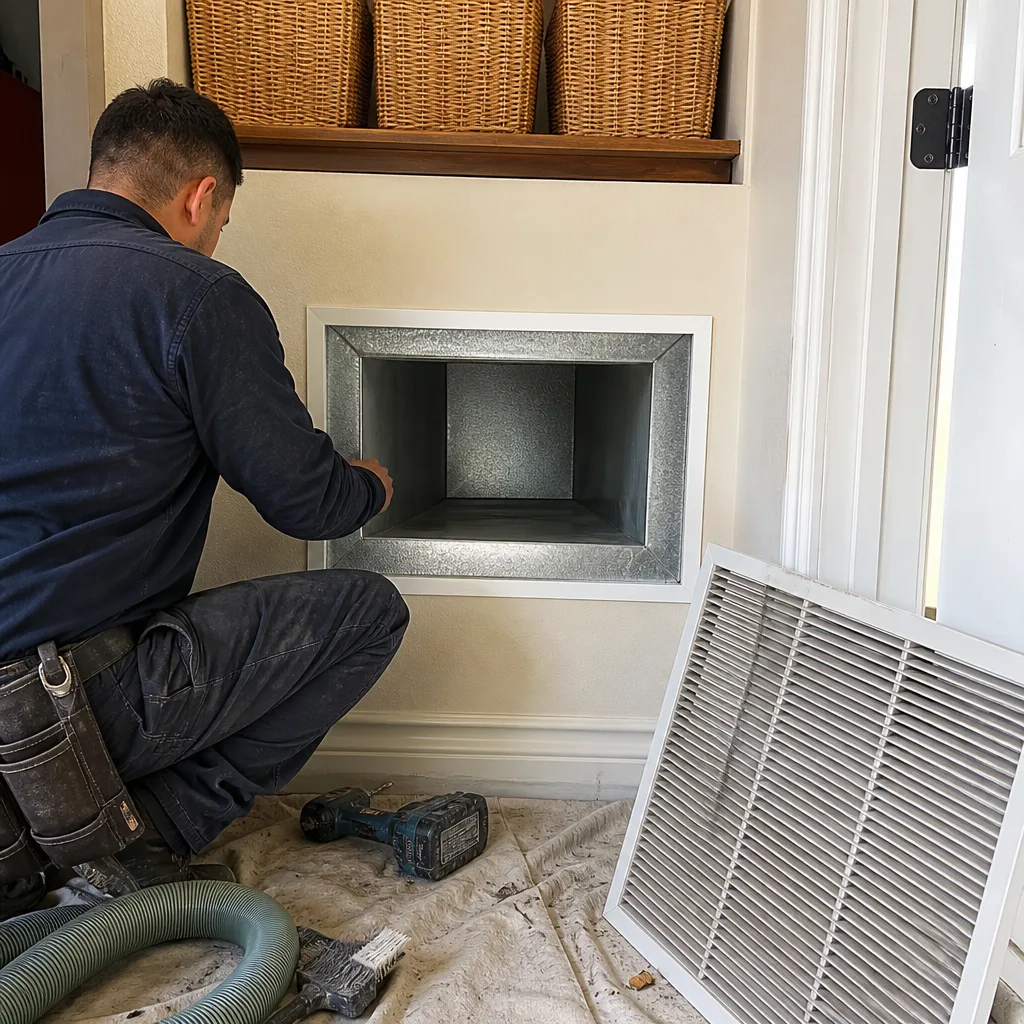
Ask for before-and-after photos of the duct interior. Any legitimate duct cleaner in San Diego should provide these. The photos show the duct walls before cleaning (coated with dust, debris, sometimes mold staining) and after (bare metal, clearly visible). Kestrel documents every job this way because it’s the only way to verify the work. We also operate under the Kingswell Guarantee, which puts in writing that if the work falls short within 365 days, we return and make it right at no charge. If a contractor won’t show you the inside of your ducts before and after, that’s a red flag.
It’s real, and it’s measurable. Marine-layer humidity in San Diego routinely sits above 70% for days at a time in May and June, and that moisture enters unconditioned spaces through the building envelope. When it encounters cold duct surfaces, condensation forms. Over repeated cycles, that creates conditions where mold can grow on dust inside the ducts. The risk is highest in older homes with uninsulated or poorly sealed ductwork. Homes built before 2000 are especially vulnerable because duct sealing standards were looser. An inspection in late spring catches condensation damage before it becomes a mold problem.
Set the system fan to auto, not on. Continuous fan operation pulls wind-driven dust into the duct system faster than necessary. Keep windows closed tightly and check for gaps around door and window frames, especially on east-facing walls. If you have a pleated filter, check it after the wind event ends; Santa Ana conditions can clog a filter in days. And if you can taste dust in the air inside the house, that’s a sign that fine particulate is entering somewhere and your duct system is likely collecting it. Schedule an inspection before the holiday season.
Yes, and the key word is “written.” The 365-Day Done Right Promise is part of the Kingswell Guarantee that Kestrel has operated under since 2004. It states in writing that if the work falls short within 365 days, we return and make it right at no charge. You don’t need to argue your case or prove anything to a call center. Call (619) 695-0424, tell us what’s wrong, and we schedule the return visit. The promise covers the duct cleaning work we performed: if the same contamination returns because we missed something, we’re back at no charge. That’s not a courtesy; it’s the guarantees we’ve operated under since 2004, founded under the Kingswell Guarantee and reflected in every job.
The Bottom Line
San Diego’s mild climate does not mean a maintenance-free duct system. It means four distinct air-quality seasons, each of which attacks your ducts in a specific way: marine-layer moisture in May and June, summer dust and allergens from July through September, Santa Ana fine grit in October and November, and wildfire smoke that can arrive any time from August through November. The response that works in Chicago doesn’t work here. Schedule inspections in late April and late September, change filters seasonally, and plan for a full professional cleaning every two to three years at $350 to $600 per system, quoted in writing before any work begins. For more guides & resources on keeping your system healthy year-round, visit our blog. Your ducts are the lungs of the house. Treat them like it.
Written by Dale Whitmore, Owner at Kestrel Air Duct San Diego, serving San Diego since 2004.
See the difference
 Before
 After
After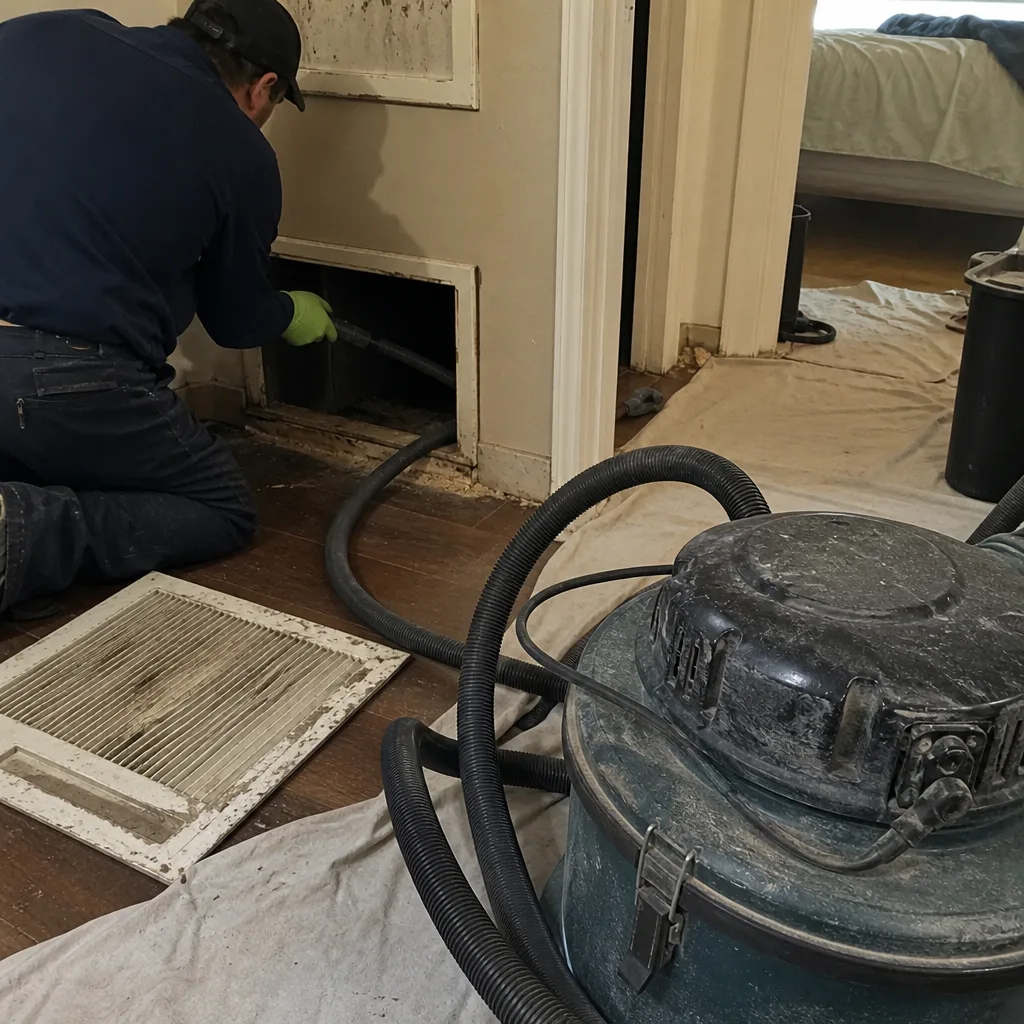 Before
 After
After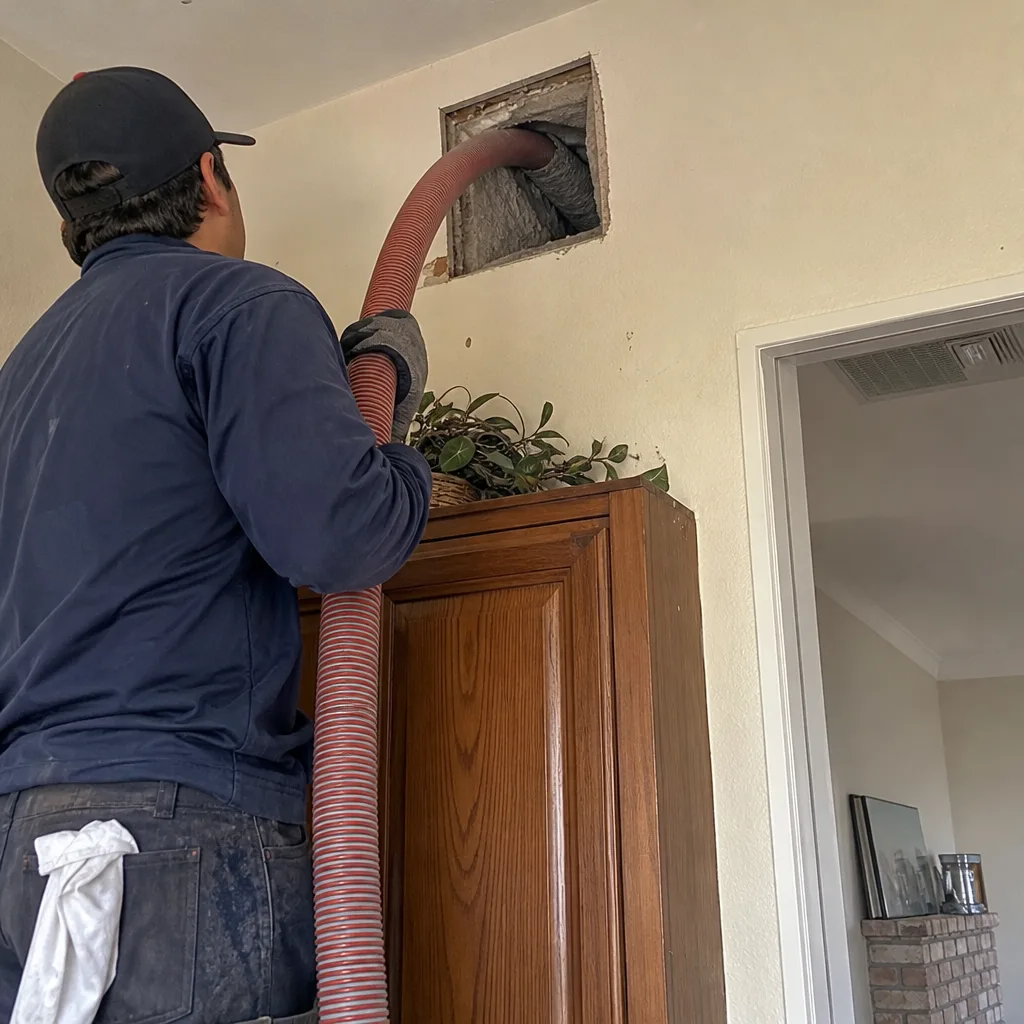 Before
 After
After