
Last updated October 15, 2026
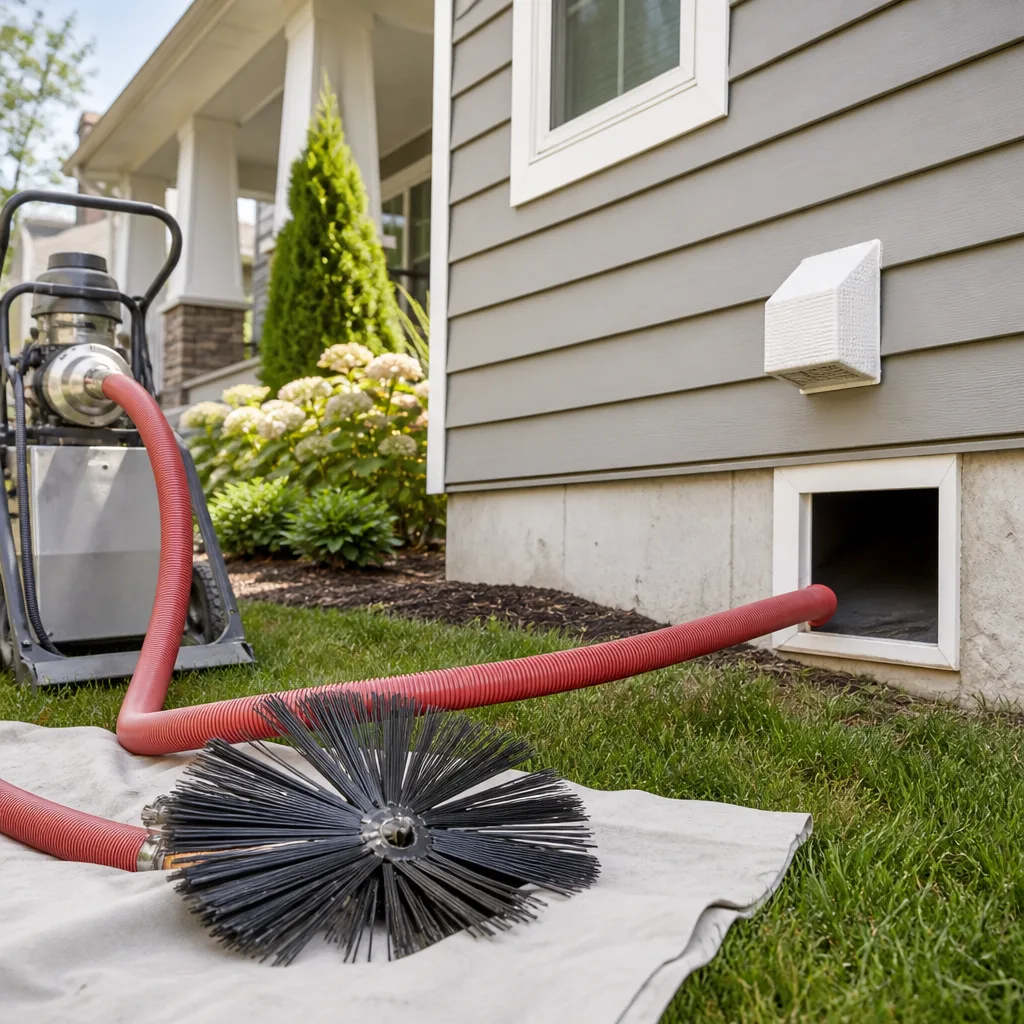 Whole-home duct cleaning
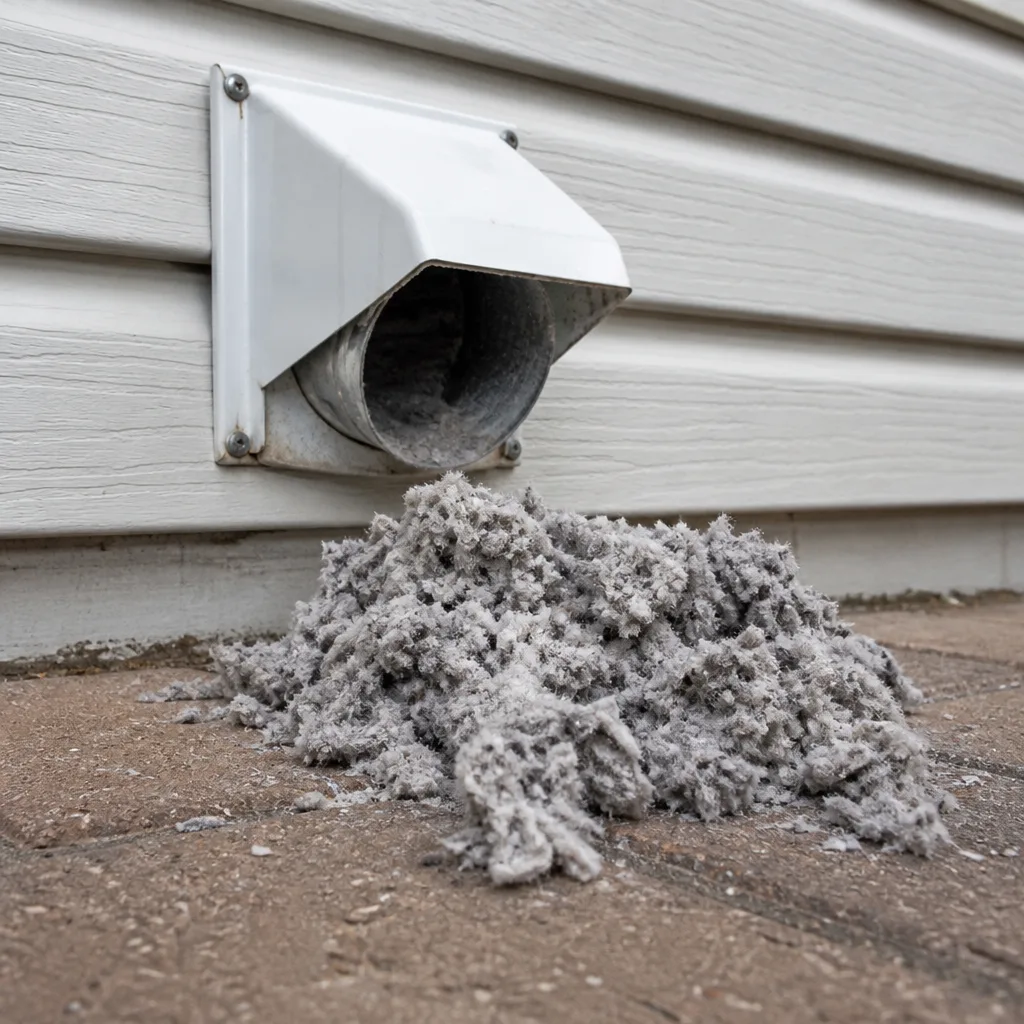 Dryer vent cleaning
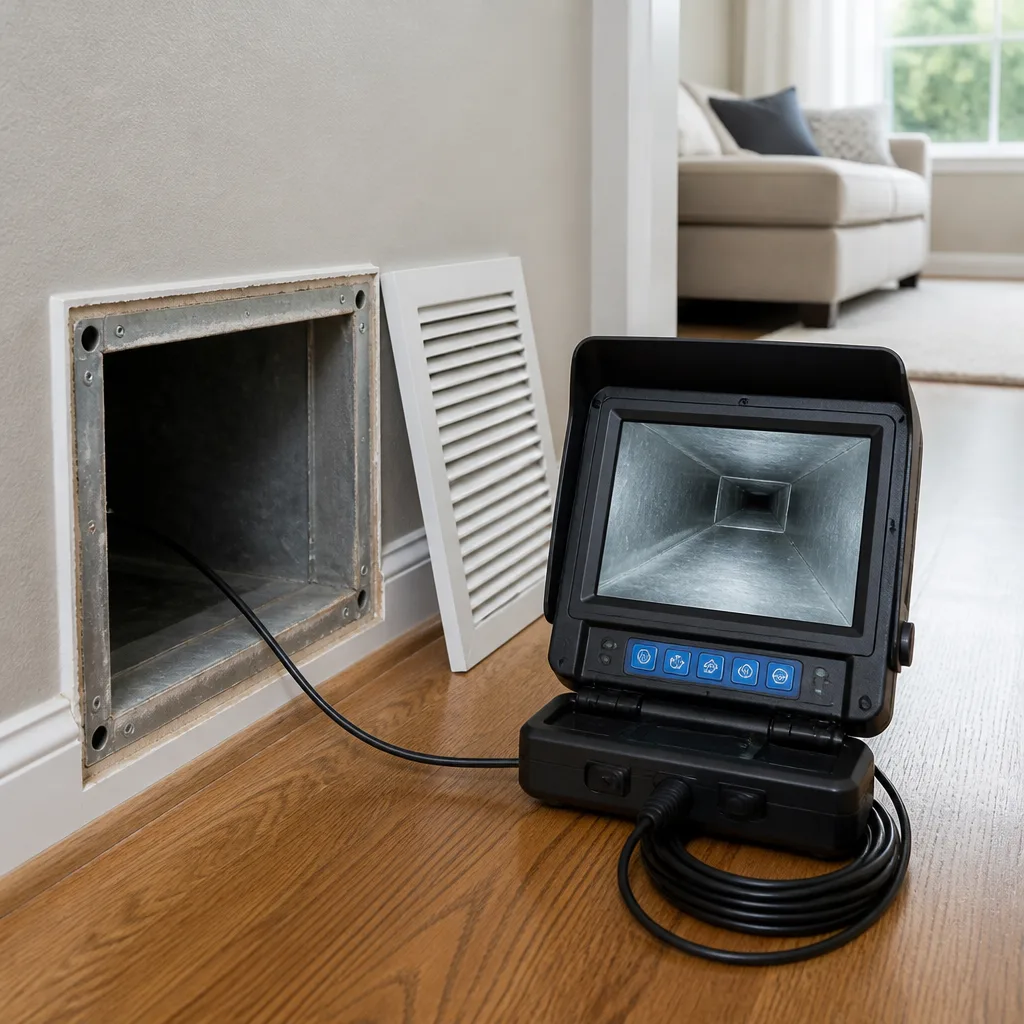 Camera inspection
 Sanitizing & deodorizing
Whole-system duct and dryer vent check with before-and-after photos - you see exactly what came out of your vents
That "$99 whole-house special" is a bait ad - the real number appears once they are in your hallway, or the "clean" is a shop-vac at the register. We photograph the inside of your ducts before and after instead.
The Complete Guide to Air Duct Cleaning in San Diego
Here’s a fact that surprises most people: the EPA does not recommend annual air duct cleaning for most homes. Yet a majority of San Diego companies sell it on a yearly subscription schedule. The disconnect between the research and the sales pitch leaves homeowners guessing, and guessing usually costs money. This Air Duct Cleaning guide draws the line at exactly where the science and San Diego’s specific coastal-dust conditions actually place it. You’ll learn what a proper cleaning involves, what it should cost, when you genuinely need it, and how to verify the crew did it right.
Quick Answer
Air duct cleaning in San Diego typically costs between $350 and $650 for a whole-home system and involves negative-air extraction paired with rotary brush agitation to dislodge and remove built-up debris. Most San Diego homes benefit from cleaning every 3 to 5 years, though homes near wildfire corridors, pet-heavy households, or recent remodels may warrant more frequent service; see our DIY vs Professional Air Duct Cleaning: The San Diego Homeowner’s Decision Guide for help deciding which path fits your situation. The EPA and NADCA both advise cleaning only when specific conditions exist, not on a fixed annual schedule.
Styles & brands we work with
Table of Contents
- What Actually Builds Up in San Diego Ducts
- What the EPA and NADCA Actually Say About Cleaning Frequency
- What a Proper Cleaning Looks Like, Step by Step
- How Much Air Duct Cleaning Costs in San Diego
- Written Price vs. “Starting At” Quotes: Why the Distinction Matters at the Door
- The Decision Tree: Clean Now, Wait, or Inspect First
- DIY Inspection vs. Professional Cleaning: Where the Line Is
- How to Choose a Duct Cleaning Company in San Diego
What Actually Builds Up in San Diego Ducts
San Diego’s air is not like Phoenix’s, and it’s not like Miami’s. We sit in a specific environmental pocket that produces specific fouling patterns. The marine layer rolls in most mornings and burns off by afternoon, carrying fine sea-salt particles that settle into ductwork. Salt is hygroscopic, so it attracts and holds moisture. That means the dust clinging to your duct walls isn’t just sitting there dry; it’s slightly tacky, slightly damp, and more likely to bond with other particles that pass through.
Then there’s the wildfire factor. San Diego sits downwind of multiple inland fire corridors: the 2003 Cedar Fire, 2007 Witch Creek, and 2018 Camp Fire all sent ash across the county. Homes within ten miles of a burn zone often show a fine gray silt lining their return ducts. That silt is lighter than household dust and travels farther through the system before settling. In our experience, homes in Rancho Bernardo and Scripps Ranch tend to show more ash-related buildup than coastal communities like La Jolla or Pacific Beach, simply because of prevailing wind patterns during fire events.
What about regular household dust? It’s mostly skin cells, textile fibers, pet dander, and tracked-in soil. In San Diego’s dry inland valleys, like El Cajon or Santee, that dust stays granular and loose. Near the coast, where marine-layer humidity hovers between 60 and 80 percent many mornings, the same dust cakes onto duct surfaces. This is the key pattern most national guides miss: coastal San Diego ducts gum up differently than inland ducts. The remediation approach should account for that.
Here’s what we typically find in San Diego systems, in order of frequency:
- Fine particulate dust from daily living and open windows during San Diego’s mild seasons.
- Pet hair and dander, often concentrated in return-air registers where airflow pulls from main living areas.
- Construction debris from drywall sanding, flooring removal, or stucco work. Homes renovated within the last two years often show heavy gypsum dust in the supply side.
- Wildfire ash, a fine gray residue more common in east and north county neighborhoods.
- Sea-salt residue near coastal communities, which accelerates the adhesion of other particles.
- Pest droppings and insect casings, particularly in older homes with pier-and-beam foundations or attic-mounted duct runs.
None of these materials are dangerous in normal quantities. But when they accumulate past a certain point, they restrict airflow, force your HVAC system to work harder, and provide a food source for dust mites. The question isn’t whether ducts get dirty. They do. The question is when the buildup crosses from cosmetic to consequential.
What the EPA and NADCA Actually Say About Cleaning Frequency
Let’s address the annual-cleaning myth directly, because this is where most homeowners get steered wrong.
The EPA’s official guidance on air duct cleaning states plainly that duct cleaning has never been shown to prevent health problems, and the agency does not recommend routine cleaning on a fixed schedule. The EPA advises cleaning only under specific conditions. NADCA, the industry’s trade association, takes a slightly more proactive position but still does not mandate annual service. NADCA recommends inspection and cleaning when visible mold growth is present, when ducts are infested with vermin, or when registers and return grilles show substantial visible dust buildup.
Here are the specific trigger conditions both organizations agree warrant cleaning:
- Visible mold growth inside duct surfaces or on other HVAC components. This requires source removal, not just surface wiping, and should include correcting the underlying moisture problem.
- Vermin infestation: rodents, insects, or other pests have lived or died in the ductwork. Droppings, nesting material, or carcasses are clear signals.
- Substantial visible dust or debris being discharged from supply registers into the living space, especially when it recurs quickly after surface cleaning.
- Recent renovation or construction that generated significant dust, particularly drywall sanding, plaster work, or floor sanding, performed without sealed-off duct openings.
- Occupant health conditions where a physician has recommended duct cleaning for a household member with severe allergies or asthma that worsen at home.
What does “substantial” mean in real terms? A thin film of dust on a register cover is normal and doesn’t warrant a full cleaning. Dust clumps hanging from the register, dust that re-accumulates within days of wiping, or visible debris blowing into the room when the system kicks on, those are trigger signals.
San Diego’s climate adds one nuance the national guidance doesn’t address: marine-layer humidity in coastal neighborhoods creates condensation cycles inside unconditioned duct runs. That intermittent moisture makes dust adhesion worse and can support light mold growth in poorly insulated ducts. Homes west of I-5 with older metal ducts in unconditioned attics should inspect more often than homes with modern insulated flex duct in inland neighborhoods.
What a Proper Cleaning Looks Like, Step by Step
You can’t evaluate a duct cleaning job if you don’t know what one actually involves. Here’s the complete process, in the order a competent crew should perform it.
Step 1: System Inspection and Pressure Check
Before any cleaning begins, the technician should inspect the furnace or air handler, the evaporator coil, the return and supply plenums, and several register points. This establishes a baseline and identifies problems that cleaning can’t fix, like collapsed duct runs, disconnected joints, or rodent damage. A proper inspection includes checking the filter condition and noting airflow at each register.
Step 2: Sealing and Pressurizing
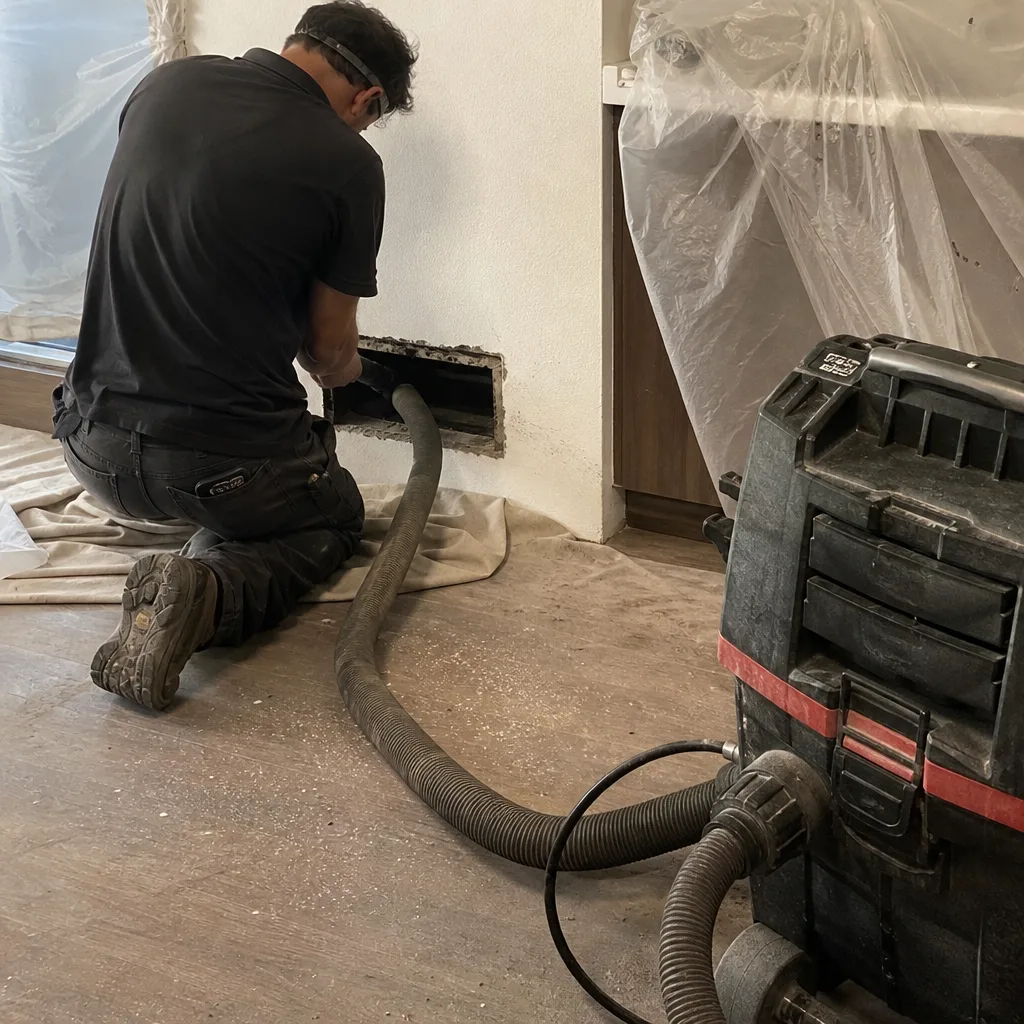
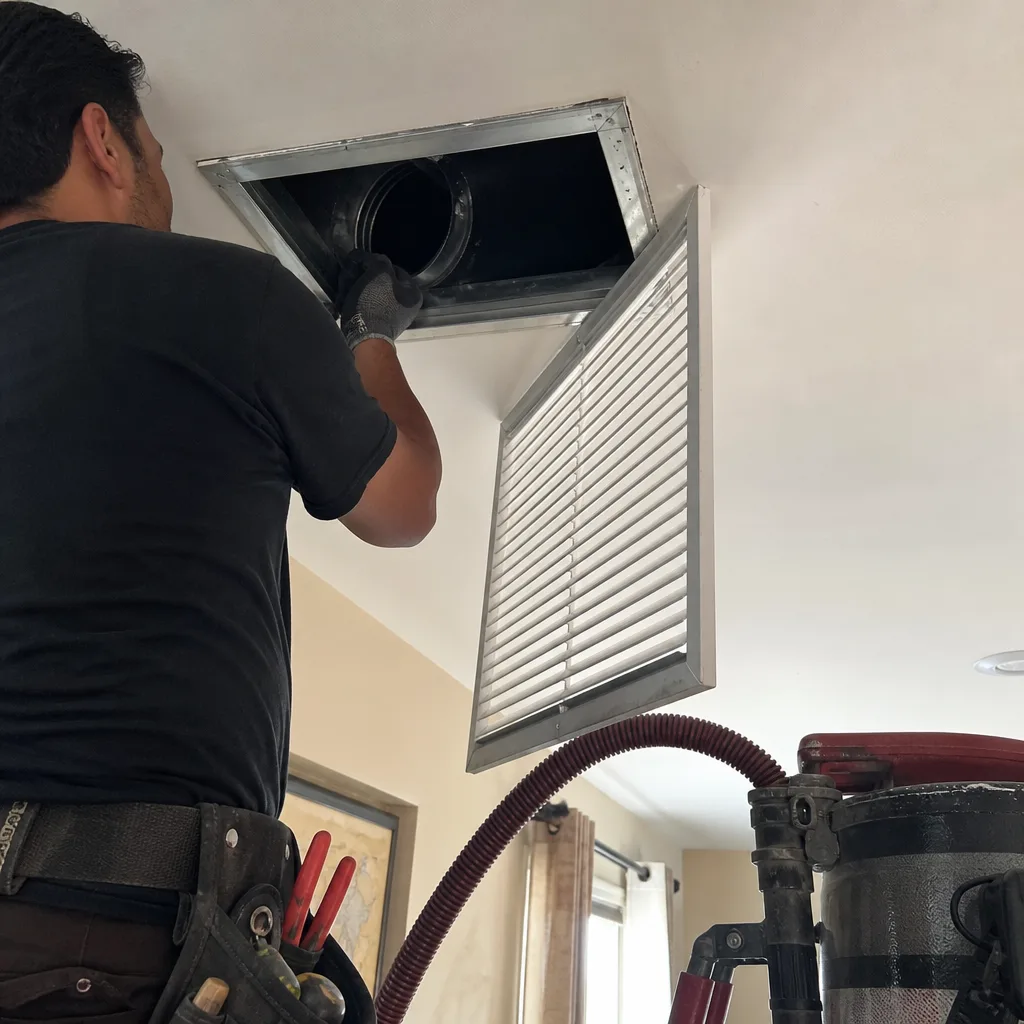
The crew seals supply registers with temporary covers or inserts the vacuum hose into the main trunk line. The system is placed under negative pressure using a high-powered vacuum unit, often a Nikro unit, which pulls air backward through the ducts while the cleaning happens. Negative-air extraction means the system is continuously pulling air out, not blowing debris around inside your home.
Step 3: Agitation and Dislodging
Negative pressure alone won’t remove material that’s adhered to duct walls. The crew needs mechanical agitation: a rotating brush system, often a Rotobrush, that spins stiff bristles against the duct interior to dislodge caked dust, salt residue, and pet hair. The brush reaches through the duct run while the vacuum continuously extracts what it loosens. Without this agitation step, a “cleaning” is just a vacuum attachment waved at a register.
Step 4: HEPA Filtration During the Process
The vacuum unit should exhaust through a HEPA filter, not out a window or into the attic. This is where Abatement Technologies equipment matters: the filtration captures loosened particles so they don’t recirculate into your living space during the job. Homes with occupants who have respiratory conditions should specifically ask about this.
Step 5: Component Cleaning
Ducts aren’t the only things that get dirty. A thorough job includes cleaning the supply and return plenums, the blower motor housing and fan blades, the evaporator coil if accessible, and the register covers themselves. Skipping these components is like washing your car but leaving the wheels caked in brake dust.
Step 6: Final Verification and Photos
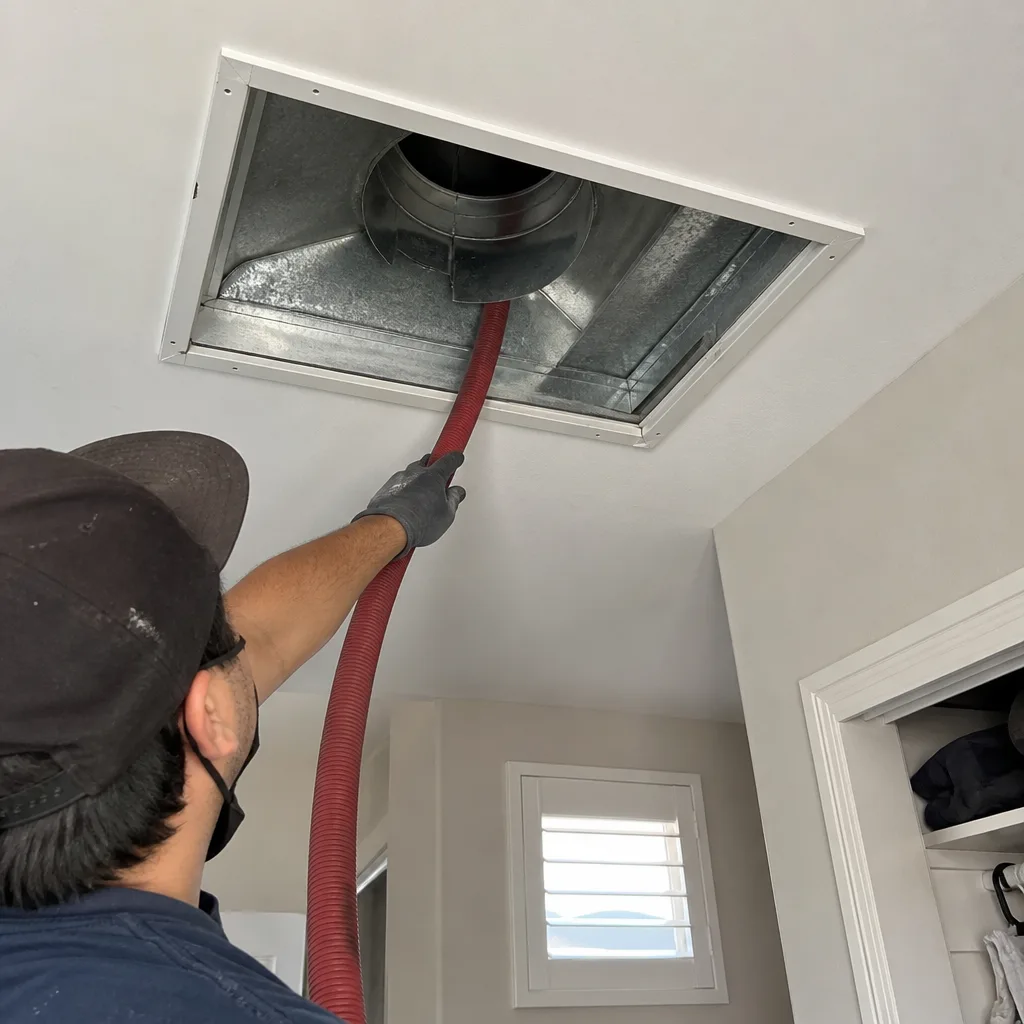
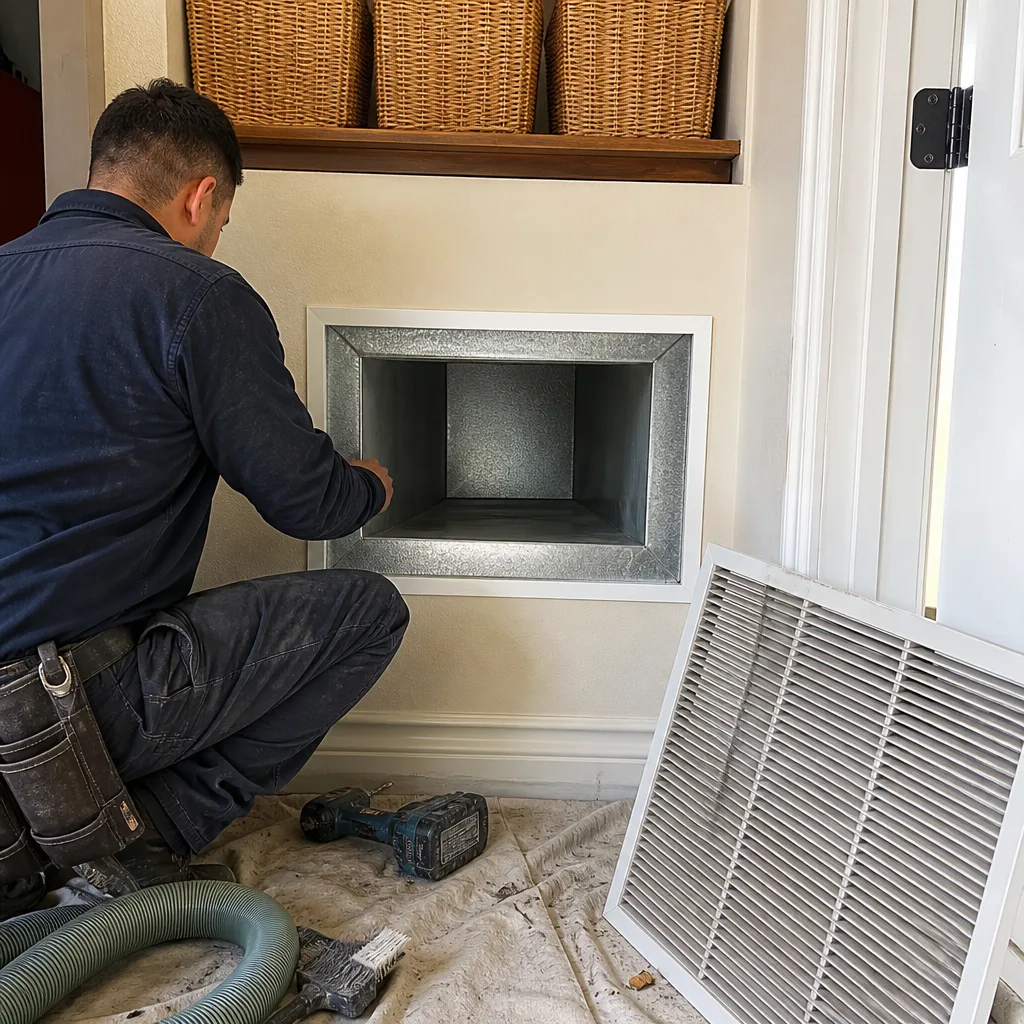
Before the crew packs up, ask to see the results. A competent company will show you before-and-after photos of the duct interiors taken with a camera probe. If they can’t show you what they cleaned, they may not have cleaned much.
How Much Air Duct Cleaning Costs in San Diego
Let’s talk dollars, because vague pricing is how homeowners get surprised at the door.
In San Diego’s market, you should expect a legitimate whole-home duct cleaning to run between $350 and $650, depending on home size, number of systems, and accessibility. Single-story homes under 1,500 square feet with one HVAC unit sit at the lower end. Two-story homes over 3,000 square feet with dual systems and attic plus crawlspace access sit at the higher end.
Here’s a typical price breakdown by home size in the San Diego area:
- Small home or condo, 1,000 – 1,500 sq ft, single system: $350 – $450
- Mid-size home, 1,500 – 2,500 sq ft, single system: $400 – $550
- Large home, 2,500 – 4,000 sq ft, single or dual system: $500 – $650
- Very large home, 4,000+ sq ft, dual system, multiple zones: $650 – $850
- The exact scope: which ducts, which components, how many registers.
- The total dollar amount, not a range.
- The duration of the job and the arrival window.
- What’s included and, just as importantly, what’s not.
- The guarantee terms in writing.
- A teaser price you won’t actually pay.
- Vague scope language: “as needed,” “up to,” “additional charges may apply.”
- No written guarantee or a guarantee that evaporates when you read the fine print.
- Heavy pressure to book immediately before the “discount” expires.
- Have you seen visible mold growth inside any register opening, or has a home inspector flagged duct mold? Clean now. Mold in ducts requires professional source removal, and delaying makes it worse. Find a company that uses negative-air extraction with HEPA filtration, so the mold isn’t redistributed through your home during the cleaning.
- Have you completed a renovation or major construction project within the last two years without sealing off the duct openings? Clean now. Drywall dust and construction debris in ducts restrict airflow and recirculate fine particulate through your living space. This is one of the most common missed cleaning triggers in San Diego, where older homes are constantly being remodeled.
- Do you have household members with severe allergies or asthma that worsen noticeably at home? Inspect first, then decide. Ask for a camera inspection of the duct interiors. If buildup is significant, cleaning may reduce particulate circulation. If ducts are relatively clean, the issue may be filtration or ventilation, not ductwork.
- Do you have multiple pets that shed heavily, and can you see hair accumulating at return registers between filter changes? Clean now, and consider adding a higher-grade filter. Pet hair in ducts combines with dust to form mats that reduce airflow. Homes with two or more large dogs or cats often need service more frequently than pet-free homes.
- Is your home more than 15 years old with the original ducts and no prior cleaning on record? Inspect first. Older duct systems may have deteriorating insulation, failing seals, or prior rodent activity. A camera inspection tells you whether cleaning is worthwhile or whether repair or replacement is the better investment.
- Was your last cleaning more than five years ago and do you notice dust returning quickly after cleaning surfaces? Clean now. Rapid dust accumulation after surface cleaning is one of the clearest signals that the duct system is the ongoing source.
- Is your home newer, well-filtered, and showing no visible dust at registers? Wait. There’s no benefit to cleaning ducts that aren’t dirty, and no national guideline recommends doing so. Save the money for something that matters.
- “Will you give me a written price before any work begins?” If the answer is anything other than an unqualified yes, end the conversation. A company that can’t commit to a price before work shouldn’t be in your home.
- “Do you use negative-air extraction with HEPA filtration?” If the technician doesn’t understand the question, find another company. This is the core mechanical principle behind legitimate duct cleaning, and it’s not optional equipment. It’s the difference between cleaning and recirculation.
- “Do you provide before-and-after photos of the duct interiors?” A company that takes photos and shows them to you is a company with nothing to hide. A company that can’t or won’t show you the work may not have done any.
- “What does your guarantee cover, and is it in writing?” Verbal guarantees are worthless. You want a written guarantee that covers the specific work performed and includes a return visit if the work falls short. Ask what happens if the cleaned ducts show visible dust re-accumulation within the guarantee period.
- “Can I see the equipment you’ll use?” Professional-grade equipment from manufacturers like Rotobrush, Nikro, and Abatement Technologies is heavy, loud, and mounted in a truck or trailer. If the “equipment” fits in a duffel bag, you’re hiring a shop-vac operator, not a duct cleaner.
- Per-vent pricing that lets the total multiply once the crew counts your registers.
- Pressure to book immediately or a “today only” discount.
- Refusal to provide any written documentation before arrival.
- Vague answers about equipment, process, or guarantee terms.
- Companies that advertise $49 or $79 whole-home cleanings. Nothing about those numbers works in San Diego’s labor market for a real cleaning.
Several legitimate factors move the price within these ranges. Homes with very long duct runs, awkward attic or crawlspace access, or significant time since the last cleaning take longer. Homes with hard duct (rigid metal) clean differently than homes with flex duct, and both are common in San Diego depending on construction era. Older coastal homes in areas like Clairemont or Point Loma often have original hard duct in tight attics; newer developments in Otay Ranch or 4S Ranch typically have accessible flex duct.
What should make you suspicious is a quote below $99. A company offering whole-home cleaning under a hundred dollars is either planning to upsell aggressively at the door or performing a register-level vacuuming pass and calling it a cleaning. Real equipment, real labor, and real time cost more than a hundred dollars in San Diego’s labor market.
For an exact quote on your San Diego home, call Kestrel Air Duct San Diego at (619) 695-0424. The estimate is free, and the written price is in your hands before any work begins.
Written Price vs. “Starting At” Quotes: Why the Distinction Matters at the Door
This is the single most important section in this guide, and it’s the one that separates honest companies from the rest.
A “starting at” quote is not a price. It’s an invitation to negotiation on your doorstep, with the technician holding the leverage. The script goes like this: the advertised price was $79, but once the crew sees your system, suddenly there’s mold remediation needed, extra vents to count, a “deep cleaning” upgrade, and a filter package. The final invoice lands at $500 to $900, and you’re standing in your own hallway deciding whether to pay or ask two strangers to leave your home. That’s not a transaction; it’s an ambush.
A written, locked price works differently. You describe your home honestly: square footage, number of systems, number of registers, any known issues. The company gives you a number in writing before the truck rolls. If the crew discovers something unexpected mid-job, that’s a conversation, not a new line item. The price you were quoted is the price you pay. Period.
Here’s what a locked-price estimate looks like in practice, versus what to watch for:
A Real Written Estimate Covers:
A “Starting At” Quote Features:
Kestrel Air Duct San Diego operates under the Kingswell Guarantee, which means a written price before work begins, a defined arrival window, a clean job site, and a written guarantee on the work. That’s been our standing commitment since 2004, and it’s not a promotional offer. It’s how every job works.
The Decision Tree: Clean Now, Wait, or Inspect First
Here’s a practical framework for deciding what your San Diego home needs today. Work through these branches in order.
DIY Inspection vs. Professional Cleaning: Where the Line Is
You can and should inspect your own registers periodically. It’s a five-minute job that tells you a lot. Remove a few register covers, look inside with a flashlight, and check for visible buildup, mold staining, or pest evidence. Wipe the register covers clean and note how quickly dust re-accumulates.
What you can’t do yourself is the actual cleaning. Duct cleaning requires negative-pressure equipment that extracts the full volume of air from the system, rotary brush agitation that reaches the full length of each run, and HEPA filtration that keeps loosened particles contained. A shop vacuum at the register opening is not duct cleaning. It’s surface dusting at the entry point, and it does nothing for the debris deeper in the system.
There’s also a safety dimension. Ductwork in unconditioned attics reaches extreme temperatures in San Diego’s inland summer days. Crawlspace access carries its own hazards: deteriorated insulation, pest activity, and confined-space risks. Professional crews bring the right protective equipment and the right training. If you’re in a position where a camera inspection of the deepest duct runs is needed, that’s a pro job too; the inspection cameras worth using cost more than the cleaning itself, and a technician who knows what they’re looking at interprets the images more reliably.
If you want a baseline assessment of your San Diego home’s ducts without commitment, Kestrel Air Duct San Diego offers free estimates. Call (619) 695-0424 and a real person answers, any time of day.
How to Choose a Duct Cleaning Company in San Diego
San Diego has no shortage of duct cleaning companies. It also has no shortage of companies that advertise duct cleaning but deliver a register wipe-down and a hard upsell. Here’s how to filter for the real thing.
Ask These Five Questions Before Booking:
Red Flags That Should End the Call:
Kestrel Air Duct San Diego has been serving San Diego since 2004 under the Kingswell Guarantee. Our technicians are background-checked and uniformed, we use Rotobrush rotary brush systems and Nikro negative-pressure units with Abatement Technologies HEPA filtration, and we put the 365-Day Done Right Promise in writing on every job. If the work falls short within the guarantee period, we return and make it right at no charge.
For more on what we do, see Air Duct Cleaning in San Diego or Dryer Vent Cleaning in San Diego. You can also visit the Kestrel Air Duct San Diego home page for a complete overview of our approach.
Common Mistakes to Avoid
- Cleaning on an automatic annual schedule. Unless you have a specific trigger like a renovation or severe allergies, annual cleaning wastes money. San Diego homes with moderate dust loads and good filtration typically need service every three to five years.
- Hiring based on price alone. The cheapest quote in San Diego is almost never the cheapest final invoice. Per-vent and “starting at” pricing shifts cost to the doorstep, where you’re least equipped to negotiate.
- Skipping the guarantee question. A company that won’t put its guarantee in writing is telling you something about how confident it is in its own work. The 365-Day Done Right Promise exists precisely because most companies won’t commit to one.
- Treating the filter as an afterthought. San Diego’s dry inland air carries fine particulate through the system constantly. A high-quality filter, replaced regularly, extends the life of a professional cleaning dramatically. Products from Honeywell, Aprilaire, and Guardsman are worth considering if you want better filtration between service visits.
- Assuming all companies use real equipment. Duct cleaning is an unregulated trade in California. Anyone with a truck and a leaf blower can advertise. Ask about negative-air extraction, HEPA filtration, and agitation equipment by name before you book.
- Ignoring the dryer vent while cleaning the ducts. They’re separate systems with separate issues. A clogged dryer vent is a fire hazard and needs its own service. Many San Diego homeowners bundle both, which is practical but shouldn’t be assumed.
- Waiting for visible dust clouds before acting. By the time debris is visibly blowing from your registers, the buildup is severe. Dust re-accumulating within days of wiping surfaces is the earlier warning sign. Act on that signal, not the dust storm.
See the difference
 Before
 After
After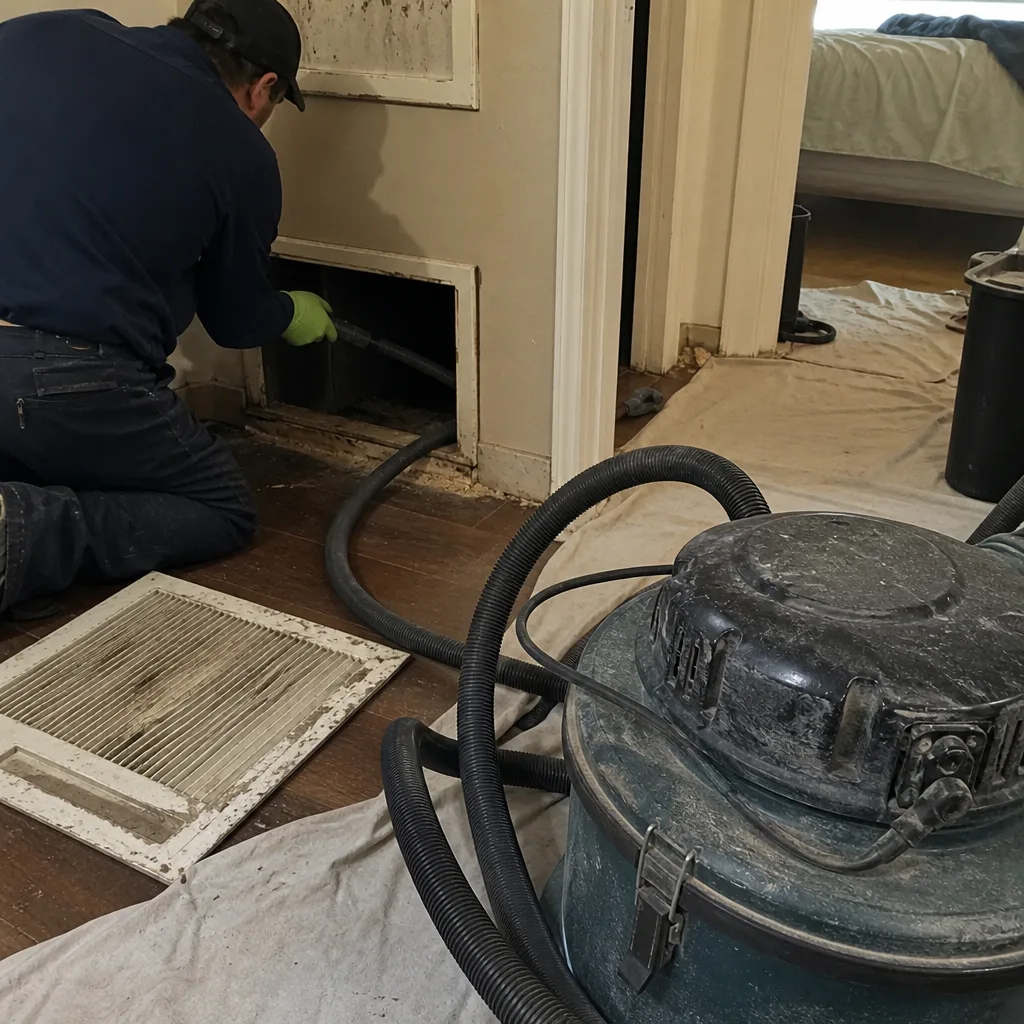 Before
 After
After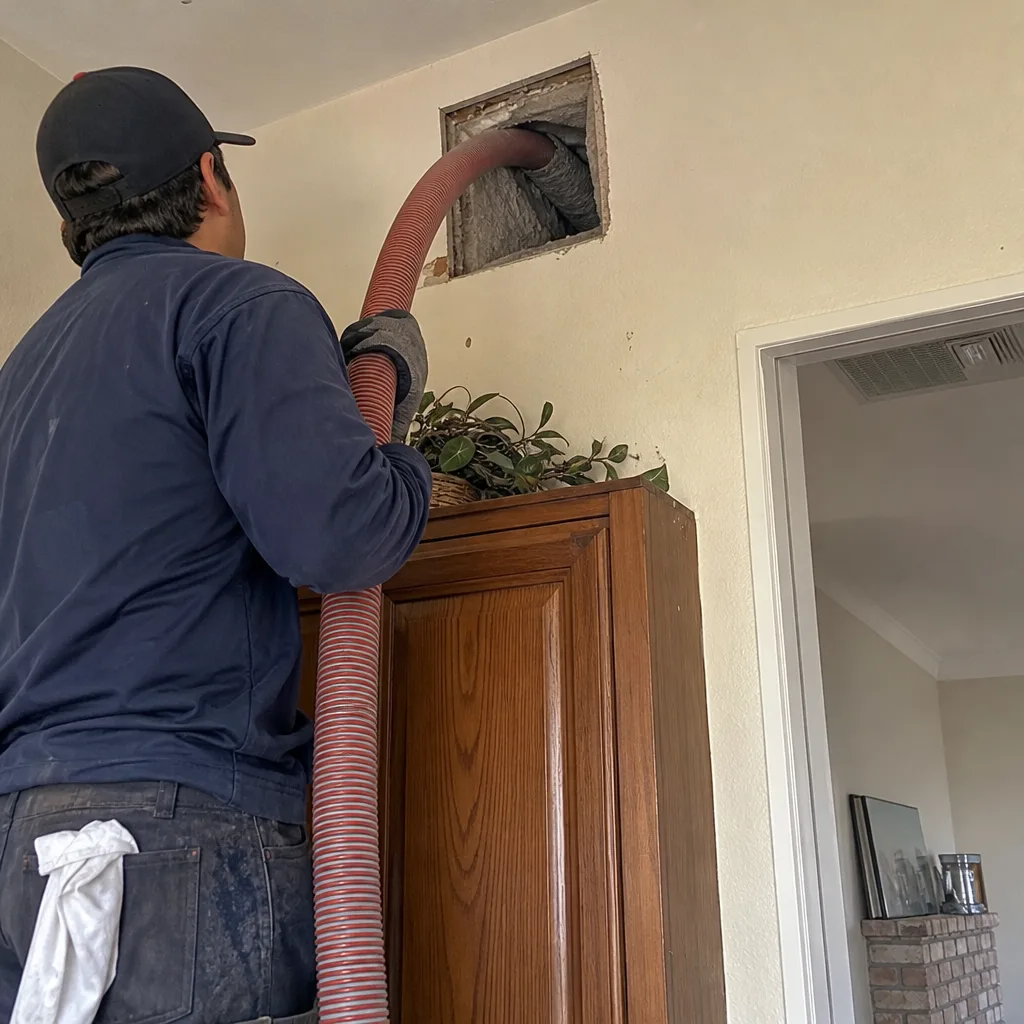 Before
 After
AfterWhen to Call a Professional
Call a professional when you see visible mold growth inside registers or on duct surfaces, when your home has been through a renovation that left duct openings unsealed, when rodent or insect activity has occurred in the duct system, or when severe allergy symptoms in household members correlate with time spent at home. Those are the triggers the EPA and NADCA both recognize as legitimate cleaning indicators, and they’re the ones where professional equipment makes a measurable difference. For more guides & resources on maintaining healthy indoor air, explore our blog. If you’re in San Diego and want an honest assessment of whether your ducts actually need cleaning, Kestrel Air Duct San Diego offers free estimates. Call (619) 695-0424 and a live person will answer, any time of day or night.
Frequently Asked Questions
Most San Diego homes run between $350 and $650 for a whole-home duct cleaning, depending on square footage, number of HVAC systems, and accessibility of the ductwork. The price should be quoted in writing before work begins, not presented as a “starting at” figure that grows at the door. Call (619) 695-0424 for a free estimate with a written price before any work starts.
Your ducts need cleaning if you see visible mold growth, evidence of rodents or insects, substantial dust discharging from registers, or if you’ve completed a renovation that left ducts unsealed. You do not need cleaning just because a company’s postcard says it’s been three years. A camera inspection gives you a factual answer.
The lowest quotes typically come from companies using shop-vac level equipment at the register opening, or from companies that quote a teaser price and then add charges at the door. Real duct cleaning requires negative-air extraction, rotary brush agitation, and HEPA filtration, all of which cost real money in equipment and labor. A whole-home cleaning under $100 in San Diego is not a real cleaning. Call (619) 695-0424 for an honest written quote.
Ask for before-and-after photos of the duct interiors taken with a camera probe. A legitimate company will show you the duct walls before and after agitation, and the difference should be visible. If a company can’t produce photos of your actual ducts, you have reason to question what was actually cleaned. Kestrel Air Duct San Diego documents every job with before-and-after imagery.
For most San Diego homes without specific triggers, every three to five years is a reasonable interval. Homes near wildfire corridors, pet-heavy households, or homes that have undergone renovation may need more frequent service. Annual cleaning is not recommended by the EPA or NADCA and is almost always unnecessary.
It can, if the ducts are actually dirty and the allergy sufferer’s symptoms correlate with time spent at home. If your ducts are relatively clean, the better investment is likely a higher-grade HVAC filter, such as those from Honeywell or Aprilaire, changed regularly. A camera inspection determines which path is right for your home. Call (619) 695-0424 to schedule a free estimate.
The Bottom Line
San Diego’s coastal humidity, wildfire ash patterns, and remodeling-heavy housing stock create specific duct-fouling conditions that national guidance overlooks. The honest answer on frequency is not “every year” and not “never.” It’s: clean when specific triggers exist, inspect when you’re unsure, and don’t accept a price that isn’t locked before work begins. A legitimate cleaning involves negative-air extraction, mechanical agitation, and HEPA filtration, and a legitimate company puts its guarantee in writing. Since 2004, Kestrel Air Duct San Diego has operated under the Kingswell Guarantee: a written price, a defined arrival window, a clean job site, and a written guarantee backed by the 365-Day Done Right Promise. If you’re still guessing, call (619) 695-0424 and get a real answer from a live person.
Written by Dale Whitmore, Owner at Kestrel Air Duct San Diego, serving San Diego since 2004.