
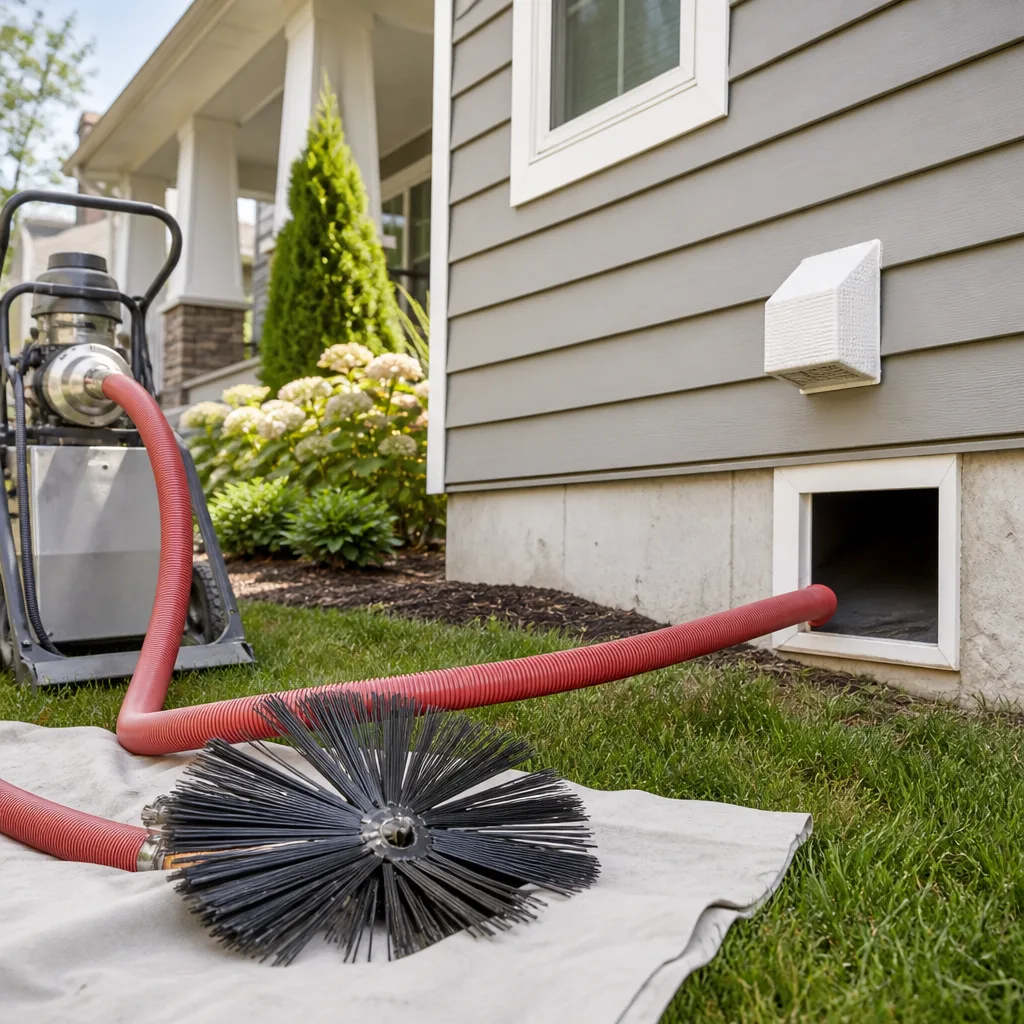
 Whole-home duct cleaning
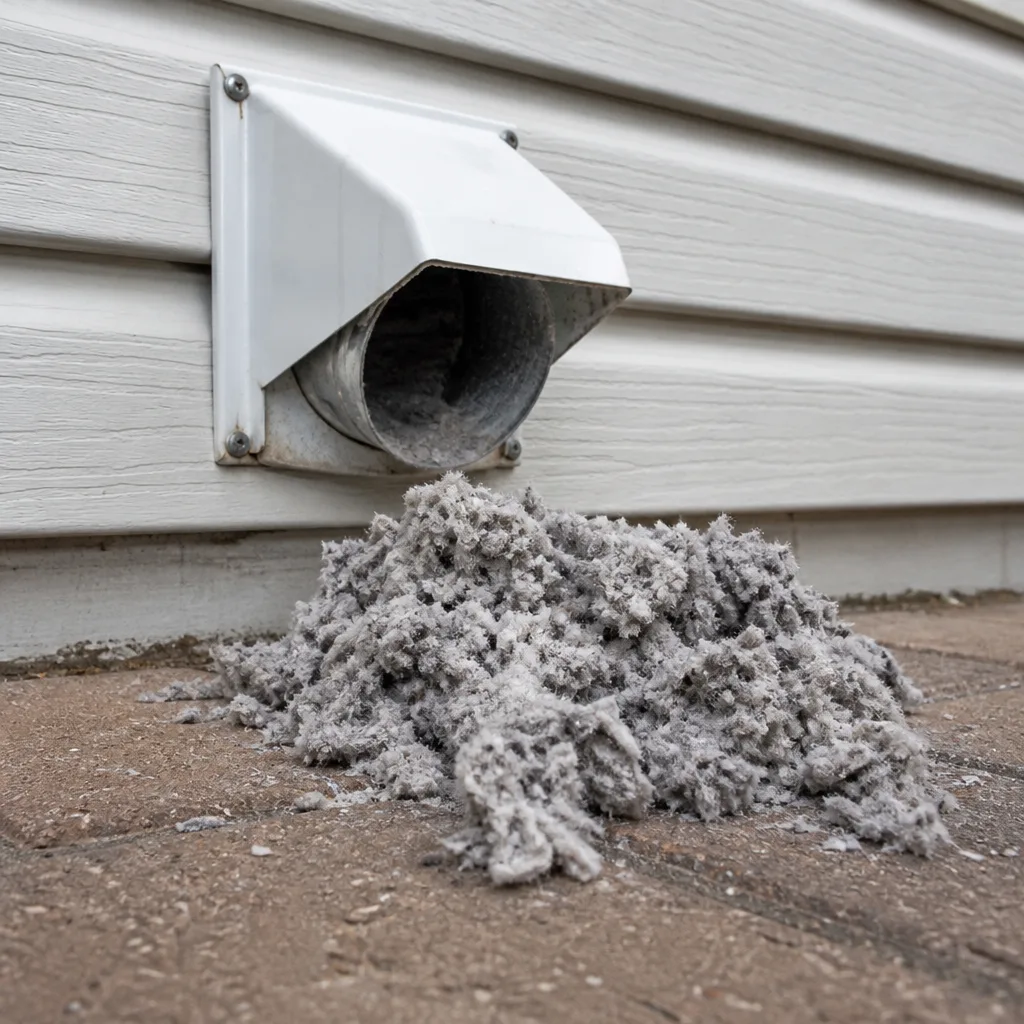 Dryer vent cleaning
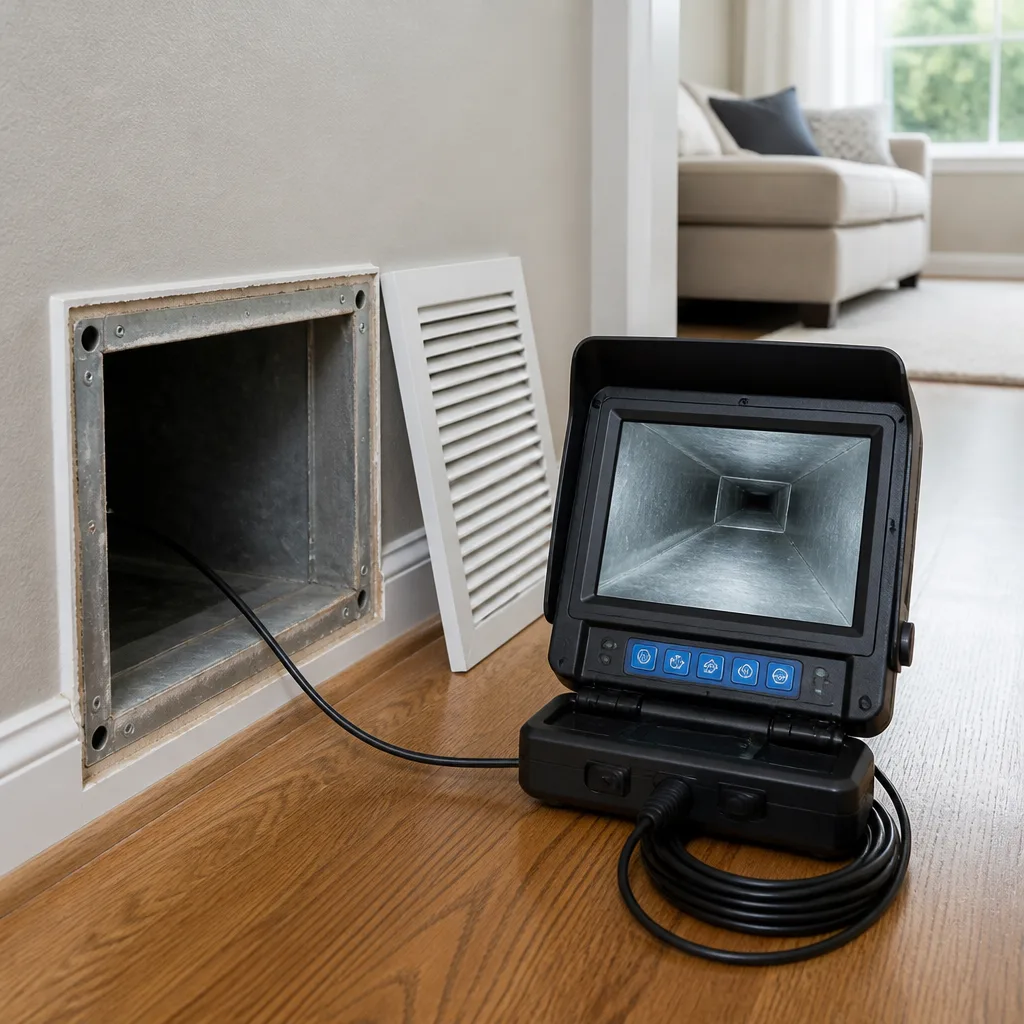 Camera inspection
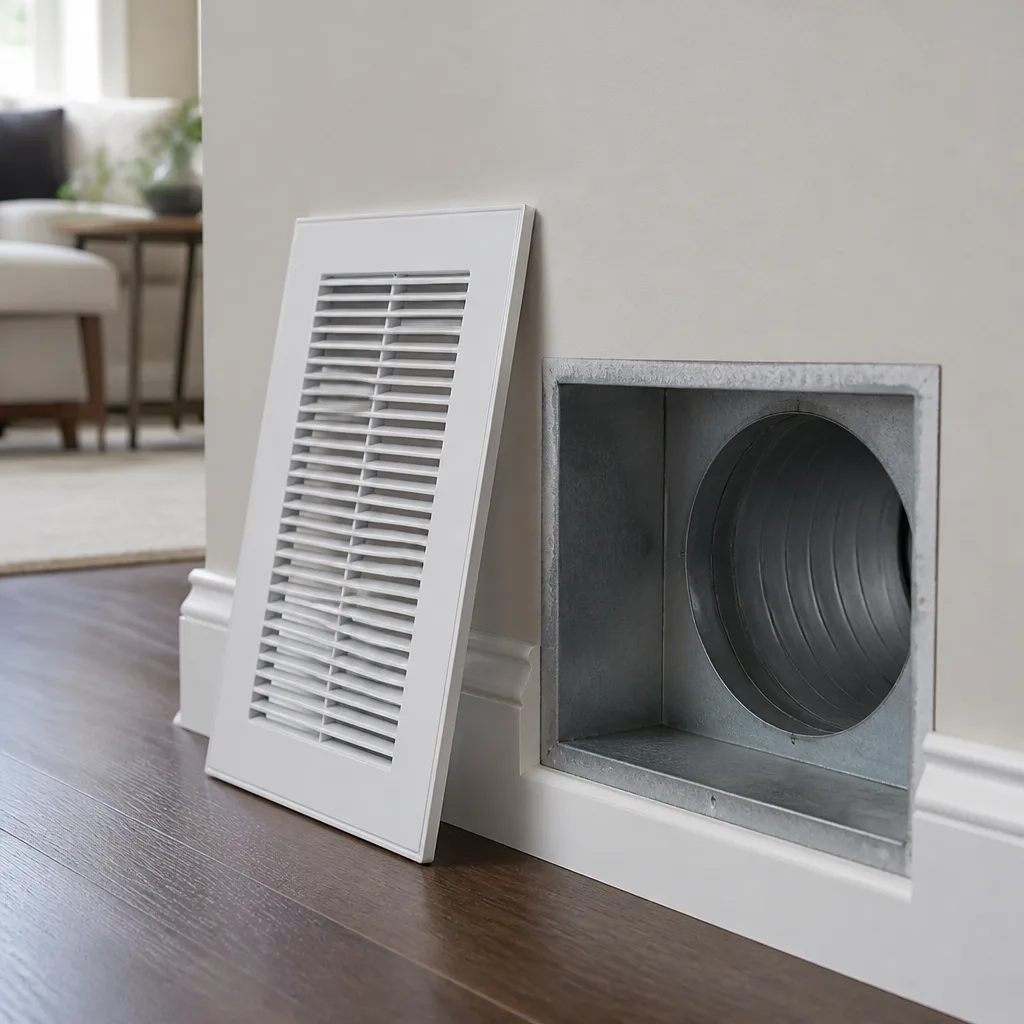 Sanitizing & deodorizing
Whole-system duct and dryer vent check with before-and-after photos - you see exactly what came out of your vents
That "$99 whole-house special" is a bait ad - the real number appears once they are in your hallway, or the "clean" is a shop-vac at the register. We photograph the inside of your ducts before and after instead.
Nikro Duct Sealing & Repair: The San Diego Owner’s Guide
We stock and install Nikro-compatible duct sealing components and repair parts across San Diego, with most sealing and repair jobs running between $350 and $900 installed depending on access and the number of joints involved. You’ll usually notice the problem the same way most owners do: a room that never quite reaches temperature, a utility bill that creeps up in July, or a musty smell that hangs around no matter how often you change the filter. If your Nikro unit is running but the sealed joints around it have let go, you’re pulling attic air or crawlspace air into the system, and that’s not a cleaning problem, it’s a sealing problem.
We’re an independent San Diego service provider, not affiliated with Nikro. That means we can source the right part for your unit without being tied to a single supply chain, and we’ll tell you honestly when an OEM part is worth the money and when a quality aftermarket equivalent does the same job for less.
Which Nikro Models This Applies To
Nikro negative-air units share a lot of DNA across their line, but the sealing components differ between the smaller portable HEPA units used for spot containment and the larger duct-mounted negative pressure machines contractors run for whole-house work. The most common sealing failure we see in San Diego is on the gaskets and connection collars, the flexible rings that join the Nikro unit to your duct run. When those dry out, which they do faster in San Diego’s arid inland climate than in coastal humidity, the machine still runs but it can’t hold negative pressure. You’re losing suction at the collar instead of at the duct wall, where it belongs.
Here’s the compatibility gotcha: Nikro uses two distinct collar diameters across its residential and light-commercial lines, a 6-inch and an 8-inch, and they are not interchangeable. A 6-inch collar clamped onto an 8-inch port with an adapter ring is a temporary fix that fails, usually within months. We’ve pulled apart enough of these to know. Match the collar to the port, not the duct, because the port is what the seal has to hold. Check the data plate on the side of your unit, it will list the model and the port size. Snap a photo of it before you call us, it saves a trip.
For OEM vs aftermarket: Nikro’s own gaskets and collars are well made, and for the HEPA-sealed filtration ring, we generally recommend staying OEM because that seal is part of what keeps the unit actually filtering rather than just moving air. For the outer duct collars and the simple foam gaskets, a quality aftermarket part with the same durometer rating does the job at roughly 60 percent of the OEM cost. We stock both on the truck and we’ll show you the difference before we install anything.
Styles & brands we work with
Signs Your Nikro Duct Sealing & Repair Is Failing
- A room that stays warm even with the AC running hard. Air is escaping through failed joints before it reaches the register. The Nikro unit is pulling, but the sealed pathway isn’t holding, and the cold air is leaking into your attic or wall cavity instead of your living room.
- Dust accumulating faster than it used to around the returns. A broken seal on the return side means dirty air gets pulled in from unconditioned spaces, bypassing the filter entirely. You’re seeing the results on your furniture and windowsills.
- Whistling or hissing near the unit when it runs. That’s air being pulled through a gap in a seal. A properly sealed collar is quiet. Noise means a leak path.
- A musty or stale smell in the house only when the system runs. Crawlspace and attic air is getting drawn into the closed system through a failed gasket. You’re smelling what’s been hiding in the insulation and the framing cavities.
- Your utility bill trending up in cooling months without a matching jump in thermostat use. The system is running longer to hit the same temperature because conditioned air is going somewhere it shouldn’t. In San Diego’s inland valleys, where summer heat loads are real, this shows up fast.
See the difference
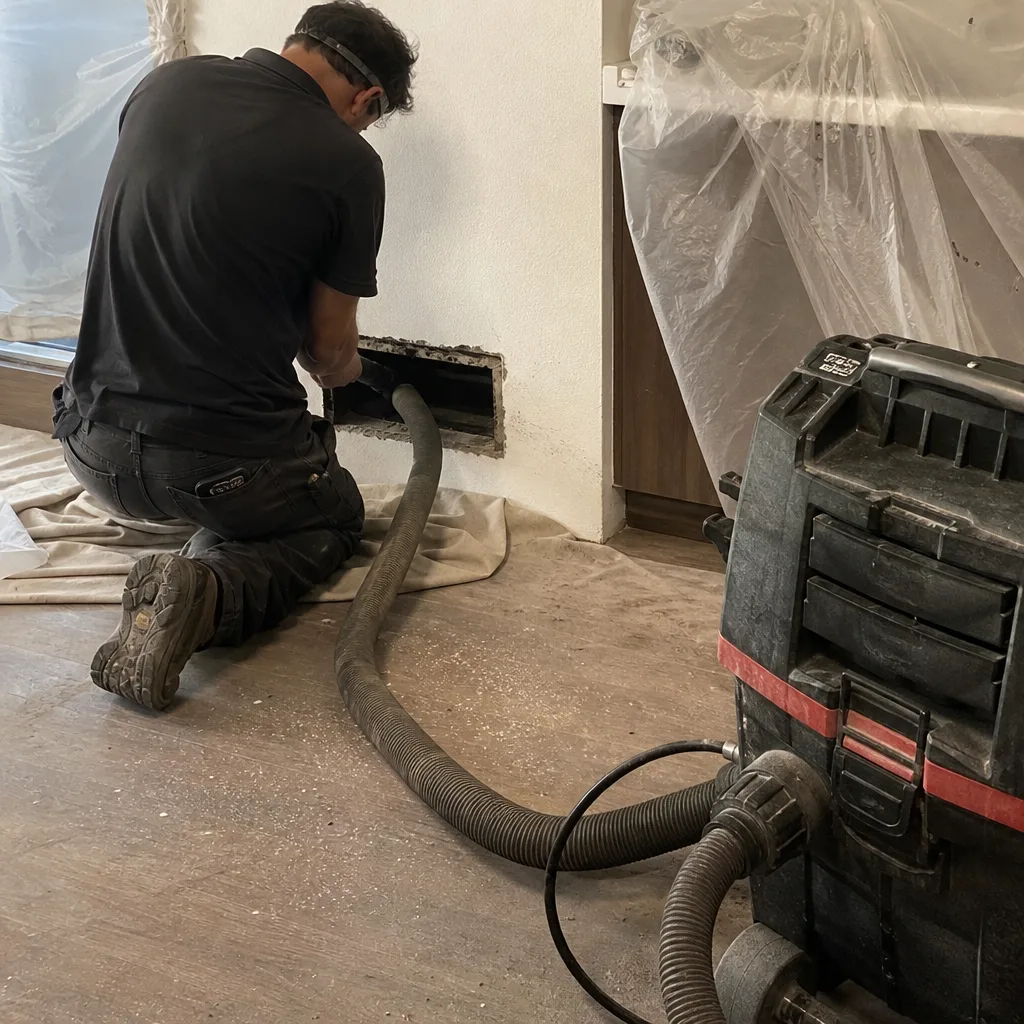 Before
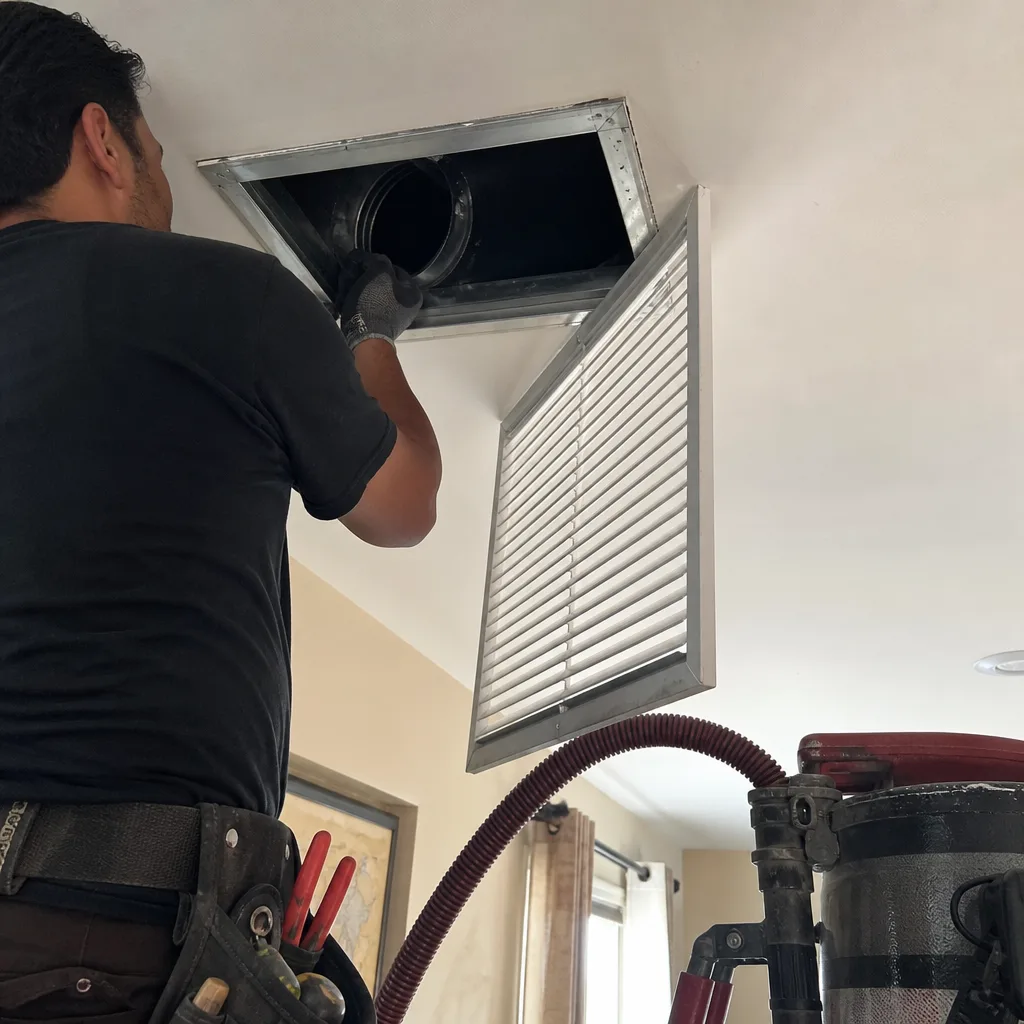 After
After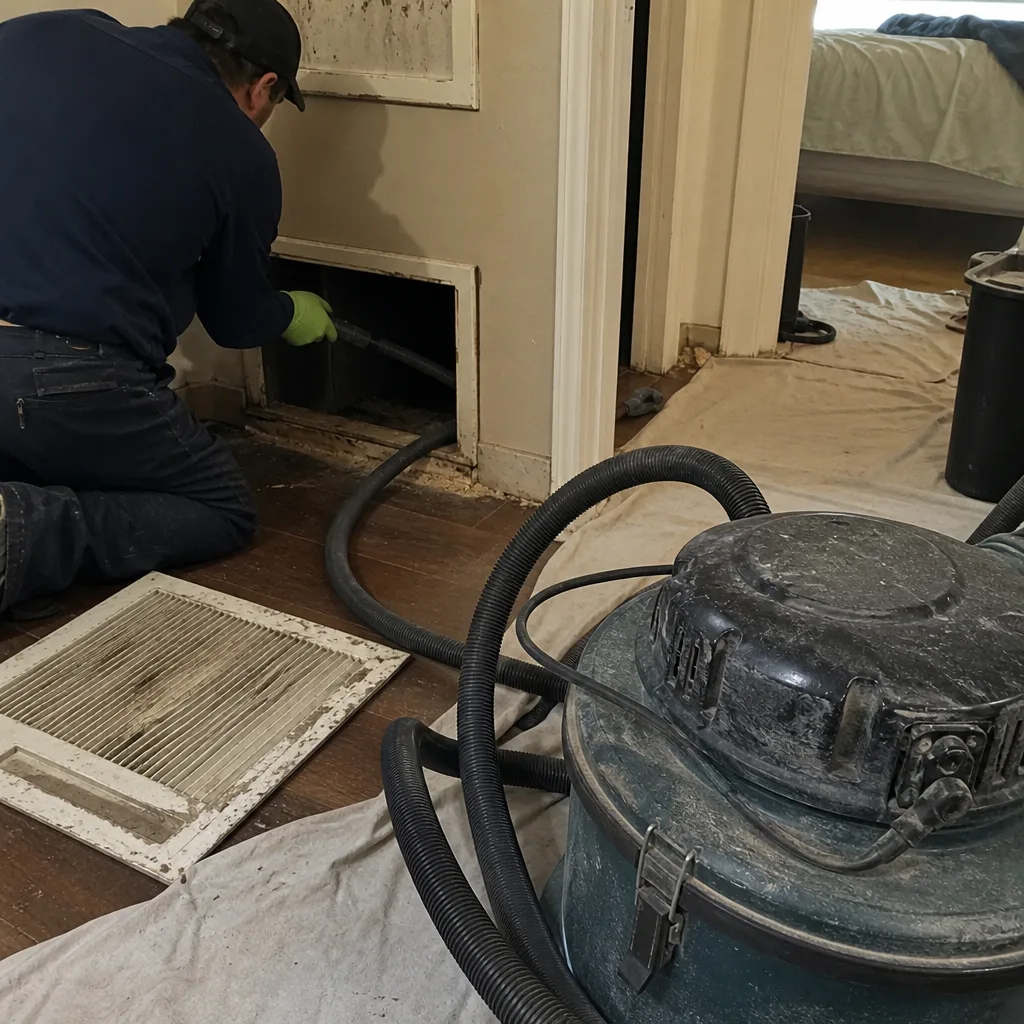 Before
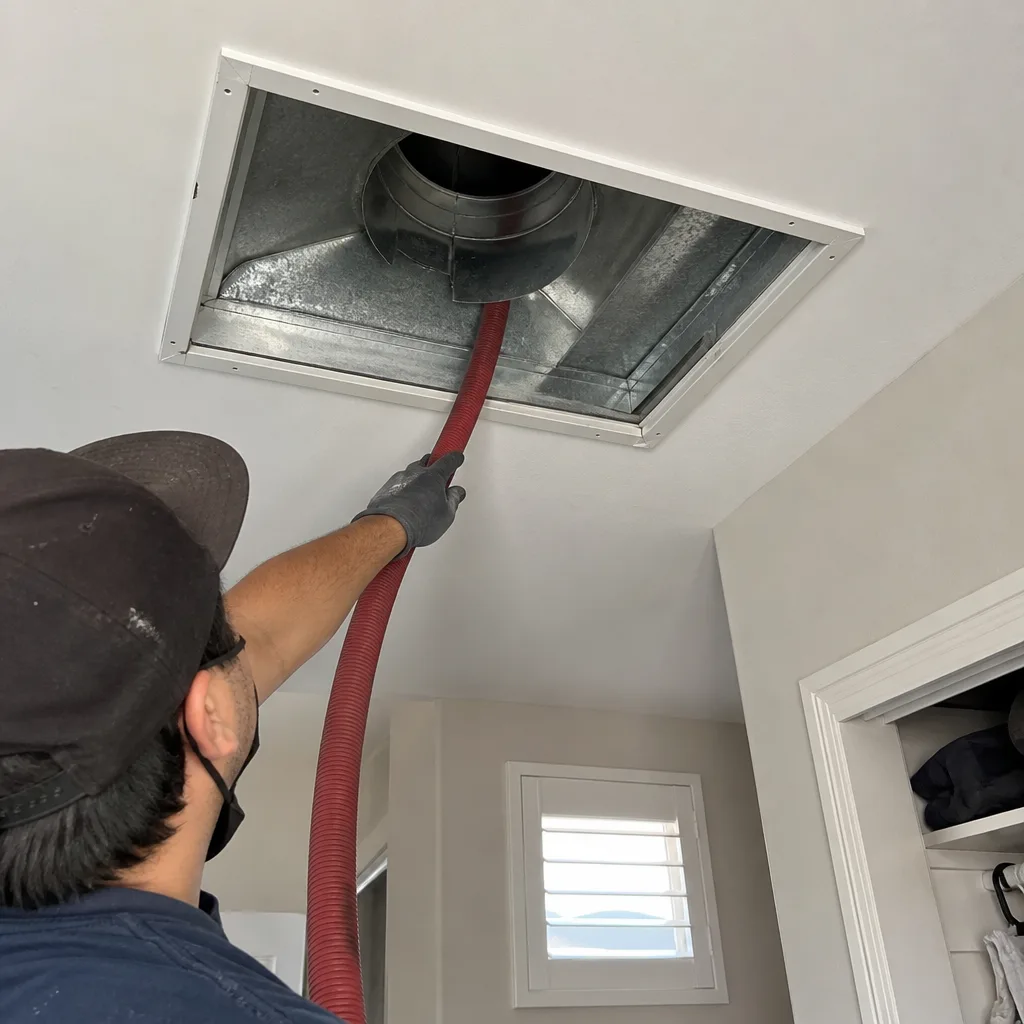 After
After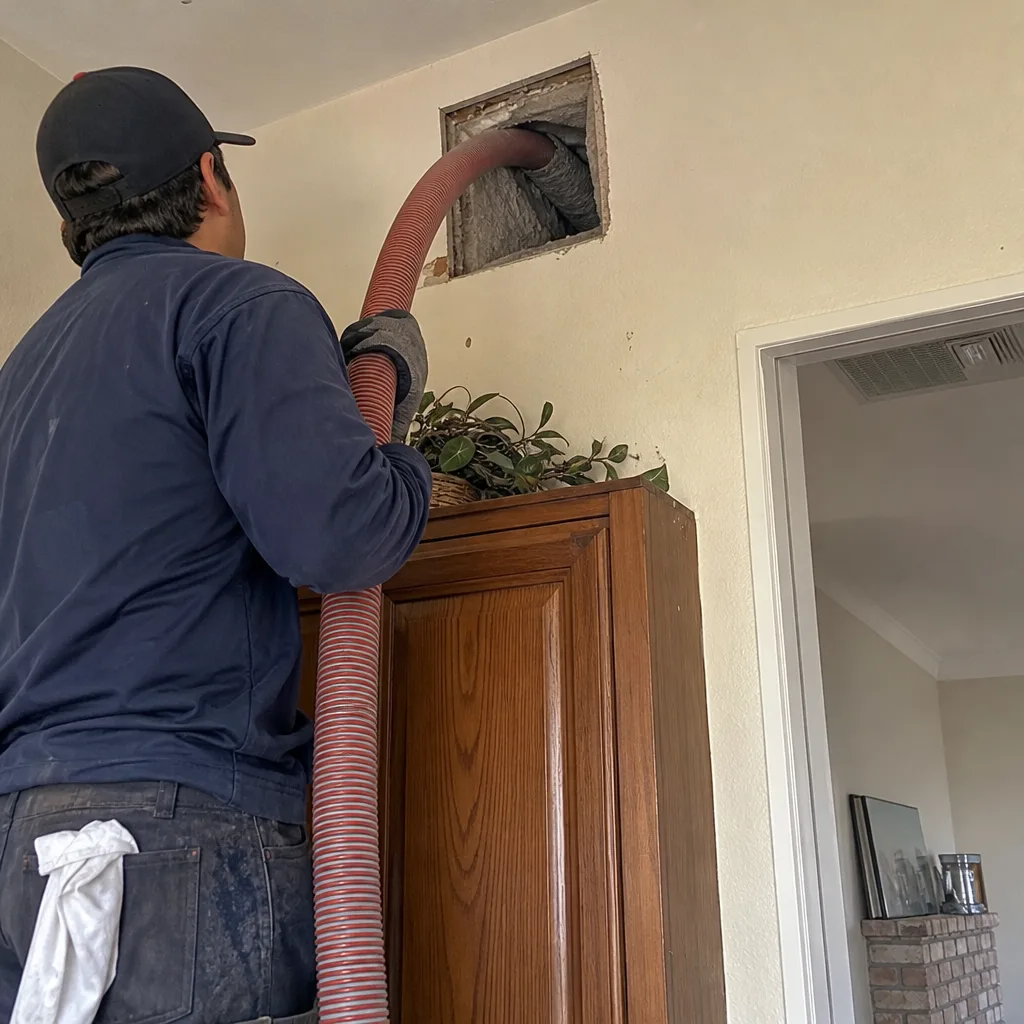 Before
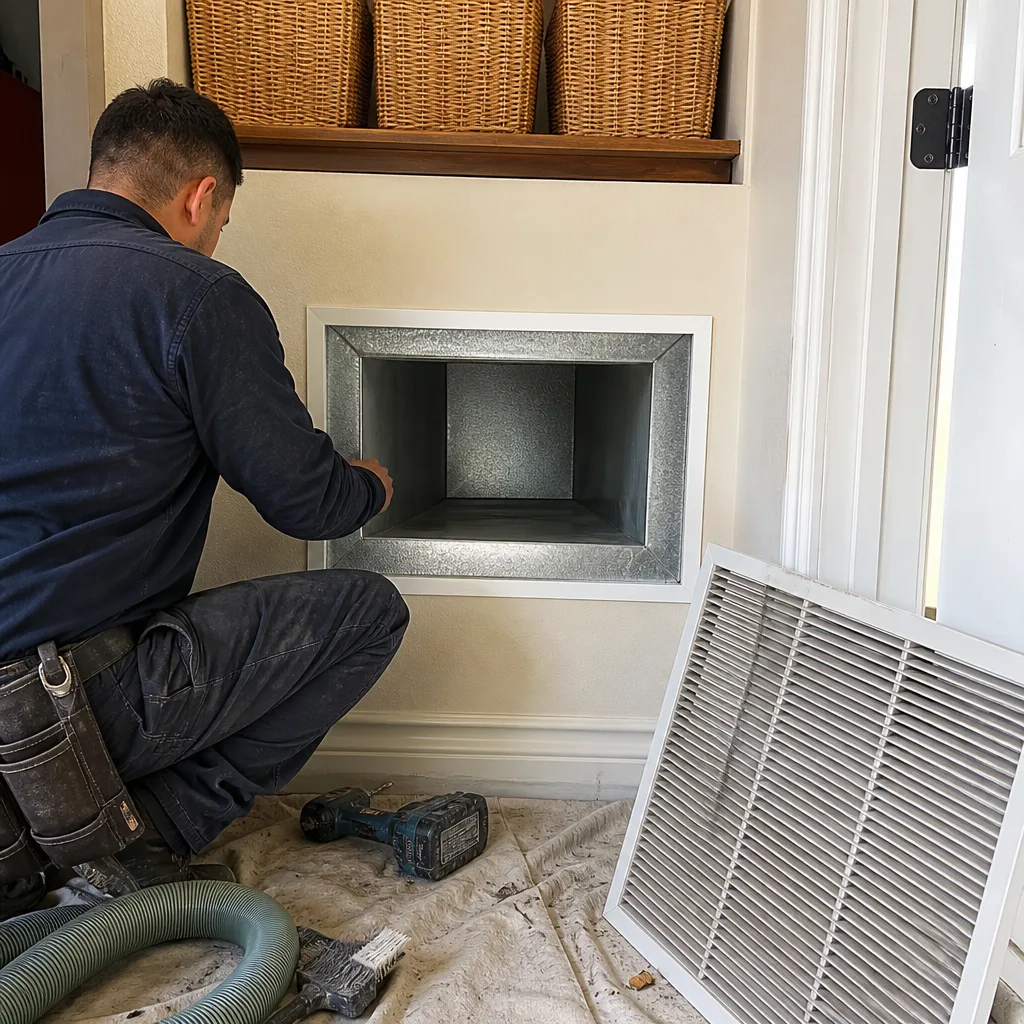 After
AfterReplacement Cost & What’s Included
In San Diego, most Nikro duct sealing and repair jobs run between $350 and $900 in total. The spread comes down to a few things: how many joints need resealing, whether it’s a simple collar replacement or a full reseal along the visible duct run, and how accessible the failing section is. Crawlspace work costs more than attic work, and tight clearance adds labor time.
- Single collar or gasket replacement: $180 – $260 installed, part included
- Full connection reseal at the Nikro unit and main trunk line: $350 – $550
- Complete visible joint reseal along the supply and return runs: $600 – $900
Every one of these prices is given to you in writing before work begins. No door-step revisions, no surprise line items. Dale Whitmore set that rule at the start, and it hasn’t changed. The 365-Day Done Right Promise applies to every sealing repair we do: if the work fails within the guarantee period, we return and make it right at no charge. That’s in writing on every invoice, and it’s backed by the Kingswell Guarantee that every Kestrel Air Duct San Diego job operates under.
DIY or Call Us?
There are things you can safely check. Inspect the visible collar where the Nikro unit connects to the duct run. If you can see daylight at the joint, or feel air moving across the seam while the unit runs, the seal has failed. You can also note the model number on the data plate so you have it ready when you call.
What we don’t recommend is redoing seals yourself with tape or mastic from a home center. A negative-air system runs under constant suction, and a poorly applied duct seal fails fast, sometimes within a season. You’ll pay twice, once for the materials and again for the proper fix. The sealing compounds we use are rated for continuous negative pressure and applied to a clean, prepared surface, which is where most DIY repairs go wrong. Not dangerous, just money wasted. If you’d rather have it done once and done right, call us at (619) 695-0424.
FAQs
In San Diego’s climate, you can expect 8 to 12 years from a properly installed seal. Coastal homes with humidity can stretch that toward the longer end; inland homes where the air runs dry and hot tend to see gasket material harden and crack sooner. If your unit is past the ten-year mark and you’re noticing the signs above, the seals are the first place we look.
Sometimes, but not often. A collapsed foam gasket has to be replaced; the material has lost its ability to rebound and hold a seal. A collar with a hairline tear can occasionally be reinforced, but we’ll tell you honestly if reinforcement is a patch, not a fix. We don’t sell patches that buy six months. Call (619) 695-0424 and we’ll give you a straight answer.
Most single-collar replacements and reseals are done in 90 minutes to two hours. A full visible joint reseal on a typical San Diego home takes half a day. You’ll know the time window and the price before we start, because we write it down and hand it to you first.
We stock the most common Nikro collar sizes, gasket materials, and sealing compounds on the truck, along with compatible parts for Lennox, Trane, and Carrier systems. Unusual or OEM-specific HEPA seal rings may take a day or two to order. Either way, we’ll tell you what’s available before we schedule the work.
Written by Dale Whitmore, Owner, Kestrel Air Duct San Diego at Kestrel Air Duct San Diego, serving San Diego and nearby areas.