
Last updated October 15, 2026
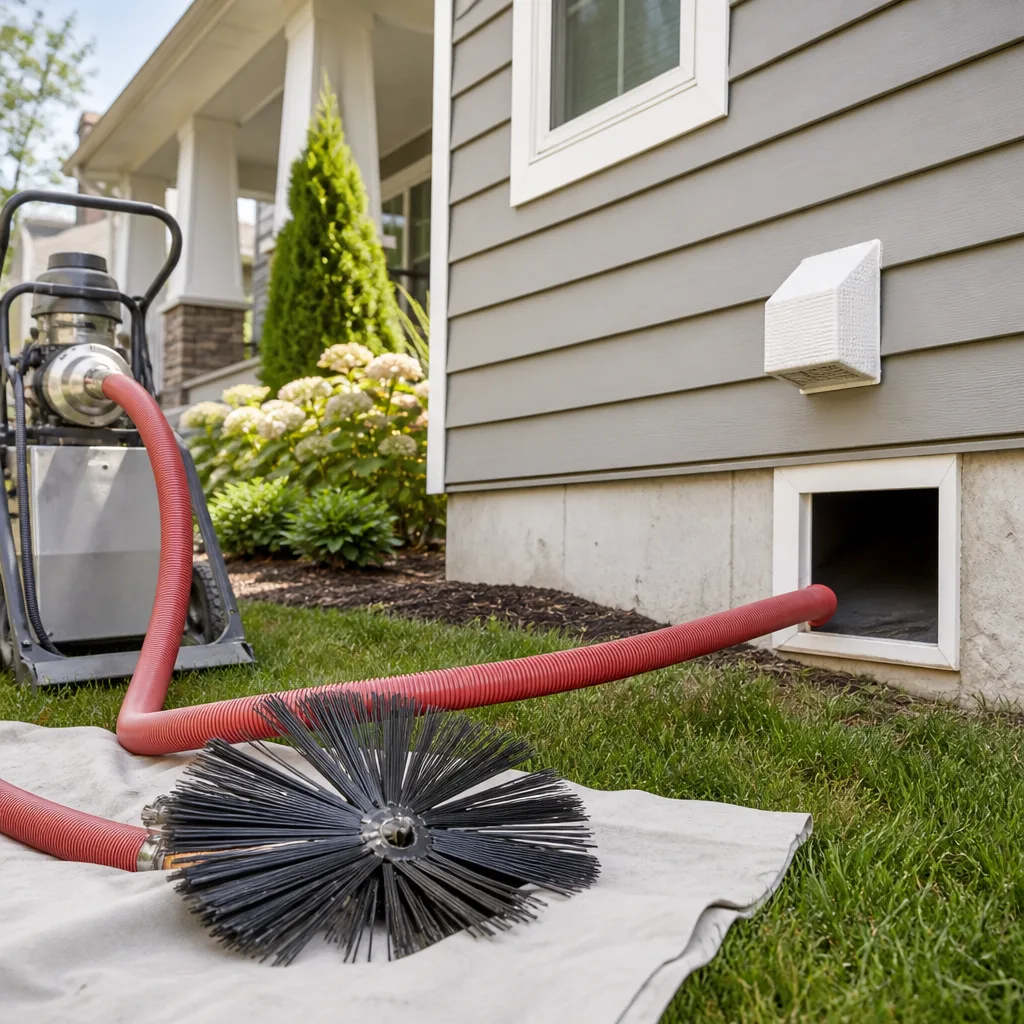 Whole-home duct cleaning
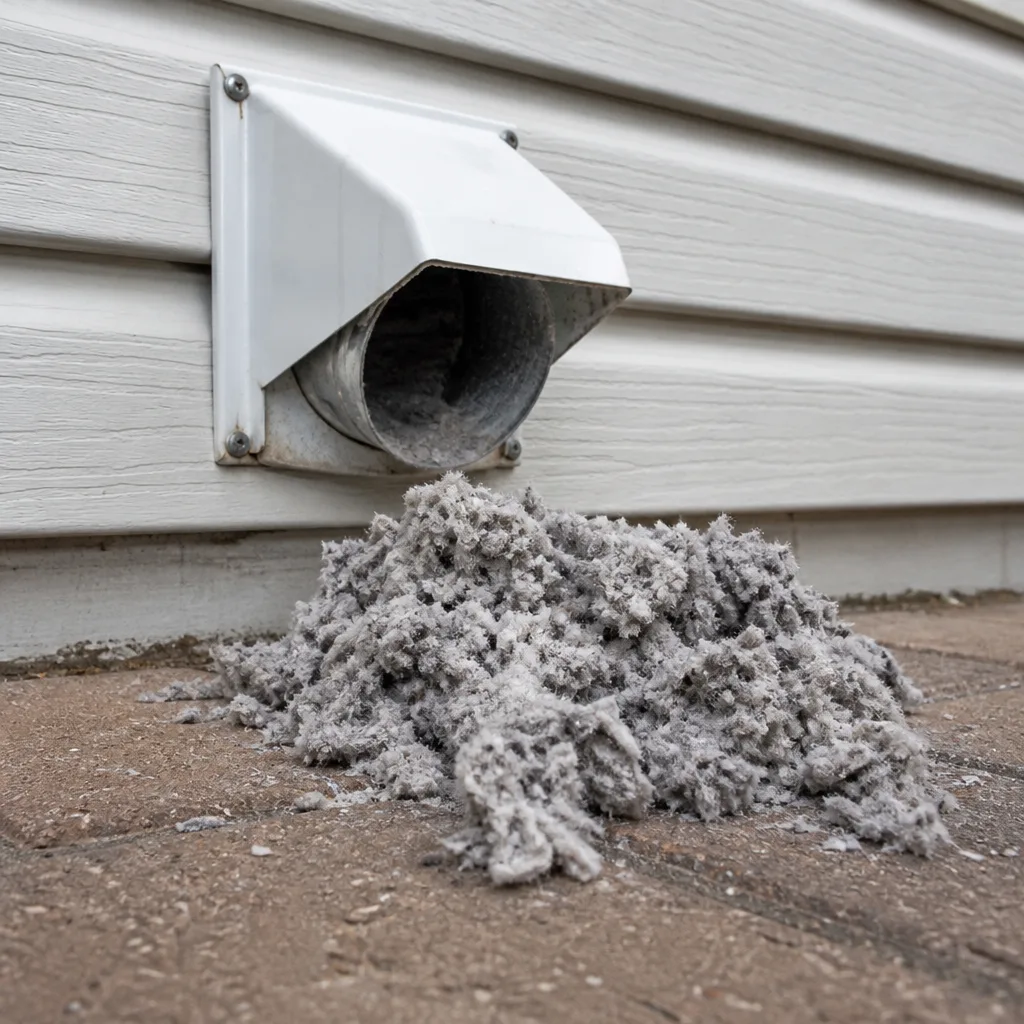 Dryer vent cleaning
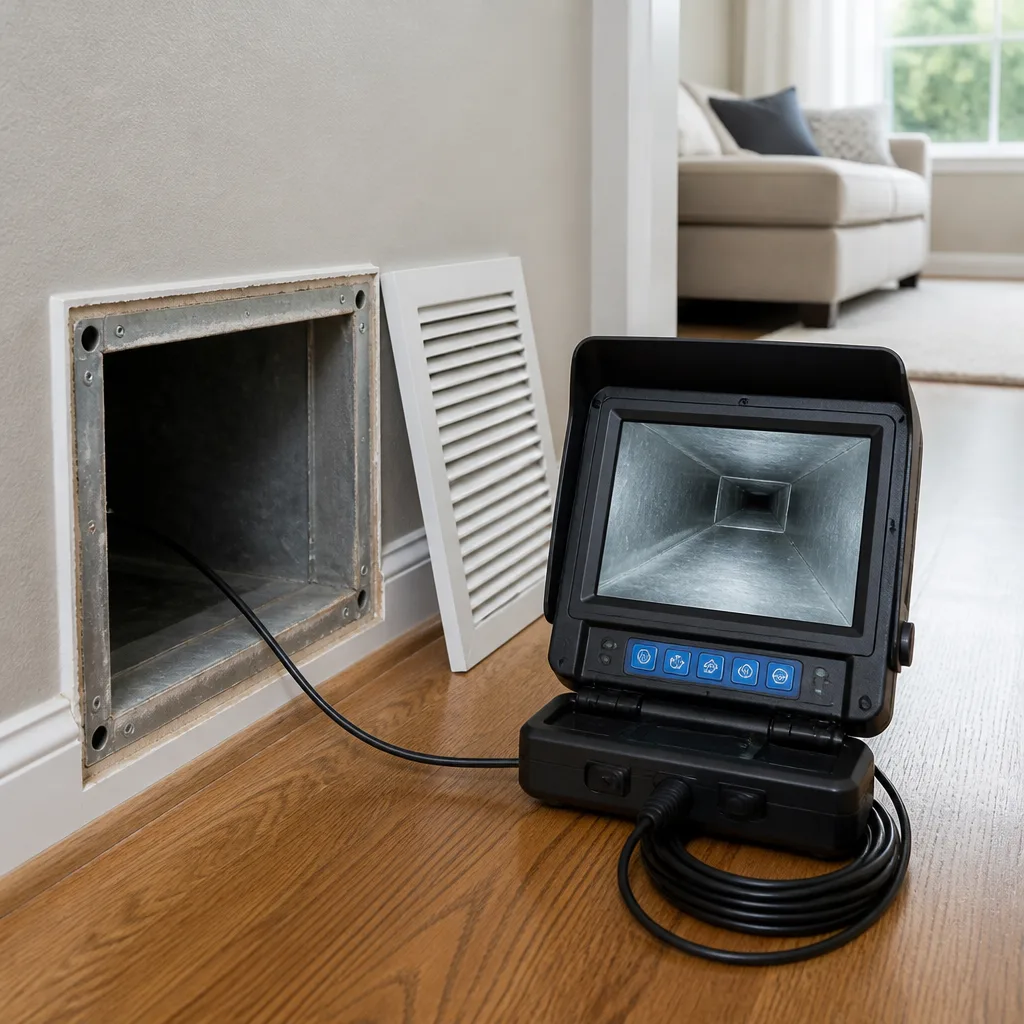 Camera inspection
 Sanitizing & deodorizing
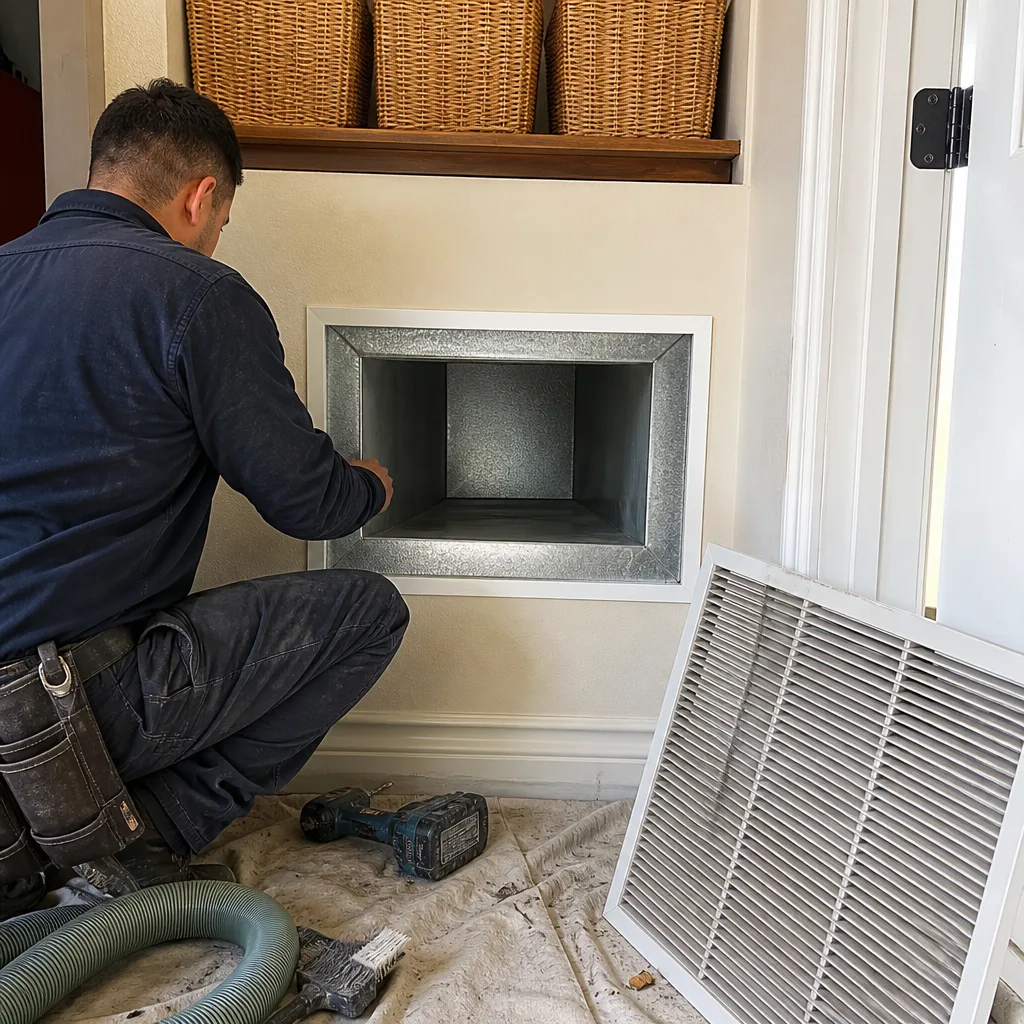
Whole-system duct and dryer vent check with before-and-after photos - you see exactly what came out of your vents
That "$99 whole-house special" is a bait ad - the real number appears once they are in your hallway, or the "clean" is a shop-vac at the register. We photograph the inside of your ducts before and after instead.
How to Hire a Air Duct Cleaning Contractor in San Diego: A Step-by-Step Guide
San Diego’s coastal air carries more than a breeze. It carries salt, fine dust, and the kind of particulate that settles into ductwork and stays there. What surprises most San Diego homeowners isn’t that ducts get dirty. It’s how much the price for cleaning them varies from one phone call to the next, and how little of that variance has anything to do with the actual work. The difference between a $400 invoice and a $1,200 invoice often comes down to nothing more than which company answered the phone. This Air Duct Cleaning Cost Breakdown: The San Diego Homeowner’s Reference for 2026 walks you through hiring a duct cleaning contractor in San Diego with the same scrutiny you’d apply to any four-figure home decision, because that’s exactly what this is.
Quick Answer
To hire an Air Duct Cleaning contractor in San Diego, verify their California contractor license on the CSLB website, get a written scope of work that lists every vent and the exact cleaning method before anyone arrives, ask how they handle mid-job discoveries like mold or damage, and confirm the arrival window is a specific two-hour block rather than “morning or afternoon.” A legitimate San Diego duct cleaning for a standard single-family home typically runs between $450 and $850, and any phone quote far below that range should raise immediate questions about what the crew is actually being paid to do.
Styles & brands we work with
Table of Contents
- Step 1: Verify the California Contractor License in Under Two Minutes
- Step 2: Demand a Written Scope of Work Before Anyone Touches a Duct
- Step 3: Spot the Five Door-to-Door Upgrade Pitches Before They Cost You
- Step 4: Test the Arrival Window Commitment
- Step 5: Verify the Work Within 24 Hours
- Understanding Cleaning Methods: Negative-Air vs. Contact Vacuum
- Ten Questions That Separate Real Contractors From Price Changers
- Common Mistakes to Avoid
- When to Call a Professional
Step 1: Verify the California Contractor License in Under Two Minutes
California law requires any contractor performing work over $500 to hold a valid license from the Contractors State License Board, known as the CSLB. For duct cleaning in San Diego, the relevant classifications are C-20, which covers warm-air heating, ventilating, and air conditioning, or C-61 with a D-40 sub-classification specifically for duct cleaning. A company holding neither of these classifications is not licensed for ductwork in the state of California, full stop.
The verification process takes less than two minutes:
- Go to cslb.ca.gov. The “Check a License” search box is on the front page. Type the company name exactly as it appears on their invoice or website.
- Look for the classification. The license details page shows the classifications the contractor holds. Look for C-20 or C-61/D-40. If you see only a general “A” license or nothing at all, the contractor is not licensed for duct cleaning.
- Check the status. The status must read “Active.” Any other status, including “Expired,” “Revoked,” or “Suspended,” means the contractor cannot legally work in San Diego right now.
- Check the bond and insurance line. The license page shows a workers’ compensation insurance status. California requires contractors with employees to carry workers’ comp. If a crew of two or three shows up and the license shows no workers’ comp coverage, every one of those technicians is uninsured the moment they step into your San Diego home.
One extra step that most guides skip: the license page lists the primary qualifying individual. That is the person who actually passed the trade exam. If the name on the license is different from the name on the invoice, ask why. A company that rents its license from another entity is a real pattern in California, and it usually correlates with precisely the kind of price-at-the-door behavior you’re trying to avoid.
Our crews at Kestrel Air Duct San Diego work under the Kingswell Guarantee, which means the written price and the written scope of work are in your hands before we touch your first vent. You can find our full service detail on the Air Duct Cleaning in San Diego page.
Step 2: Demand a Written Scope of Work Before Anyone Touches a Duct
Every duct cleaning quote in San Diego should come with a written scope of work. Not a brochure. Not a website screenshot. Not a text message with a number and a thumbs-up. A written document that says exactly what the crew will do, how they’ll do it, and what happens when something unexpected shows up.
A legitimate written scope of work covers these five items:
- The exact number of vents being cleaned. Count your registers yourself. In most San Diego homes, you’ll find between eight and fourteen supply registers and one to three return grilles. If the written scope doesn’t list this count, there’s no way to verify the job was completed.
- The cleaning method. The scope should state whether they’re using negative-air extraction, contact vacuuming, or rotary brush agitation, and should name the equipment type. We run Rotobrush rotary brush systems alongside Nikro negative-pressure units, which means the brush dislodges debris at the duct wall while the negative pressure pulls it out of the system. A scope that just says “clean ducts” is not a scope.
- The duration of the job. A full-house duct cleaning in a San Diego single-family home goes between two and four hours. A scope that promises the whole house in 45 minutes is describing a cursory pass, not a cleaning.
- What happens if they find mold, asbestos, or damage mid-job. This is the pivot point where most price-at-the-door schemes happen. The scope must state in writing that any additional work found mid-job will be photographed, shown to you, priced separately, and requires your written sign-off before proceeding. If the scope doesn’t include this line, add it yourself and make them initial it.
- What the guarantee covers. Our 365-Day Done Right Promise states in writing that if the job falls short within the guarantee period, Kestrel returns and makes it right at no charge. That’s the Kingswell Guarantee. A verbal promise is not a promise.
Read the scope before the crew unloads anything from the van. If the scope is vague, the invoice won’t be.
Step 3: Spot the Five Door-to-Door Upgrade Pitches Before They Cost You
Once a crew is in your home, the upgrade pressure starts. Some upgrades address real problems. Most are pure margin. Knowing the difference is the entire game.
- UV germicidal lights. A UV light installed inside the ductwork can kill mold and bacteria on the coil surface, which is a real thing in San Diego where coastal humidity keeps coils damp. But a properly cleaned system rarely needs one. If the technician pitches a UV light during a cleaning visit, ask for a photograph of the mold they claim to be treating. A legitimate contractor will always have one. We carry Honeywell and Aprilaire filtration and IAQ products for homeowners who want to maintain clean air between visits, but we never introduce upgrades as a response to a problem we can’t show you.
- Antimicrobial fogging. Fogging the ducts with an antimicrobial agent after cleaning is sometimes legitimately useful, particularly after mold remediation. It is never a substitute for cleaning. If a company quotes fogging as part of a routine cleaning, they’re selling you a chemical smell instead of actual removal.
- Duct sealing or encapsulant coating. Sealing leaks in ductwork is a real energy-efficiency measure, especially in older San Diego homes where flex duct has separated at the joints. But it’s a completely different job requiring different equipment. A duct cleaner who offers to “just seal a couple leaks” while cleaning is outside their scope. If the C-20 or C-61 license doesn’t cover HVAC installation work, they can’t legally patch ductwork anyway.
- Whole-house sanitizing as a line item. This is most often a spray bottle of disinfectant passed over the registers. It costs them six dollars and gets billed at three hundred. If you want sanitizing, ask what product, what concentration, and how it’s applied. Then check the product label against what they claim it does.
- Emergency mold findings requiring immediate action. If a technician opens a vent and tells you there’s black mold that requires immediate remediation, the correct response is to close the vent, end the visit, and call a licensed mold inspector. Duct cleaners are not mold assessors in California. Anyone who tells you otherwise is selling panic.
The pattern underneath all five pitches is the same: an unverifiable discovery, made by the only person present who claims to be an expert, requiring an immediate decision. The Kingswell Way values code that our technicians follow says the price and the job are agreed before work starts. Mid-job discoveries are photographed and priced separately. That’s the standard. Hold any San Diego contractor to it.
Step 4: Test the Arrival Window Commitment
How a contractor handles the arrival window tells you more about their operation than any review could. After years of running jobs in San Diego, we’ve learned that the companies that arrive when they said they would are usually the same companies that do the work they said they’d do at the price they quoted.
A legitimate arrival window commitment sounds like this: “Your technician will arrive between 9:00 a.m. and 11:00 a.m. We’ll text you 30 minutes before arrival.”
A non-answer sounds like this: “We’ll be there in the morning.” “Somebody will call you when they’re on the way.” “We schedule by region, so sometime between eight and two.”
There are three reasons the specific window matters:
- It means the company has dispatch software or an actual dispatcher. A two-hour window requires someone to be looking at a schedule and managing routes. A company that can’t tell you when they’re coming doesn’t have that person, which means they’re running jobs off the back of a pickup truck and a notepad.
- It’s a test of their commitment infrastructure. When you hold a window, you honor it or you call. If they no-show a cleaning appointment, what will they do if you invoke a guarantee six months from now?
- It predicts the invoice. Companies that can’t hold a schedule often can’t hold a price either. The same operational sloppiness shows up in both places.
Our 24/7 phone line is answered by a person, not a voicemail queue. When you call Kestrel Air Duct San Diego, you get a real conversation, any time of day, and a defined arrival window for your visit. That’s the Kingswell Guarantee at work before the work even starts.
Step 5: Verify the Work Within 24 Hours
Duct cleaning has a verification problem. The ducts are behind walls. The technician tells you they’re clean. How do you know? You run a simple checklist within the first 24 hours, while the evidence is still fresh.
- Wipe the inside of a supply register with a clean white cloth. Reach past the register and wipe the first six inches of the duct. The cloth should come back with at most a light gray dusting. If it comes back black or heavy with debris, the ducts were not cleaned. A rotary brush system should have removed the visible accumulation.
- Check the return grille. The return side carries the biggest volume of air and accumulates the most dust. Open it and shine a flashlight. You should see clean metal or flex duct, not a gray carpet of dust.
- Look at the blower compartment. A proper cleaning includes the blower motor and housing, not just the ducts. Ask the technician to show you the blower after cleaning. If it’s still caked with dust, the job was incomplete.
- Check the floor around each vent. The cleaning process loosens debris. A professional crew cleans up after themselves. If you’re finding dust bunnies around every register the morning after, that’s a process problem.
- Run the system for 15 minutes and note any new vibration or noise. Sloppy cleaning can knock connections loose. If the system hums differently after the job than it did before, call the contractor back. Under the 365-Day Done Right Promise, we return and make it right at no charge if anything falls short.
The 24-hour window matters because dust naturally re-accumulates over time. Wait a month and you can’t distinguish bad work from normal settling.
Understanding Cleaning Methods: Negative-Air vs. Contact Vacuum
When a San Diego contractor describes how they’ll clean your ducts, you’ll hear two approaches. Both have their place, but they’re not the same job, and they shouldn’t be priced the same way.
Negative-air extraction is the gold standard for source removal. The crew seals a powerful vacuum unit into the duct system and runs it while agitating the ducts to dislodge debris. The vacuum creates negative pressure inside the system, pulling loosened material out through the vacuum rather than distributing it through the living space. In plain terms: the air inside the ducts flows backwards, toward the vacuum, carrying dust with it. Our Nikro negative-pressure units do exactly this. We pair them with Abatement Technologies HEPA filtration, so the air that exits the equipment is filtered before it enters your San Diego home. The HEPA filter catches what the vacuum would otherwise send back into the room.
Contact vacuuming means putting a vacuum hose directly into each register. It removes what the hose touches, which is the area immediately around each register. It does not clean the full run of the duct between the register and the air handler. For a lightly dusty system in a coastal San Diego condo, contact vacuuming might honestly be all you need. For a full single-family home with a decade of accumulation, it’s an incomplete job.
Rotary brush agitation is the practice of running a rotating brush through the duct to dislodge debris that the air alone wouldn’t move. Our Rotobrush systems spin at the duct wall and scrape off what’s stuck there. This matters in San Diego, where years of mild, humid air create a slightly tacky film on duct surfaces that traps particulates. The brush breaks the film; the negative pressure removes it.
When you read a written scope of work, look for which method they’re using. If the scope doesn’t say, the invoice will reflect whatever version benefits the contractor. And if a company claims to do “contact vacuum only” for under $300, that’s not a full duct cleaning, no matter what their ad says.
Ten Questions That Separate Real Contractors From Price Changers
Before you invite anyone into your San Diego home, call them and ask these ten questions. A legitimate contractor will answer every single one without hesitation. A price changer will start to hedge, promise, or stall by question four.
- What is your CSLB license number and classification? A real contractor gives you the number immediately. You then verify it on the CSLB website. If they don’t have one, the conversation is over.
- Will you put the scope of work in writing before you arrive? The answer must be yes. No exceptions. If they say “the technician will write it up when he gets there,” that’s the tell.
- What method do you use, and what equipment? Listen for actual words: negative-air, rotary brush, contact vacuum. If they can’t describe the method, they’re probably buying leads and selling appearances.
- How many vents does the quote include? You should be able to count your vents yourself. If the quote doesn’t include a vent count, it’s not a specific quote.
- What does the price change if you find mold or damage? The answer must be: photograph, show you, price separately, get your sign-off. Anything less is an open checkbook.
- What is your arrival window? A two-hour block with a text-on-the-way is standard. “Morning or afternoon” is not.
- What happens if I’m not satisfied with the result? A written guarantee should cover this. The Kingswell Guarantee and our 365-Day Done Right Promise say we return and make it right at no charge. Get it in writing, not in a voice mail.
- Who answers the phone if I call with a question after the job? If the answer is a central booking line that stops responding after the invoice clears, that’s your post-job support. Our phones are staffed 24/7 by a real person.
- How long will the job take? A full single-family home in San Diego runs two to four hours. Anyone promising less than an hour is describing a surface pass.
- Can I see photos of your own work on a similar home? A contractor with a track record has before-and-after photos they can show. No photos, no track record.
For the full picture of what we do and how we price it, visit the Kestrel Air Duct San Diego home page. And if your duct issue is specifically the dryer line, our Dryer Vent Cleaning in San Diego page covers that separately, because dryer vents are a different system with different stakes.
Common Mistakes to Avoid
- Accepting a phone quote without a written scope. A phone quote is a marketing number. The written scope is the contract. In San Diego’s market, the gap between the two is where the entire bait-and-switch industry lives.
- Skipping the CSLB check because the website looks professional. A polished website costs about ninety dollars to build. A contractor license takes years to earn. The website proves nothing about the license.
- Letting the crew start work before you see the full price in writing. Once the van is unloaded and the hoses are in your hallway, you’ve lost your negotiating position. The Kingswell Guarantee puts the written price in your hands before work begins, every single visit.
- Accepting “it’s caused by mold” without a photograph. If a technician can see mold, they can photograph it. A photo is the entire claim. No photo, no claim.
- Choosing the lowest bid and stopping your research there. A $199 whole-house duct cleaning in San Diego is an invitation to a very expensive appointment. The model works because the crew never intended to do the job for that price.
- Not checking what the guarantee actually covers. “Satisfaction guaranteed” covers nothing unless it says what happens when you’re not satisfied. Our 365-Day Done Right Promise says it in writing: if it’s not done right, we return and make it right at no charge.
- Forgetting to check the blower compartment and return side after the job. Many contractors clean registers but skip the components that move most of the air. The blower is the heart of the system. If it’s not clean, the job isn’t done.
When to Call a Professional
Call a professional when you can see visible dust at the registers that keeps returning after basic cleaning, when your home smells musty every time the system kicks on, when anyone in the house is dealing with unexplained respiratory irritation that improves away from home, or when you’ve lived in the home for three to five years without a cleaning. If you had renovation work done recently, drywall dust in the system is a certainty. And if your dryer vent hasn’t been cleaned in two or more years, that’s a separate and urgent call. Kestrel Air Duct San Diego offers free estimates in San Diego, with a live person answering the phone 24/7. Call (619) 695-0424 and we’ll give you the written price and the written scope before you ever schedule the visit.
See the difference
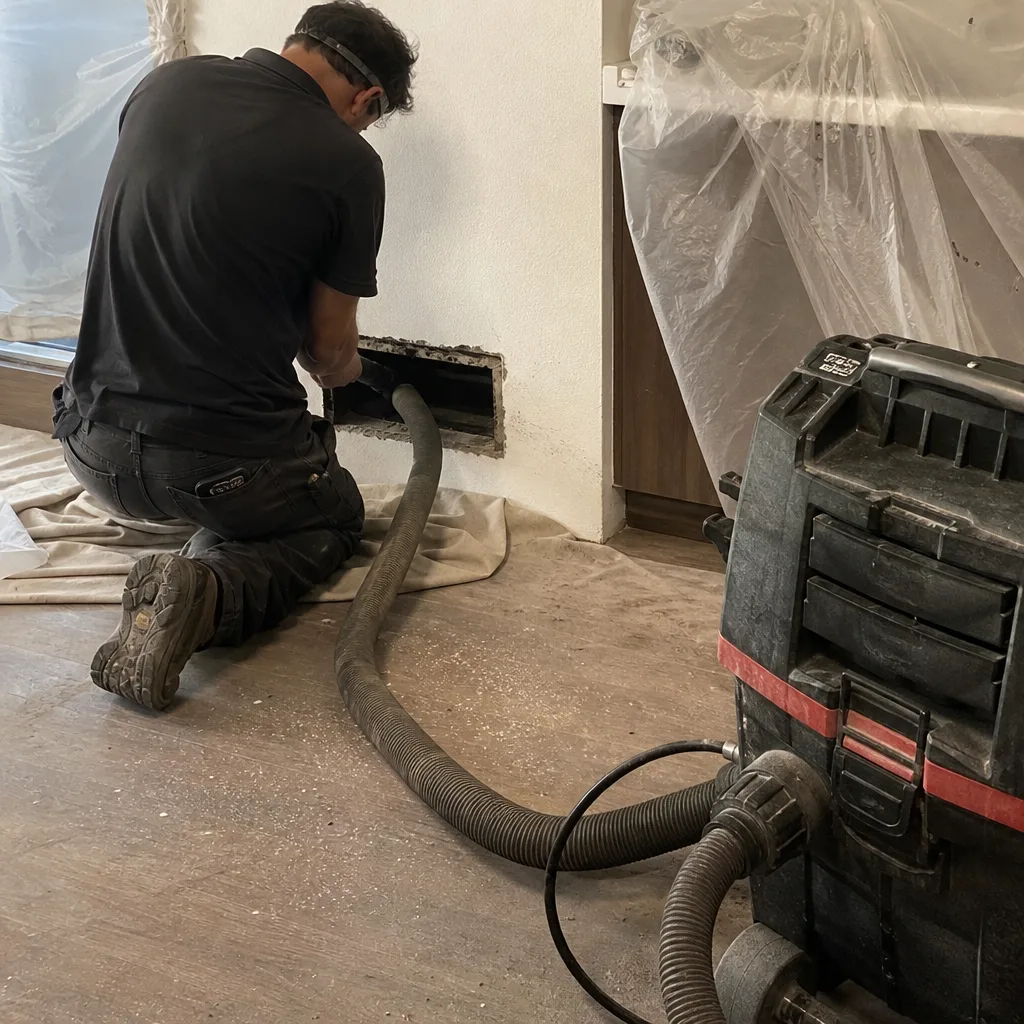 Before
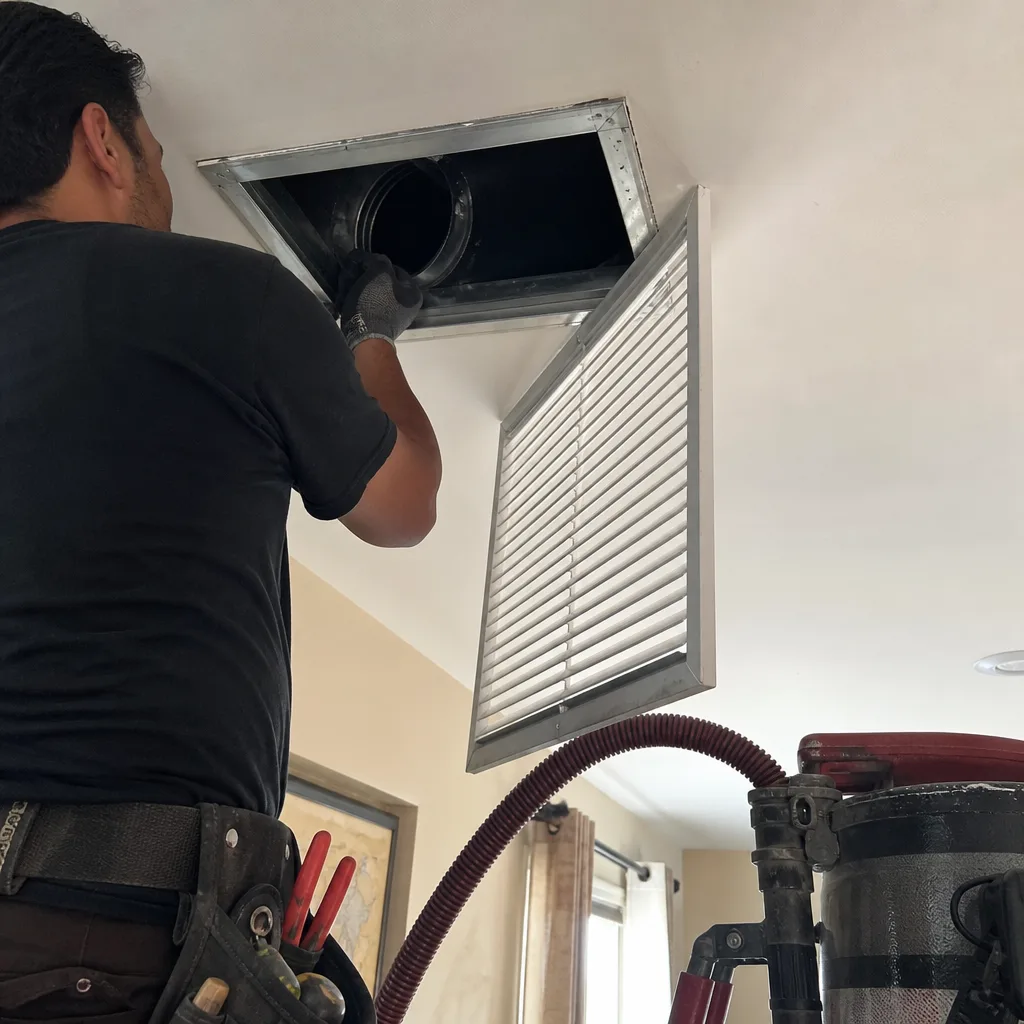 After
After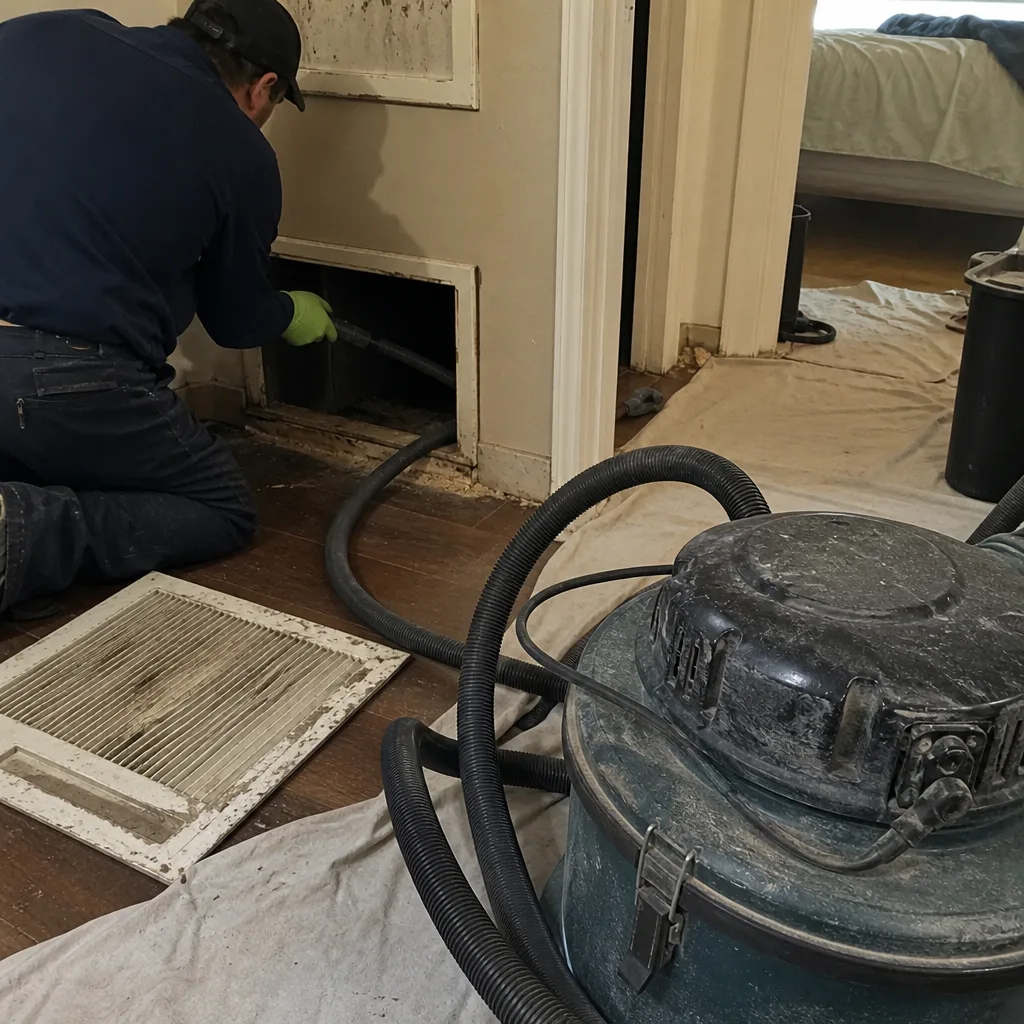 Before
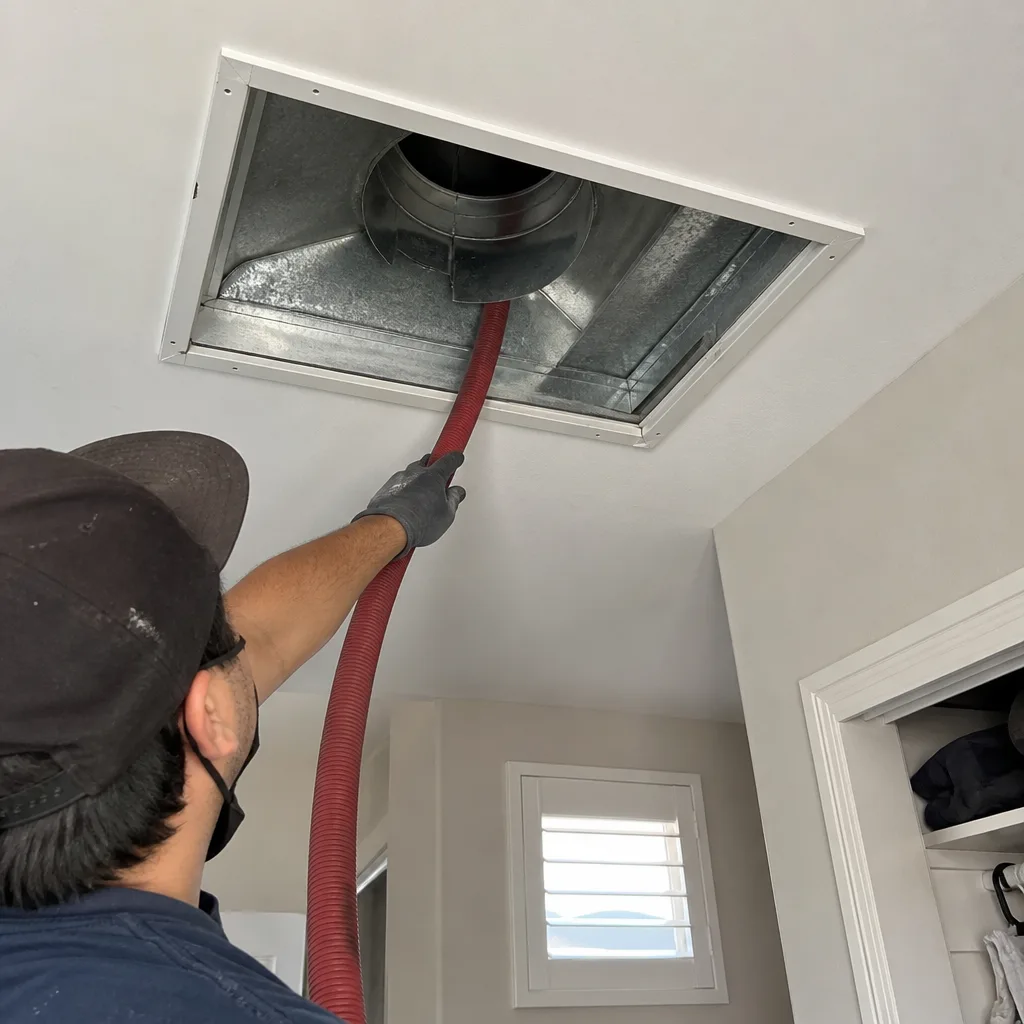 After
After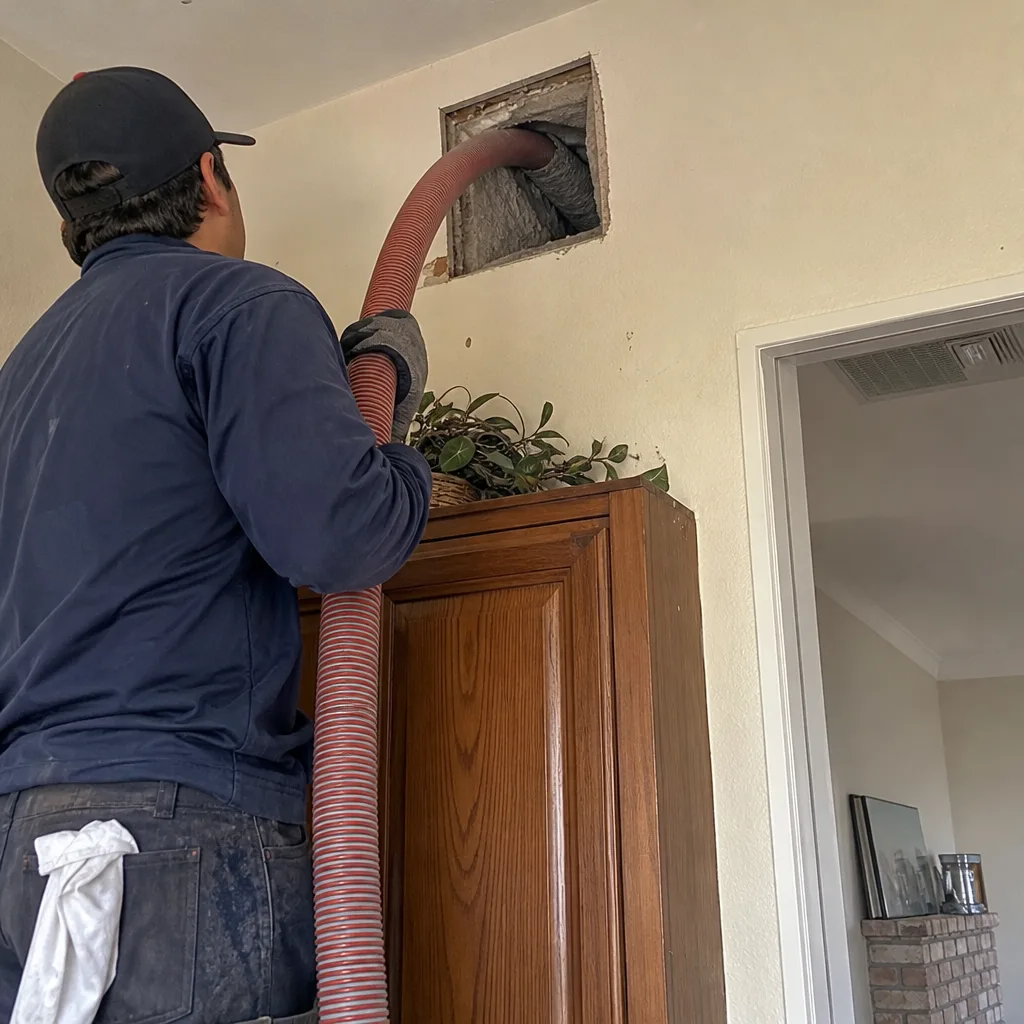 Before
 After
AfterFrequently Asked Questions
In San Diego, a standard single-family home duct cleaning from a licensed contractor typically runs between $450 and $850, depending on the number of vents, the accessibility of the system, and the level of contamination. A quote far below $400 is nearly always a teaser price designed to get a crew into your home, where the invoice changes. Call (619) 695-0424 for a written quote with no pressure and no surprises.
Because the cheap quotes are not for the same job. A $250 quote usually covers contact vacuuming at best, a cursory pass of each register, and sometimes nothing but a competitive lead-buying exercise where the real sale happens at your front door. A $600 quote from a licensed contractor should cover negative-air extraction, rotary brush agitation, and the blower compartment. They are not the same service.
Run the 24-hour verification checklist: wipe the inside of a supply register with a clean white cloth, inspect the return grille with a flashlight, ask to see the blower compartment after cleaning, and check the floor around each register for leftover debris. If the cloth comes back black or the blower is still dusty, the job wasn’t completed. Under the 365-Day Done Right Promise, we return and make it right at no charge if anything falls short.
For most San Diego homes, every three to five years is appropriate. Coastal homes with frequent window-ope(ning) or homes with pets may need it more often, while a tightly sealed newer build might stretch to seven years. The honest answer depends on how the system looks, not on a calendar. The NADCA (National Air Duct Cleaners Association) standard points to three to five years as a general guideline, and that holds true for San Diego’s climate.
A newer home’s ductwork can actually be dirtier than an older home’s, because construction dust from drywall, insulation, and flooring gets pulled into the system during the build and first year of occupancy. We regularly find drywall dust settled in the returns of homes built within the last two years in San Diego. It’s not about the home’s age; it’s about what’s been pulled through the system since the last visual inspection.
Air duct cleaning addresses the HVAC system that distributes conditioned air through your home. Dryer vent cleaning addresses the exhaust line from your clothes dryer to the outdoors, which carries lint and heat. They are different systems with different risks and different methods. We offer both services at Kestrel Air Duct San Diego, and a dryer vent that hasn’t been cleaned in over two years is a more immediate priority in most homes. Call (619) 695-0424 for a free estimate on either.
The Bottom Line
Hiring an air duct cleaning contractor in San Diego comes down to three things: verify the license, get the scope in writing, and confirm the price won’t move once the crew arrives. The $99 phone quote is a front for a door-step upsell. The $700 written quote from a licensed contractor is a defensible, verifiable, enforceable agreement. Ask the ten questions, run the 24-hour checklist, and never let anyone start work until you know exactly what work you’re paying for. That’s not being difficult. It’s being the kind of homeowner that bad contractors avoid and good contractors want. We’ve been doing it the Kingswell way since 2004, and we’d rather have one informed customer than ten price shoppers-explore more guides & resources to get fully up to speed. Call (619) 695-0424 and we’ll give you the written price before you ever decide.
Written by Dale Whitmore, Owner at Kestrel Air Duct San Diego, serving San Diego since 2004.